
August 30, (THEWILL) — Nigeria’s quest to reduce its dependence on crude oil may be entering a more consequential phase, but the country’s ability to translate rising non-oil exports into sustainable economic growth will depend on whether it can move beyond selling raw commodities and begin exporting more processed and higher-value products.
That was one of the central messages from Zenith Bank Plc’s 10th International Trade Seminar on Non-Oil Export, held virtually on Tuesday, August 25, 2026, under the theme, “Unlocking Value and Harnessing Growth in Non-Oil Export.”
The seminar brought together policymakers, regulators, exporters, manufacturers, investors and development partners to examine how Nigeria can expand its non-oil export earnings, improve domestic value addition, strengthen trade infrastructure and financing, and exploit opportunities created by the African Continental Free Trade Area (AfCFTA).

The timing of the conversation is significant. Nigeria achieved a record $6.1 billion in non-oil exports in 2025, a development that suggests the country’s export diversification strategy is beginning to yield measurable results. But the bigger question is whether the country can turn that increase into a sustained export revolution capable of generating foreign exchange, creating jobs, supporting industrialisation and reducing the economy’s vulnerability to crude oil price shocks.
The answer will depend less on how much Nigeria exports and more on what it exports, how competitively it produces it, and how deeply Nigerian businesses participate in global value chains.
From exporting commodities to exporting value
For decades, Nigeria has remained trapped in a commodity-export model. The country produces substantial quantities of agricultural and mineral commodities, yet much of its export potential remains concentrated at the lower end of the value chain.
Cocoa, cashew, sesame, ginger, leather, cotton and other commodities can generate foreign exchange when exported in raw or semi-processed form. But the economic value multiplies when these commodities are processed domestically into finished or intermediate products. This is where the non-oil export debate must now move.
It is not enough for Nigeria to replace one commodity — crude oil — with another set of commodities if the underlying structure of the economy remains unchanged. The real objective should be to build an economy in which Nigerian producers can process raw materials, manufacture finished products, meet international standards, package competitively and sell directly into regional and global markets.
That would produce several benefits simultaneously: higher export earnings, more industrial capacity, stronger small and medium-sized businesses, greater employment and increased government revenue.
Zenith Bank’s seminar therefore addresses a fundamental economic question: Can Nigeria turn its enormous productive capacity into internationally competitive businesses?
Why the banking sector matters
The financial system has a critical role to play in answering that question. Exporters require financing at virtually every stage of the production and distribution process — from purchasing raw materials and equipment to processing, warehousing, transportation, certification and shipment. Yet financing remains one of the major constraints confronting Nigerian businesses.
For banks, the opportunity is equally significant. A successful export business generates foreign exchange, creates transaction flows and requires multiple financial services, including trade finance, letters of credit, guarantees, foreign-exchange services, payments and working-capital facilities.
Consequently, Nigeria’s export expansion is not simply an industrial policy opportunity. It is also a banking opportunity. For Zenith Bank, which has positioned itself strongly around trade and international banking, supporting non-oil exporters can deepen its relationship with businesses while expanding its trade-finance franchise.
The bank can therefore benefit commercially from the same export ecosystem it is helping to build. But there is an important caveat.
Banks must be willing to develop financing structures that reflect the peculiarities of export businesses rather than simply treating exporters as conventional borrowers. Exporters often require longer-tenor financing, pre-shipment and post-shipment finance, equipment financing, invoice financing and structured trade facilities.
The more sophisticated Nigerian exporters become, the greater the opportunity for banks to provide sophisticated financial products around them.
AfCFTA could change the game
Perhaps one of the biggest opportunities for Nigeria is the African Continental Free Trade Area. Nigeria has one of Africa’s largest consumer markets and possesses substantial manufacturing, agricultural and entrepreneurial capacity. But Nigerian businesses cannot rely indefinitely on the domestic market.
The AfCFTA offers a potential pathway into a continental market of more than a billion people. For Nigerian manufacturers, agricultural processors, technology companies and service providers, the opportunity is enormous. But market access on paper does not automatically translate into exports.
Nigerian companies must be competitive. They must produce at internationally acceptable quality standards, deliver consistently, price competitively and meet delivery schedules. This means the AfCFTA challenge is ultimately a productivity challenge.
Nigeria must lower the cost of production if its businesses are to compete successfully against producers from other African economies and the rest of the world.
The infrastructure problem
One of the biggest obstacles remains infrastructure. An exporter cannot be globally competitive if electricity costs are excessively high, roads are poor, ports are inefficient and logistics costs consume a significant portion of the value of the product.
For agricultural exporters, the problem is even more pronounced. Perishable commodities require efficient storage, cold-chain infrastructure and reliable transportation. Delays at ports, inadequate warehousing and cumbersome documentation can turn an otherwise profitable export transaction into a loss-making venture.
This means Nigeria’s non-oil export strategy cannot be left to exporters and banks alone. Government must provide the infrastructure and regulatory environment that allow businesses to compete.
The country needs more efficient ports, better roads connecting production centres to export corridors, reliable electricity, improved rail logistics and faster customs procedures. Without these interventions, financial support alone will not deliver an export boom.
READ ALSO:
The opportunity for Zenith Bank
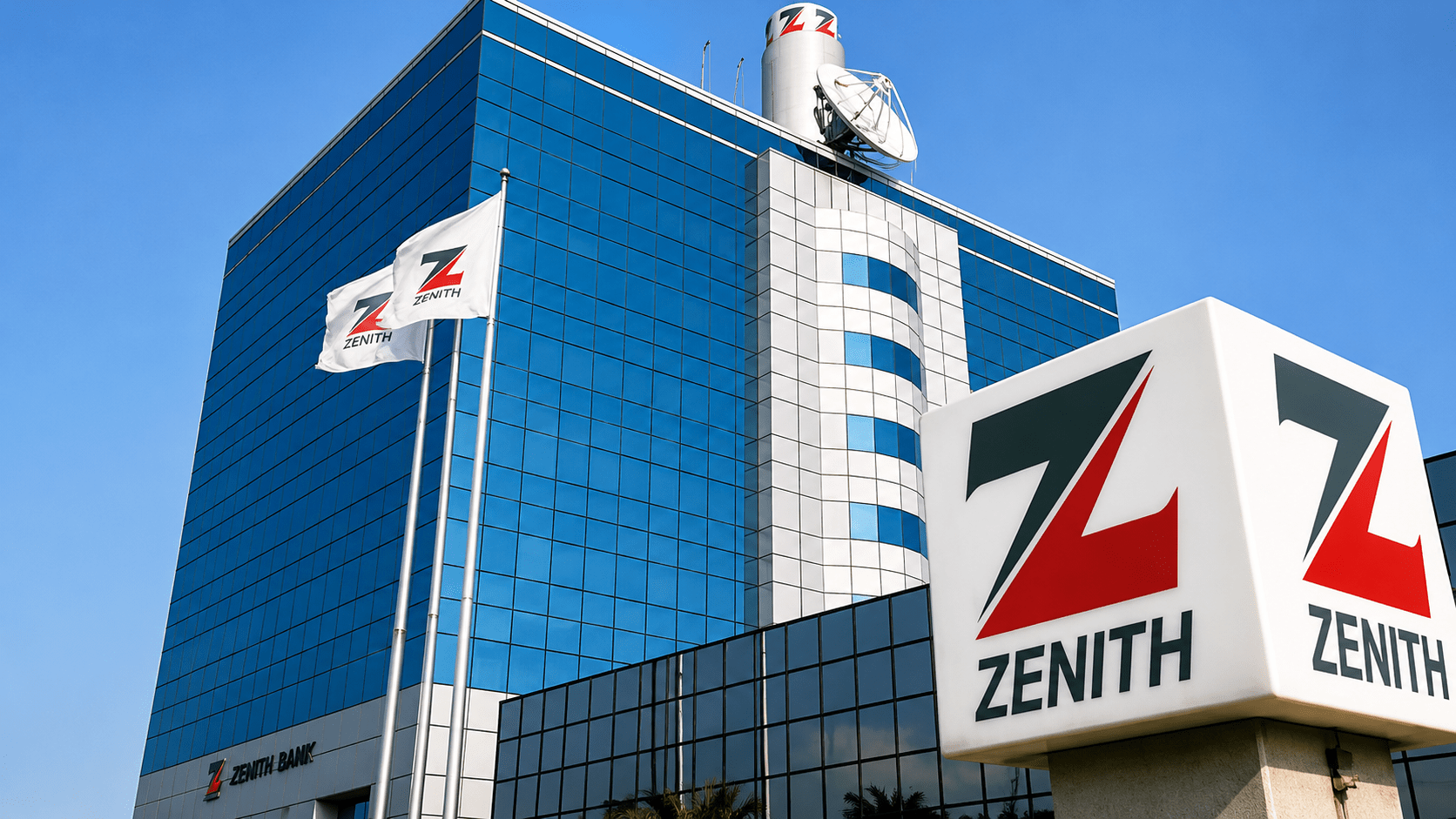 For Zenith Bank, the seminar represents more than corporate social responsibility. It can become an important component of the bank’s long-term business strategy.
A larger non-oil export sector means more businesses requiring banking services. Exporters will need foreign-exchange services, trade finance, cash management, guarantees, payments, investment banking and working capital.
As Nigerian businesses expand across Africa, they will also require banking relationships capable of supporting cross-border transactions Zenith Bank’s existing African footprint could therefore provide an important competitive advantage.
The bank can position itself not merely as a lender to exporters but as an export ecosystem bank — helping businesses identify markets, structure transactions, secure financing, manage foreign exchange and navigate international trade requirements.
That would create a direct link between the bank’s advocacy and its commercial objectives.
Expectation of measurable action
This is perhaps where Zenith Bank has an opportunity to improve its initiative. A decade of trade seminars is significant, but the next phase should go beyond dialogue.
The bank could establish a structured ‘Non-Oil Export Growth Programme’ that tracks businesses emerging from its seminars and provides them with practical support.
Such a programme could combine export financing, technical assistance, market intelligence, export-readiness assessments and connections to buyers across Africa and other international markets.
Zenith Bank could also publish an annual ‘Nigeria Non-Oil Export Competitiveness Report’, identifying the sectors with the greatest export potential, the financing gaps confronting exporters and the policy reforms required to unlock them. That would transform the seminar from an annual conversation into a measurable economic-development platform.
Nigeria’s bigger economic dividend
The real prize from non-oil exports is not simply additional foreign exchange. It is structural transformation.
A successful export economy creates demand for factories, warehouses, logistics companies, farmers, processors, technology providers, accountants, insurers, banks and professional services. It creates jobs across the value chain.
It also gives businesses an incentive to improve quality and productivity because international markets punish inefficiency more quickly than protected domestic markets. Nigeria therefore needs to view non-oil exports as an industrialisation strategy, not merely an alternative source of foreign exchange.
The $6.1 billion recorded in 2025 should be regarded as a beginning rather than an achievement to celebrate and forget.
The ambition should be to multiply that figure substantially over the next decade — but with a much larger share coming from processed and manufactured products. That is the difference between merely diversifying exports and genuinely diversifying the economy.
Zenith Bank’s 10th International Trade Seminar has placed an important issue back at the centre of the economic conversation. But the ultimate test will not be how many people attend the next seminar or how many policy recommendations are made.
The real test will be whether Nigerian businesses become more competitive, whether more products move from Nigerian factories and farms into African and global markets, whether exporters gain easier access to finance, and whether Nigeria earns significantly more from what it produces.
“For Zenith Bank, the opportunity is equally clear: help build the export ecosystem, and the bank can become one of the biggest financial beneficiaries of the export economy it helps create,” said Mike Akannor, adding, “For Nigeria, the stakes are even higher.”
“The country has spent decades searching for life after oil. The next chapter may finally depend on learning how to sell more of what it produces — but, more importantly, learning to produce more of what the world is willing to pay a premium for,” Akannor said.

Sam Diala is a Bloomberg Certified Financial Journalist with over a decade of experience in reporting Business and Economy. He is Business Editor at THEWILL Newspaper, and believes that work, not wishes, creates wealth.