
-
The Pentagon is preparing to withdraw about 200 American troops deployed to Nigeria earlier this year, with the drawdown expected to be completed by late September.
-
The deployment delivered significant counterterrorism gains, including a joint US-Nigerian operation that killed Abu Bilal al-Minuki, a senior Islamic State commander in the Lake Chad Basin.
-
Washington is expected to retain small teams of trainers and intelligence analysts in Nigeria, ensuring that the troop drawdown does not end the security partnership between both countries.
-
The continued attacks by terrorists, bandits and other armed groups show that while counterterrorism operations have weakened extremist networks, Nigeria’s wider security crisis remains complex.
August 28, (THEWILL) — The United States is preparing to draw down about 200 troops deployed to Nigeria earlier this year following a period of intensified counterterrorism cooperation that produced significant gains against Islamist militant networks.
The New York Times (NYT), citing US military officials, reported on Thursday that the larger American contingent is expected to leave Nigeria by late September.
However, the withdrawal will not mark the end of Washington’s security engagement with Abuja, as small teams of American trainers and intelligence analysts are expected to remain in the country.

The planned drawdown comes after months of joint operations, intelligence-sharing and military training that strengthened cooperation between the Nigerian and US armed forces and resulted in the targeting of senior terrorist commanders.
One of the most significant successes recorded during the partnership was the May operation that killed Abu Bilal al-Minuki, a senior Islamic State figure in the Lake Chad Basin.
The operation dealt a major blow to the leadership structure of the terrorist organisation operating in the region.
The Commander of US Africa Command (AFRICOM), Gen. Dagvin Anderson, disclosed last month that the operation had significantly degraded Islamic State’s leadership in Nigeria and globally. He said the United States subsequently pulled back many of its troops following the operation, while Nigerian forces remained active in efforts to prevent terrorist groups from rebuilding their operational and financial capabilities.
Anderson also confirmed that the US would maintain its intelligence partnership with Nigeria.
Troop Deployment Followed Trump’s Pressure
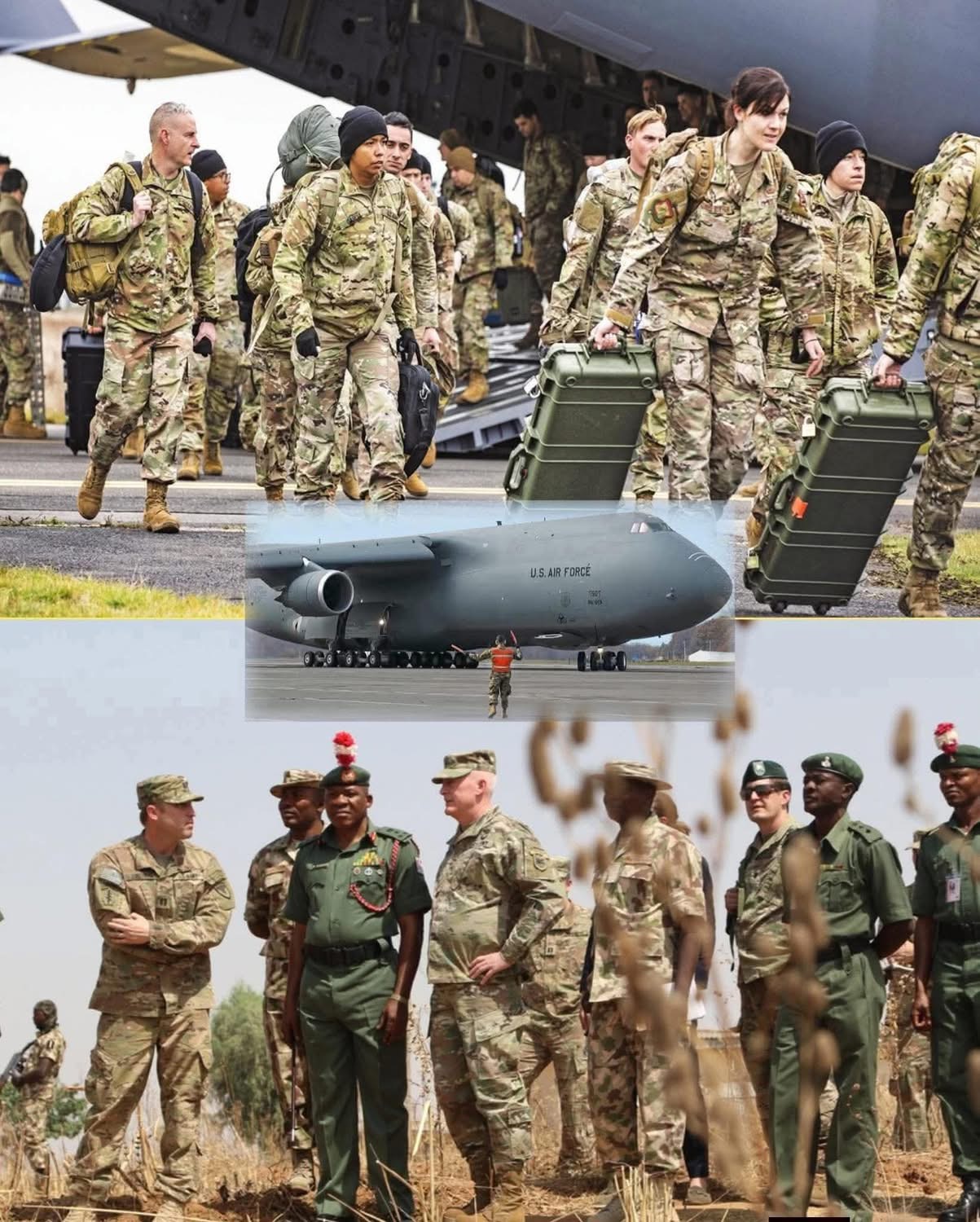
The US troops were deployed to northeastern Nigeria in February amid heightened security concerns over terrorist attacks in the region.
Their deployment came weeks after US President Donald Trump criticised Nigeria over the protection of Christian communities from terrorist violence. Trump had accused Nigeria of failing to protect Christians and subsequently designated the country as a “country of particular concern” over allegations of religious persecution.
Nigeria has rejected the characterisation of its security crisis as a campaign of religious persecution, maintaining that terrorism and other forms of violence have affected both Christians and Muslims.
Attacks Continue Despite Gains
The reduction of the US military presence comes as Nigeria continues to battle a broad range of security threats. Recent attacks have demonstrated that significant gains against terrorist leadership have not brought an end to violence across the country.
On Saturday, gunmen launched a major assault on a military base in northeastern Nigeria. In the northwest, gunmen reportedly killed more than two dozen people in recent attacks, including an imam, while at least 25 people were killed in an attack on a village in the central part of the country.
Beyond Boko Haram and Islamic State West Africa Province (ISWAP), Nigeria is grappling with banditry, kidnapping, farmer-herder conflicts, communal violence, militia activity and other forms of armed criminality.
Ladd Serwat, Africa senior analyst at the Armed Conflict Location & Event Data Project (ACLED), has previously said Islamist militant activities constitute only a small proportion of the overall violence recorded in Nigeria. He described the security environment as highly complicated, with threats also linked to instability spreading from neighbouring Sahelian countries.
READ ALSO:
US-Nigeria Partnership Enters New Phase
The planned troop drawdown comes shortly after Nigeria and the United States held their second round of talks in Washington under a joint working group focused on protecting Christian communities in Nigeria’s Middle Belt.
The working group was established following Trump’s concerns over attacks against Christians and the broader deterioration of security in parts of Nigeria.
Despite differences over how the violence should be characterised, the two countries have continued to deepen their security cooperation.
The retention of American intelligence analysts and trainers after the withdrawal of the larger contingent is expected to preserve some of the capabilities developed during the deployment.
For Washington, the arrangement provides continued access to intelligence cooperation and a security partnership with Nigeria without maintaining a large military footprint. But for Abuja, the drawdown places greater responsibility on Nigerian security forces to consolidate the gains achieved during the joint operations.
Felix Ifijeh is a journalist with years of professional reporting experience. Known for his keen news sense, compelling storytelling and commitment to accurate, impactful reporting, he has built a reputation for turning leads into clear, engaging, and well-structured reports that resonate with readers. His work reflects deep newsroom experience and a commitment to accurate, impactful journalism.
