
-
Tidal announced on its official X account that it will remove fully AI-generated tracks from its platform entirely, starting December 9, 2026.
-
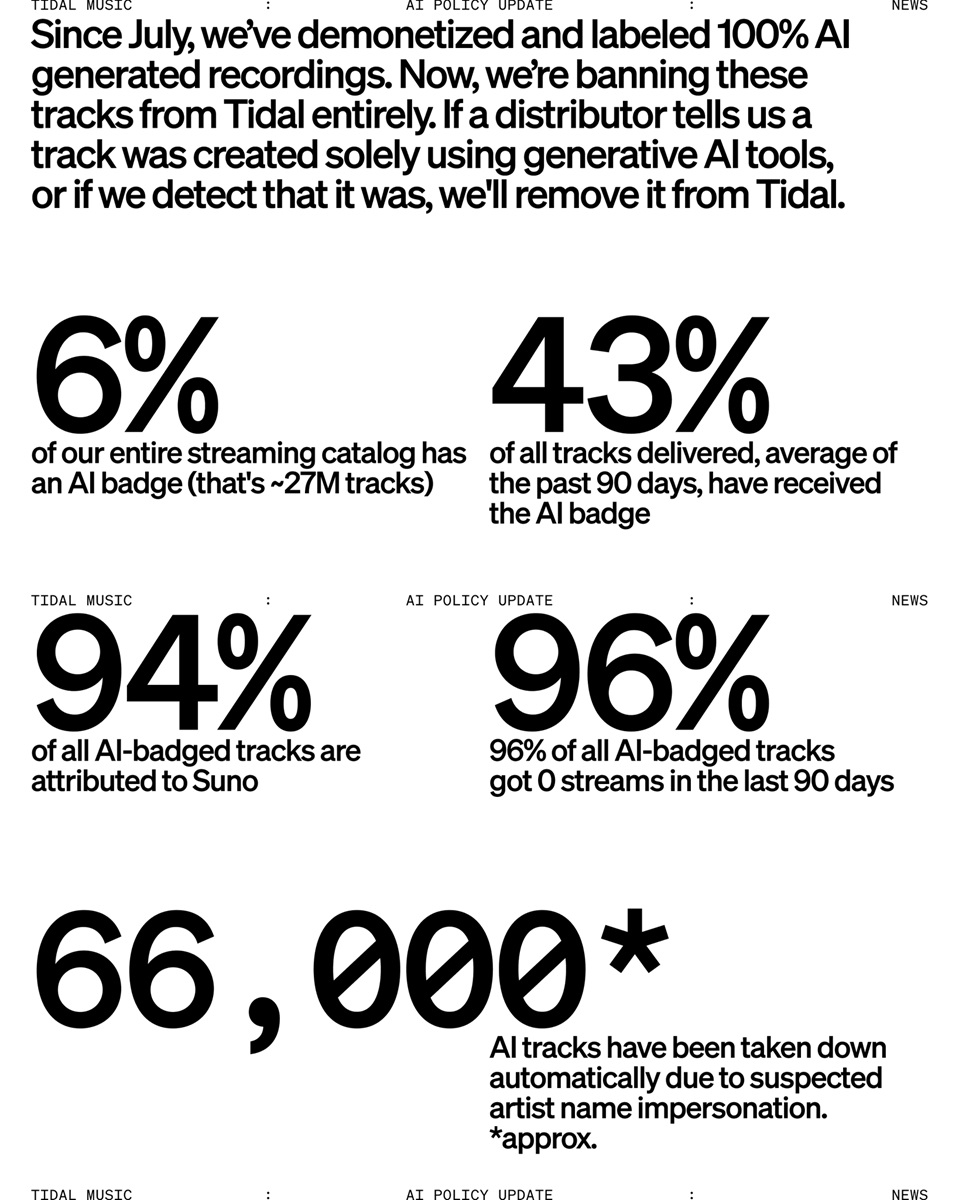
The streaming service has labelled and demonetised wholly AI-generated recordings since July.
-
According to Tidal’s data, 43% of tracks delivered over the past 90 days received its AI badge, and 94% of all badged tracks are attributed to the AI music generator Suno.
-
The ban applies to wholly AI-generated recordings, not to music made with AI assistance.
November 24, (THEWILL) – Tidal will ban fully AI-generated music from its platform starting December 9, 2026, the streaming service announced on its official X account. Any wholly AI-generated track submitted to Tidal from that date will be rejected and removed from the platform.
The move turns a policy of labelling and withholding royalties into an outright ban.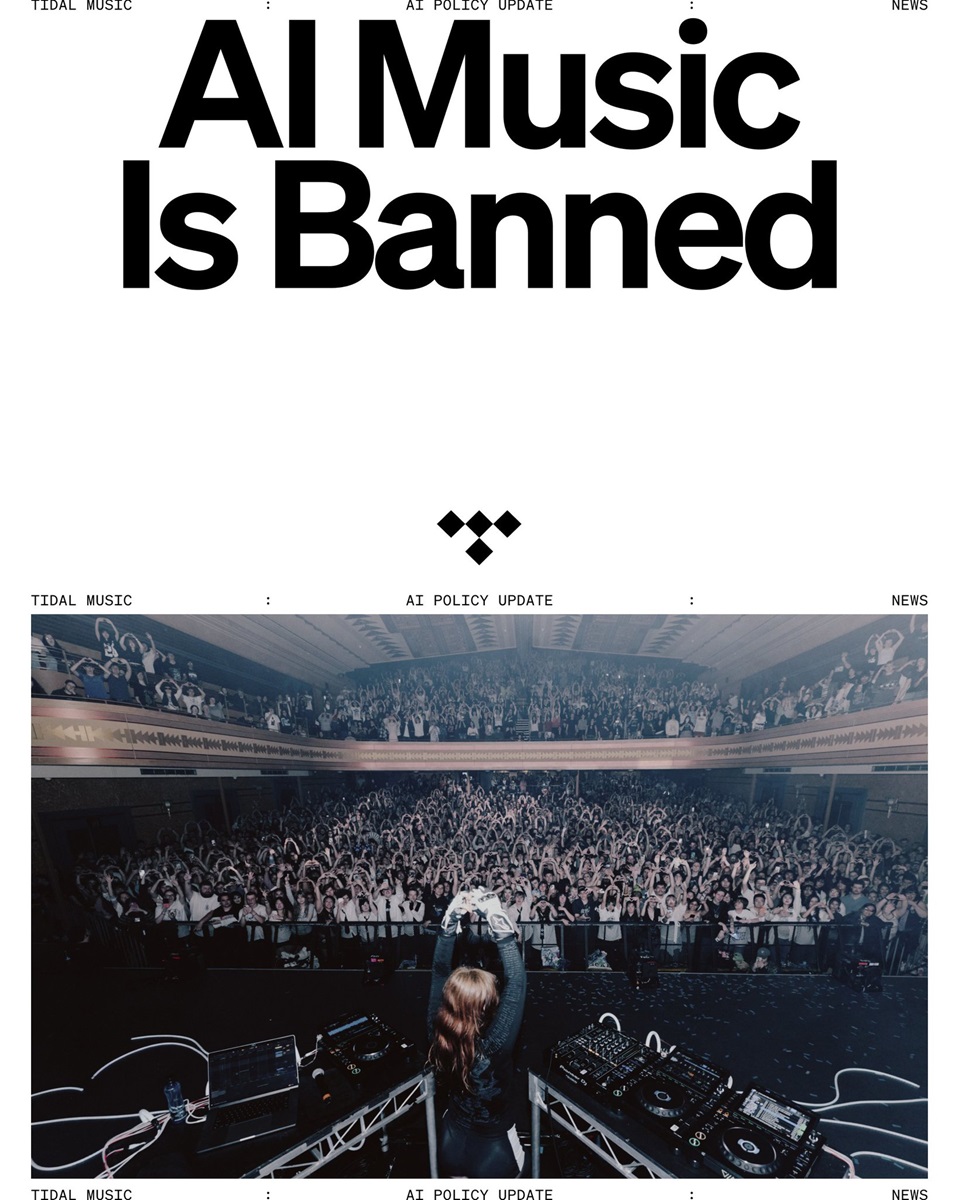
Since July, the service said in its post, it has demonetised and labelled recordings that are 100% AI-generated. It is now “banning these tracks from Tidal entirely.” If a distributor tells Tidal that a track was created solely with generative AI tools, or if Tidal detects that it was, the track will be removed.
Tidal released figures with the announcement on its X page.
It said 6% of its streaming catalogue now carries an AI badge, and 43% of all tracks delivered, averaged over the past 90 days, have received the badge. Suno accounts for 94% of AI-badged tracks, and 96% of them received zero streams in the last 90 days. Tidal also said about 66,000 AI tracks have been automatically taken down for suspected artist name impersonation.
The ban targets recordings that are wholly AI-generated. Tidal’s policy page defines AI-generated recordings as those wholly generated using generative artificial intelligence, and says the service takes no action on AI-generated compositions under its current policy. The announcement does not say how the ban will treat tracks that blend human and AI work.
READ ALSO:

 The announcement
Tidal announced its first AI policy on June 30, 2026. Fully AI-generated music was to be tagged for users and made ineligible for monetisation, royalties and direct-to-fan sales. The labelling and royalty block began July 15. Tony Gervino, Tidal’s executive vice president and editor-in-chief, said at the time that the company wants to protect and reward “organic creativity”.
In a later interview, Gervino said Tidal works with an external partner to detect tracks made with AI platforms, and listeners can switch off AI-labeled tracks in their app settings.
Tidal is not alone in confronting AI-generated music. Spotify, Apple Music, Deezer, Qobuz and SoundCloud have also taken steps against AI-generated content. Tidal’s ban goes further than those announcements by removing the tracks outright rather than only labelling or demonetising them.

Gertrude Oby is a writer and journalist passionate about the creative industries. Works span fashion, film, media, art, and culture.