
-
House of Representatives approves Tinubu’s external borrowing requests totalling $28.2bn and €1.04bn.
-
The loans cover the 2026–2027 supplementary borrowing plan and fresh external financing under the 2026 budget.
-
Government plans to invest the funds in power, transportation, healthcare and other critical sectors.
-
Tinubu says the borrowing will help bridge Nigeria’s infrastructure funding gap and accelerate economic development.
November 24, (THEWILL) – The House of Representatives on Tuesday approved President Bola Tinubu’s requests for external loans totalling $28.2 billion and €1.04 billion, authorising the Federal Government to pursue fresh foreign financing for critical infrastructure and development projects across the country.
The approval followed the consideration of two separate proposals forwarded to the National Assembly by the President, covering a supplementary external borrowing programme for 2026–2027 and additional loans provided for in the 2026 Appropriation Act.
While the two requests amount to $28,225,160,783.49 and €1,045,083,643, representing one of the major external financing proposals presented to the legislature by the Tinubu administration, the first proposal (the 2026–2027 Supplementary External Borrowing Plan) seeks approval for $20,517,755,901 and €1,045,083,643.
The second is a request for a National Assembly resolution authorising the implementation of new external borrowing contained in the 2026 Appropriation Act. The facility is valued at ₦10,790,366,835,481, equivalent to $7,707,404,882.49, using the budget exchange rate of $1 to ₦1,400.
Both proposals had earlier passed second reading and were referred to the House Committee on Aids, Loans and Debt Management for detailed consideration.
At Tuesday’s plenary, following the presentation of the committee’s reports, lawmakers resolved to consider the requests at the Committee of Supply, presided over by the Deputy Speaker, Benjamin Kalu.

The requests were presented as part of the administration’s broader financing strategy for addressing infrastructure shortfalls, supporting economic growth and executing development programmes across the country.
Presenting the reports, the chairman of the committee, Abubakar Nalaraba, appealed to members to support the two borrowing proposals and grant the President’s requests.
The House subsequently approved both proposals, providing the legislative authorisation required for the Federal Government to proceed with the proposed financing arrangements.
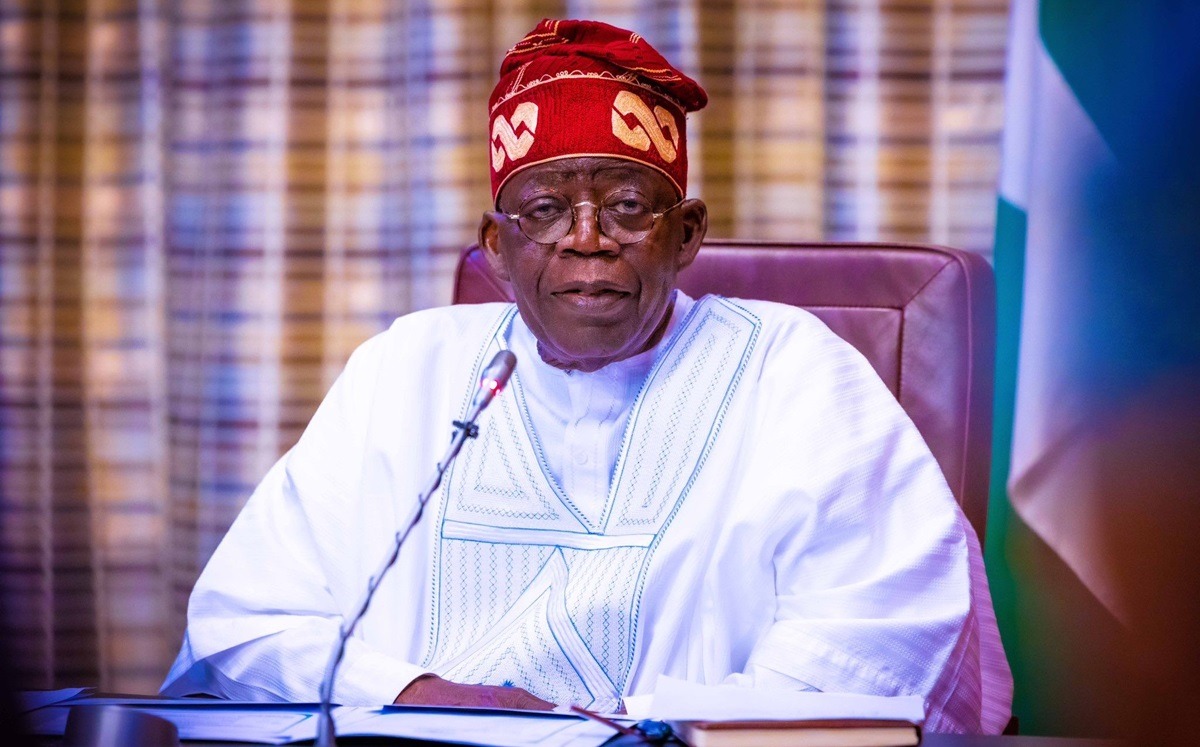
Tinubu Cites Economic Growth, Development Priorities
Explaining the rationale for the supplementary borrowing plan in his letter to the House, President Tinubu said the administration’s reform agenda and the need to accelerate national economic growth had made additional external financing necessary.
He stated that the projects and programmes selected for funding had undergone technical and economic assessments, with their potential contributions to Nigeria’s socioeconomic development serving as a major consideration.
According to him, the proposed interventions are expected to create employment opportunities, expand skills acquisition, encourage entrepreneurship, reduce poverty and strengthen food security.
The President further disclosed that most of the projects would be executed across the 36 states of the federation and the Federal Capital Territory, indicating that the proposed investments would cover different parts of the country.
READ ALSO:
Infrastructure Financing Gap Drives Borrowing
Tinubu identified Nigeria’s huge infrastructure financing deficit as a major justification for the additional borrowing, arguing that the scale of investment required to address the country’s development challenges could not be met without supplementary funding.
He said external financing had become necessary to bridge the shortfall and provide resources for projects considered essential to national development.
“In light of the need for significant infrastructure investment in the country and the vast financial resources needed to address this gap, it has become essential to pursue prudent external borrowing to close the financial shortfall”, the President said.
He explained that the funds would be directed primarily towards critical infrastructure in the power, transportation and healthcare sectors, alongside other strategic areas.
Tinubu also emphasised the need for timely disbursement and effective execution of the projects to ensure that the expected development objectives were achieved.
Eurobonds, Concessional Loans Among Funding Channels
On the second borrowing request, the President explained that the ₦10.79 trillion facility, equivalent to $7.707 billion, would be sourced through different financing channels, including Eurobond issuance and concessional financing.
The borrowing forms part of the financing provisions of the 2026 Appropriation Act and is intended to support the implementation of projects and programmes captured in the national budget.
With the House’s approval, the Federal Government has secured the legislative backing required to proceed with the two proposed external borrowing arrangements.

Felix Ifijeh is a journalist with years of professional reporting experience. Known for his keen news sense, compelling storytelling and commitment to accurate, impactful reporting, he has built a reputation for turning leads into clear, engaging, and well-structured reports that resonate with readers. His work reflects deep newsroom experience and a commitment to accurate, impactful journalism.