
-
Nasarawa says improved allocations have supported infrastructure, healthcare, pensions and workers’ welfare while reducing reliance on commercial borrowing.
-
World Bank urges states to link higher revenues to measurable service-delivery outcomes, stronger budget execution and public accountability.
-
RMAFC calls for stronger monitoring of local government allocations as states are encouraged to diversify revenue through agriculture, tourism and solid minerals.
October 27, (THEWILL) – State governments are deploying increased allocations from the Federation Account to roads, healthcare, education, workers’ welfare and other public services, but development partners and fiscal authorities have warned that higher revenues must translate into measurable improvements in living standards.
Speaking at a plenary session of the 32nd Nigerian Economic Summit (NES 32), Nasarawa State Governor, Abdullahi Sule, said improved revenue allocations had enabled his administration to undertake infrastructure and social-sector projects while reducing its reliance on commercial bank borrowing.
He listed roads, hospitals, primary healthcare centres, pension payments and workers’ welfare among the areas benefiting from improved fiscal management.

Sule also said higher allocations had strengthened local government finances, allowing councils to save part of their monthly receipts and subsequently fund projects involving water supply, solar power and healthcare facilities.
However, he stressed that increased federal transfers could not replace the need for states to diversify their revenue sources and attract productive private investment.
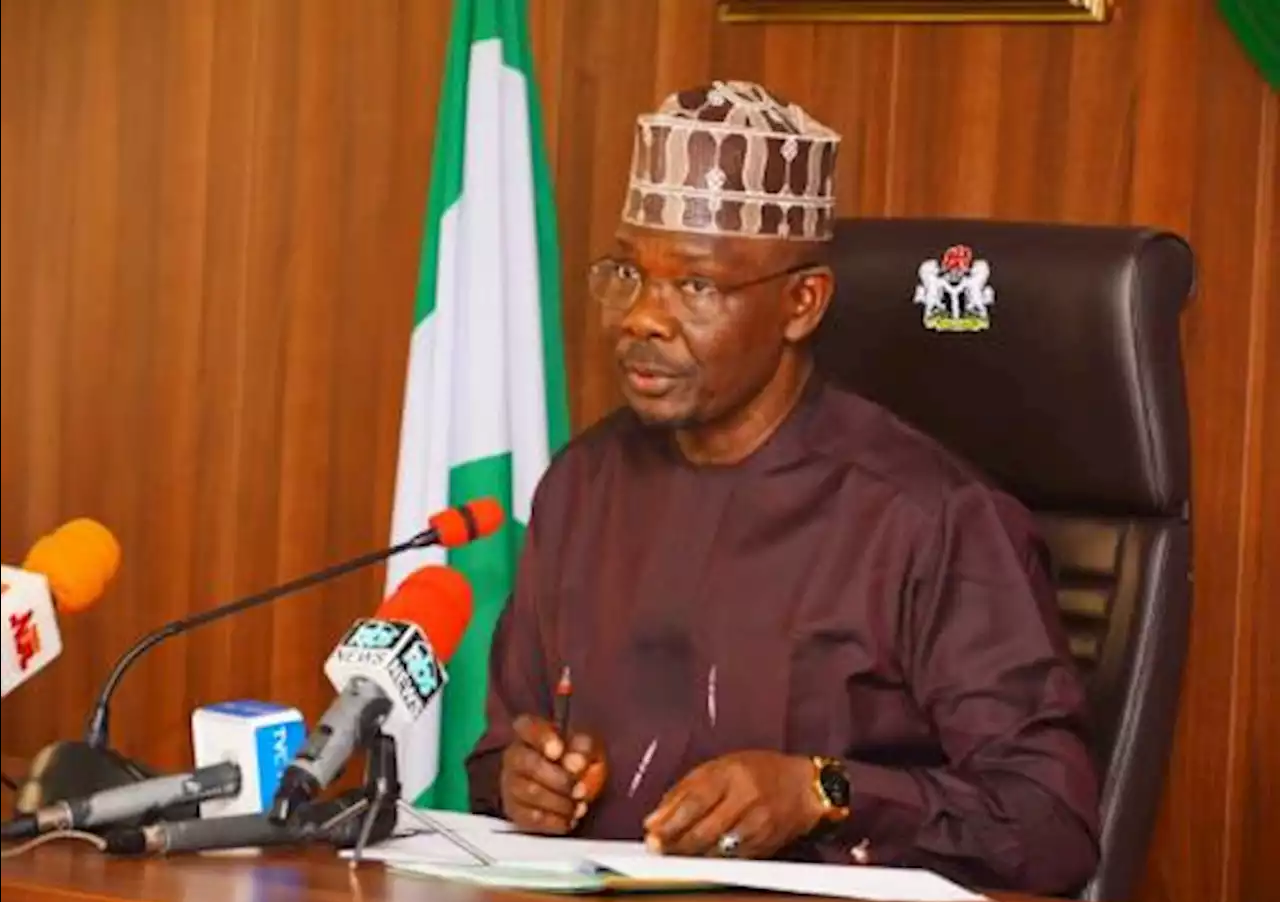
Nasarawa turns to mining, agriculture for revenue
Sule cited solid minerals as an opportunity to expand state revenue and employment, arguing that mineral resources should be processed locally rather than extracted and transported elsewhere for value addition.
Although states do not have constitutional authority to issue mining licences, he said Nasarawa had introduced an executive order requesting investors who obtained licences from the Federal Government to establish processing facilities within the state.
The policy, according to the governor, had attracted four to five mineral-processing companies, including lithium processors.
He identified Avatar Lithium Processing Plant, with a reported capacity of 3,000 metric tonnes daily, and New Energy Lithium Processing Plant, with a reported capacity of 6,000 metric tonnes daily, as major investments.
Sule said the state government supported investors through access to land, roads, electricity, water and security, while requiring environmental impact assessments and employment opportunities for host communities.
“We don’t want our raw materials to come out somewhere and create a future devastation to the land,” he said, explaining that local processing could support value addition while helping the government manage mining’s environmental consequences.
He added that the government had spent about two years preparing the investment environment before the first set of investors arrived in 2021, following his assumption of office in 2019.
Beyond mining, Sule cited the development of 10,000 hectares for rice production as another effort to diversify the state’s economic base.
He also highlighted negotiated signature bonuses from mineral investments and collaboration with development partners, including the World Bank, to improve the business environment and establish a one-stop shop for investors.
He said attracting investment required more than natural resources, noting that investors needed confidence in the security of their capital, infrastructure and the government’s commitment to supporting long-term operations.
World Bank seeks measurable returns on public spending
World Bank Country Director, Mathew Verghis, said states needed to combine efforts to facilitate specific investments with broader reforms that made their economies more attractive to businesses.
Using Nasarawa’s mining investments as an example, he said governments must create the conditions for companies to establish operations while ensuring that host communities benefit.
Verghis said the World Bank-supported State Action on Business Enabling Reforms programme was helping states improve business regulation, land administration, investment promotion and public procurement.
He cited reforms to right-of-way charges for fibre broadband deployment. According to him, 30 states had capped aggregate charges at ₦145 per metre, while other states had waived the requirement.
The reforms were accompanied by increased fibre deployment. Yobe recorded a 95 percent increase in 2025 compared with 2022, while Jigawa recorded 90 percent, Plateau 59 percent, Ekiti 56 percent and Niger 46 percent, he said.
However, Verghis warned that improving the business environment was only one part of the challenge. States also needed stronger public financial management, better budget implementation and improved public services.
He said the World Bank-supported State Fiscal Transparency, Accountability and Sustainability programme had contributed to stronger fiscal reporting, with all 36 states now publishing audited financial statements in line with established standards.
States had also introduced measures covering budget implementation reports, revenue administration, procurement and debt management, he added.
Verghis said these reforms had become more important following the increase in allocations to states after the removal of the petrol subsidy and the unification of exchange rates.
While states had directed significant portions of the additional resources towards transportation, particularly roads, alongside health and education, he said governments needed to integrate development-partner financing into their budgets to obtain a more complete picture of public expenditure.
He urged states to move beyond publishing financial information to using it to track results in healthcare and education.
READ ALSO:
RMAFC calls for stronger monitoring of local funds
Nathaniel Adojutelegan, representing the Revenue Mobilisation, Allocation and Fiscal Commission, said the commission was working on a revised revenue allocation formula to reflect changing constitutional and economic realities.
The commission monitors revenue accruing to the Federation Account, oversees its distribution among the federal, state and local governments, and advises governments on improving fiscal efficiency.
Adojutelegan encouraged states to diversify into agriculture, tourism and solid minerals, identifying the National Resources Development Fund as a potential source of financing for viable projects in these sectors.
He also urged state governments to organise artisanal miners into recognised cooperatives to expand formal participation, create employment and bring more operators into the tax net.
On local government finances, he said the commission was working towards stronger monitoring mechanisms to ensure that allocations reached councils and were spent on projects that directly benefited residents.
The call reflects a central challenge in the management of increased allocations: ensuring that funds transferred to subnational governments produce visible improvements at the grassroots.
Gates Foundation stresses budget execution
Ekenem Isichei, deputy director of policy advocacy at the Gates Foundation, said higher government allocations did not automatically translate into better public services, particularly as inflation and rising operating costs continued to constrain state budgets.
He outlined a framework requiring governments to raise revenue, allocate it to priority sectors, release the funds and measure whether the spending achieved its intended objectives.
Isichei urged states to prioritise productive infrastructure, healthcare, education and agriculture, while ensuring that budget commitments reflected the resources they could realistically deploy.
He cautioned against announcing ambitious sectoral budgets when actual releases were substantially lower, arguing that planning should be based on available funds and clearly defined priorities.
In healthcare, he said performance should be assessed by checking whether medicines and essential commodities were available in facilities and whether healthcare workers were present to provide services.
He also advocated state-level data and intelligence units to track service delivery and identify implementation gaps.
Regular performance reviews, public financial disclosures and electronic attendance monitoring were among the measures he cited as tools for strengthening accountability.
In one example, Isichei said an electronic monitoring system for healthcare workers had helped identify 500 ghost workers and save a state approximately $2 million.
He said closer collaboration between state governments and local authorities, combined with transparent reporting, realistic budgeting and evidence-based decisions, would help ensure that increased public revenues translated into better services for Nigerians.

Ogochukwu Onwaeze is a writer specializing in business and economic journalism. At THEWILL News Media, she translates market trends, financial developments, and policy shifts into clear and engaging stories.
