
-
Seventeen State Houses of Assembly have so far approved the constitutional amendment seeking to establish State Police Services.
-
Adamawa, Anambra, Benue and Ekiti are among the latest states to back the proposed constitutional alteration.
-
The amendment needs approval from 24 of the 36 State Houses of Assembly, leaving seven more states to meet the constitutional threshold.
-
The proposed framework provides for Federal and State Police Services, with safeguards covering human rights, civilian oversight, national standards and firearms control.
October 22, (THEWILL) – The drive to establish State Police in Nigeria has gained fresh momentum, with 17 State Houses of Assembly now backing the constitutional amendment seeking to decentralise policing and create State Police Services.
The development represents a significant step in a reform that has dominated Nigeria’s security and constitutional debate for more than two decades, as lawmakers across the country respond to persistent insecurity and growing calls for policing to be brought closer to the communities.
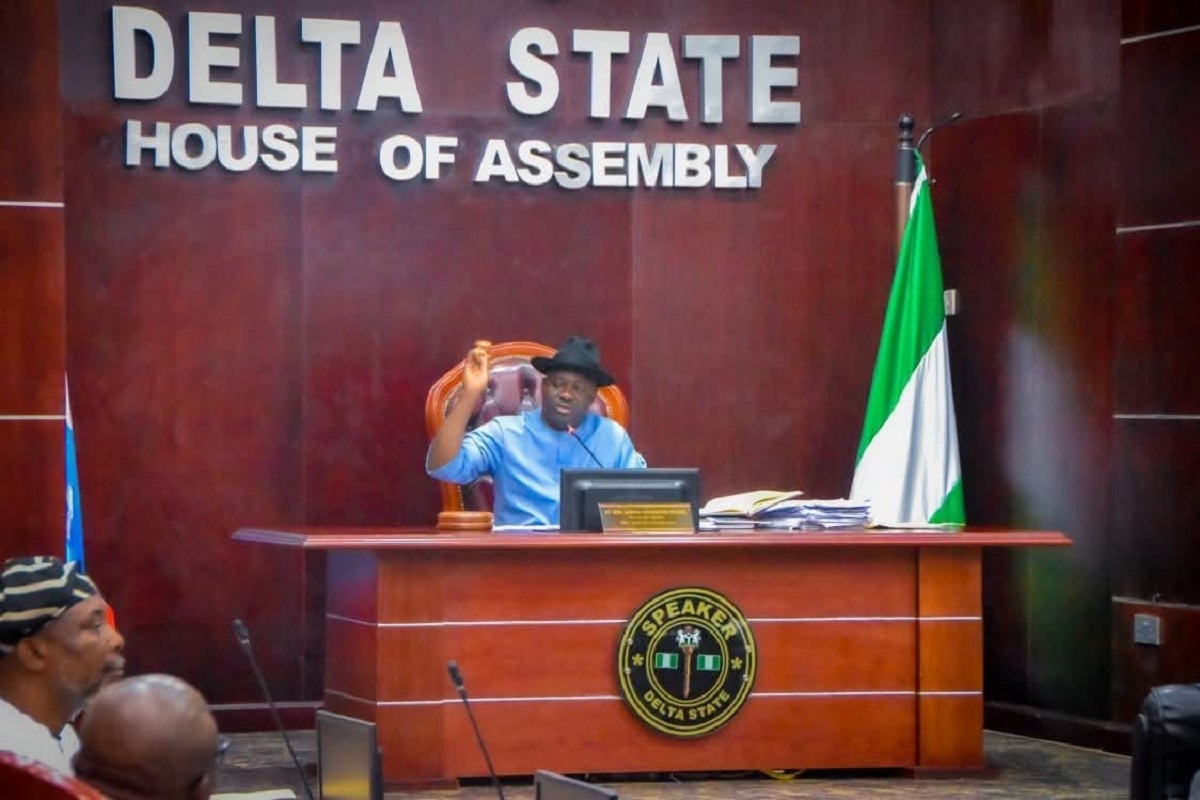
The 17 states that have so far approved the proposed amendment are Adamawa, Anambra, Benue, Cross River, Delta, Edo, Ekiti, Enugu, Kwara, Nasarawa, Ogun, Osun, Oyo, Plateau, Rivers, Taraba and Zamfara.

The proposal, however, still requires the backing of at least 24 of the 36 State Houses of Assembly before the constitutional amendment can proceed. This means seven more state legislatures must approve the bill to satisfy the two-thirds requirement prescribed by the Constitution.
Four More States Join Push
The latest wave of approvals came from Adamawa, Anambra, Benue and Ekiti.
In Ekiti State, the House of Assembly passed the Constitution of the Federal Republic of Nigeria, 1999 (Sixth Alteration) Bill, 2026, during plenary in Ado-Ekiti. The bill scaled second and third readings, with all 21 lawmakers present voting in favour.
Speaker Adeoye Aribasoye directed the Clerk of the House to transmit the bill to the National Assembly alongside observations made by the legislature.
Aribasoye said the establishment of State Police had remained a major national issue for more than two decades, adding that the Assembly had an opportunity to make its position known on the proposed constitutional reform.
In Benue, the State House of Assembly also approved the amendment during plenary presided over by Speaker Alfred Emberga.
The debate was led by the Majority Leader, Peter Ipusu, who urged lawmakers to expedite consideration of the proposal.
Ipusu argued that State Police would strengthen intelligence gathering at the grassroots, improve responses to security emergencies and enhance law enforcement. He said decentralised policing could help tackle rural banditry, farmer-herder conflicts and urban crime, while creating employment opportunities and improving accountability.
The Assembly subsequently directed that its resolution be communicated to the National Assembly.
Anambra, Adamawa Back Amendment
The Anambra State House of Assembly has also approved the proposed constitutional alteration. The bill passed through first, second and third readings during plenary in Awka and was adopted through a voice vote.
Speaker Somtochukwu Udeze presided over the sitting and directed the Clerk to communicate the Assembly’s resolution to the National Assembly.
The proposed framework would allow states to establish their own police services, subject to constitutional provisions and an Act of the National Assembly prescribing minimum national policing standards.
In Adamawa, lawmakers also approved the proposed constitutional amendment after considering its provisions.
The Assembly adopted 24 of the 26 clauses contained in the proposal and directed the Clerk to communicate its position to the National Assembly.
The proposed amendment provides for the establishment of State Police Service Commissions, with responsibilities including the recommendation of qualified persons for appointment as state commissioners of police.
READ ALSO:
13 States Had Earlier Approved
The latest four approvals followed the endorsement of the amendment by 13 other states.
They are Cross River, Delta, Edo, Enugu, Kwara, Nasarawa, Ogun, Osun, Oyo, Plateau, Rivers, Taraba and Zamfara.
The first five states to approve the proposal were Edo, Osun, Oyo, Rivers and Zamfara.
A subsequent wave of approvals saw Kwara, Nasarawa, Ogun, Delta, Taraba, Cross River, Plateau and Enugu join the list.
The development has significantly narrowed the gap between the proposal and the constitutional threshold required for it to advance.
Seven More States Needed
The State Police Bill was transmitted by the National Assembly to the 36 State Houses of Assembly on September 16, 2026, for consideration and concurrence.
The bill had earlier passed the Senate on June 24 and the House of Representatives on July 23.
Under Section 9(2) of the 1999 Constitution, an alteration to the Constitution requires the approval of not less than two-thirds of all State Houses of Assembly. With 36 state legislatures, that translates to 24 states.
The 17 approvals recorded so far therefore leave seven states required to complete the constitutional threshold.
The National Assembly has expressed confidence that the process will be concluded within the life of the current legislature once the required number of states endorse the amendment.
What The Proposed State Police Structure Provides
The proposed constitutional alteration seeks to establish a policing structure comprising Federal and State Police Services.
Under the proposed arrangement, the Nigeria Police Force would remain the default policing institution in any state until that state lawfully establishes and certifies its own State Police Service as operational.
The Federal Government would retain responsibility for policing matters assigned to it across the 36 states and the Federal Capital Territory.
The proposal also contains safeguards intended to prevent abuse and ensure uniform standards across the country.
These include provisions for civilian oversight, human rights protection, minimum national policing standards, independent police service commissions, intergovernmental cooperation, criminal information systems and firearms control.
The framework further provides for federal intervention in specified circumstances involving serious institutional failure, incapacity, threats to national security or grave abuses.

National Policing Bill Also In The Works
The constitutional amendment is being pursued alongside the Federal Government’s proposed National Policing Bill, 2026.
The Presidential Working Group on the National Policing Bill, chaired by the Chief of Staff to the President, Femi Gbajabiamila, has completed its drafting work.
The group submitted the proposed National Policing Bill, alongside 29 consequential amendment bills, to the Attorney-General of the Federation and Minister of Justice, Lateef Fagbemi, for legislative drafting review and validation.
The Ministry is expected to return the validated documents to the Working Group on or before October 30, after which the group will give them final consideration before presenting them to President Bola Tinubu.
The proposed legislation is expected to provide the broader legal framework for the policing structure envisaged by the constitutional amendment.
Background
The agitation for State Police has been a recurring feature of Nigeria’s constitutional and security debate for more than two decades.
Proponents argue that the existing centrally controlled policing system is overstretched and unable to adequately respond to the country’s diverse security challenges.
They contend that policing closer to the communities would improve intelligence gathering, speed up responses to emergencies and enable law enforcement personnel to better understand local security conditions.
The renewed push has coincided with persistent security challenges, including kidnapping, banditry, terrorism, farmer-herder conflicts, communal violence and other forms of criminality.
However, the proposal has also attracted concerns over the possibility of political interference, particularly the risk of governors or other political actors using State Police against opponents and critics.
Other concerns centre on funding, recruitment, operational independence, professionalism, human rights and accountability.
The proposed constitutional framework seeks to address some of these concerns through national standards, oversight mechanisms and clearly defined federal and state responsibilities.
For now, the reform has moved closer than ever to a constitutional breakthrough. With 17 State Houses of Assembly having approved the amendment, the immediate challenge is securing seven additional states to reach the constitutionally required 24-state threshold.

Felix Ifijeh is a journalist with years of professional reporting experience. Known for his keen news sense, compelling storytelling and commitment to accurate, impactful reporting, he has built a reputation for turning leads into clear, engaging, and well-structured reports that resonate with readers. His work reflects deep newsroom experience and a commitment to accurate, impactful journalism.
