
-
Finance Minister attributes current inflationary pressures partly to N30tn in monetary financing before the reforms.
-
Federal Government says spending on salary adjustments and wage awards was twice the savings from petrol subsidy removal.
-
Sanwo-Olu cites 4.43 percent Q2 economic growth, 14.63 percent September inflation and $54.93bn external reserves.
October 21, (THEWILL) – Nigeria could have faced inflation of up to 1,000 percent without the economic reforms introduced by President Bola Tinubu’s administration, the Minister of Finance and Coordinating Minister of the Economy, Taiwo Oyedele, has claimed.
Oyedele asserted on Tuesday at the 56th Annual Accountants’ Conference of the Institute of Chartered Accountants of Nigeria in Abuja, defending the removal of petrol subsidy and changes to the foreign exchange market despite their impact on household and business costs.
“If this reform had not happened, ladies and gentlemen, today, you would be talking about inflation in a thousand percent”, he said.

The minister attributed much of the inflationary pressure to excessive money creation before the reforms, claiming that about ₦30 trillion had been printed and was contributing to the rising cost of goods and services.
“We printed plenty of naira. Plenty trillion naira was printed. The inflation we are dealing with today, the reason why your bread is more expensive, is the ₦30 trillion showing up”, he said.
However, Oyedele did not provide a calculation or supporting data to establish how inflation would have reached 1,000 percent without the reforms. His statement was presented as a counterfactual projection rather than an observed inflation figure.
Government Defends Reform Costs
Oyedele acknowledged the pressure on households but argued that the response should focus on increasing incomes faster than prices rather than artificially suppressing prices.
He also disclosed that the Federal Government had spent twice the amount saved from petrol subsidy removal on salary adjustments and wage awards. He did not provide the expenditure figures or specify the period covered by the comparison.
READ ALSO:
The minister said the government had improved the identification of beneficiaries of cash transfers through the National Identification Number system. He cited World Bank recognition of progress in reaching vulnerable households but rejected calls to publish beneficiaries’ personal details, arguing that disclosure could undermine their dignity.
On fiscal transparency, Oyedele disclosed that the government had only recently completed the audit of its 2022 financial statements. He pledged to clear outstanding accounts by the first quarter of 2027 and publish subsequent audited financial statements within six months of each financial year-end.
Sanwo-Olu Cites Economic Gains
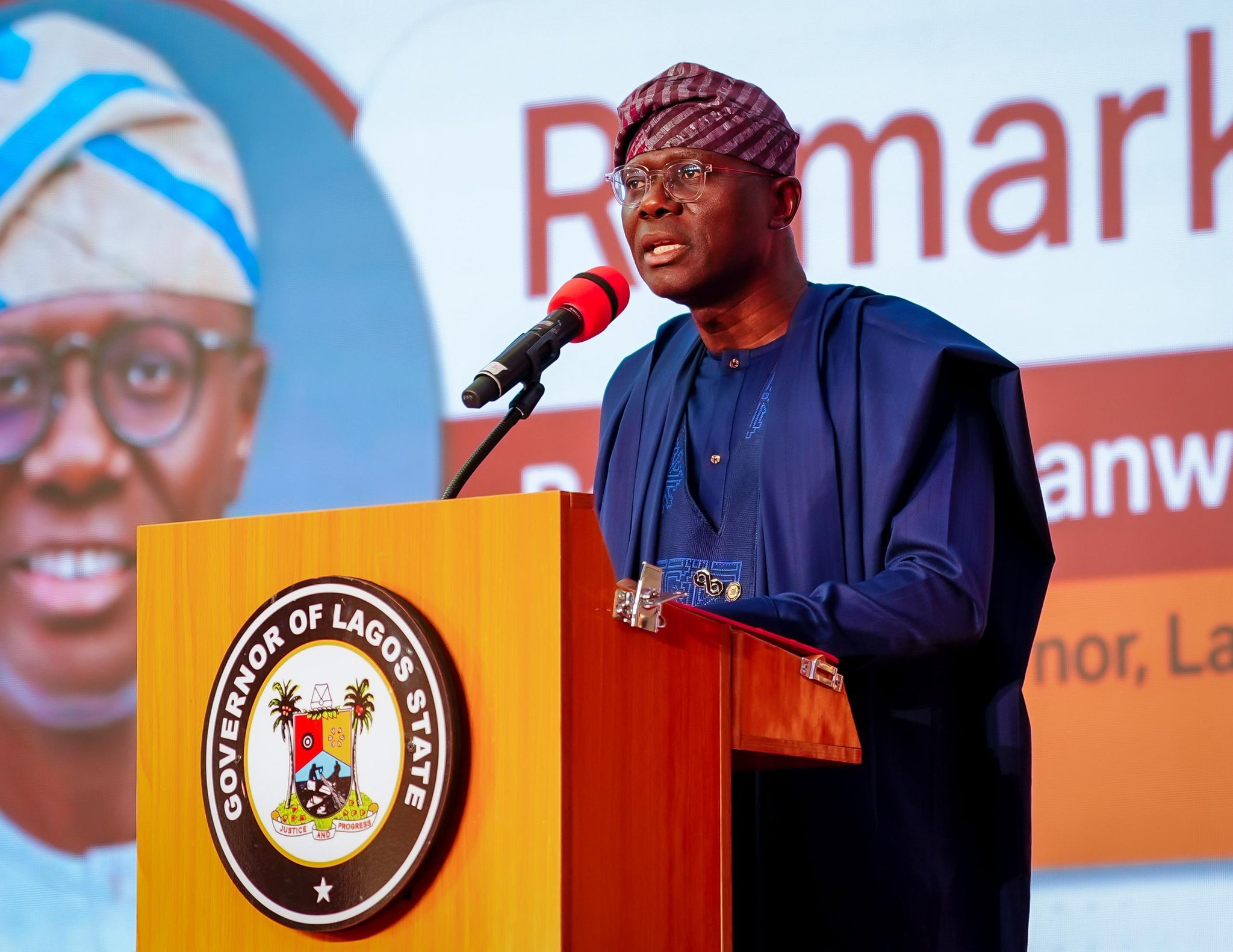
Lagos State Governor, Babajide Sanwo-Olu, also defended the reforms, arguing that petrol subsidy removal and foreign exchange market changes had strengthened public finances despite their immediate costs.
He cited official figures showing that Nigeria’s economy grew by 4.43 percent in the second quarter of 2026, while inflation fell to 14.63 percent in September. Gross external reserves stood at $54.93 billion at the end of September, and the non-oil economy expanded by 4.31 percent.
Sanwo-Olu said Federation Account distributions rose from ₦10 trillion in 2023 to ₦21.9 trillion in 2025, with more than ₦20 trillion distributed in the first nine months of 2026. Revenue collections reached ₦21.6 trillion in the first half of 2026, up 49 percent from the corresponding period of 2025.
Lagos State’s internally generated revenue also reached approximately ₦1.2 trillion in the first half of 2026, compared with ₦816 billion for the whole of 2023 and ₦1.26 trillion in 2024, according to the governor.
While the figures point to stronger government revenue and easing inflation, they do not independently establish the minister’s claim that inflation would otherwise have reached 1,000 percent. The broader assessment of the reforms also depends on household purchasing power, real wage growth and the pace at which living costs ease.

Ogochukwu Onwaeze is a writer specializing in business and economic journalism. At THEWILL News Media, she translates market trends, financial developments, and policy shifts into clear and engaging stories.
