
-
Lionel Messi ended his 21-year international career with Argentina by scoring and providing two assists in a 3-0 victory over Benin at the Monumental Stadium in Buenos Aires.
-
The 39-year-old captain admitted that leaving Argentina would be painful, describing wearing the national shirt for more than two decades as an enormous source of pride.
-
Messi finished his international career as Argentina’s most-capped player with 208 appearances and its record goalscorer with 126 goals, leaving after winning the 2022 World Cup and two Copa América titles.
Ocotber 7, (THEWILL) – In an emotional farewell speech, Messi said he would have loved to continue representing Argentina for the rest of his life but accepted that the time had come to say goodbye.
Lionel Messi struggled to find the words after the final whistle at the Monumental Stadium, but perhaps none were needed. The tears, the embrace of his teammates and the deafening response from more than 85,000 supporters said enough as one of the greatest international careers in football history finally came to an end.
For the last time, Messi wore Argentina’s famous blue-and-white shirt in a competitive international setting, and he made sure the farewell carried his unmistakable signature. The captain scored from the penalty spot and supplied two assists as Argentina defeated Benin 3-0, turning what could have been an ordinary friendly into an emotional celebration of a 21-year relationship between a footballer and his country.

But when Messi eventually stood before the Monumental crowd after the match, the football was no longer the most important thing. He was saying goodbye to the shirt that had defined the most difficult, rewarding and emotional chapter of his career.
“It was a huge source of pride for me to wear this shirt all this time, more than 20 years”, Messi said, reflecting on his journey with Argentina.
Then came the sentence that perhaps captured the night better than anything else.
“Not coming anymore is going to hurt a lot.”
For a player who spent much of his career being asked to carry Argentina’s expectations, the admission revealed just how deeply the national team had become part of Messi’s identity. He did not speak as a player simply closing a chapter. He spoke as a man leaving something he never truly wanted to leave.
“I swear, I’d love to keep coming my whole life, because playing for Argentina is the most beautiful thing that can happen to you”, he added.
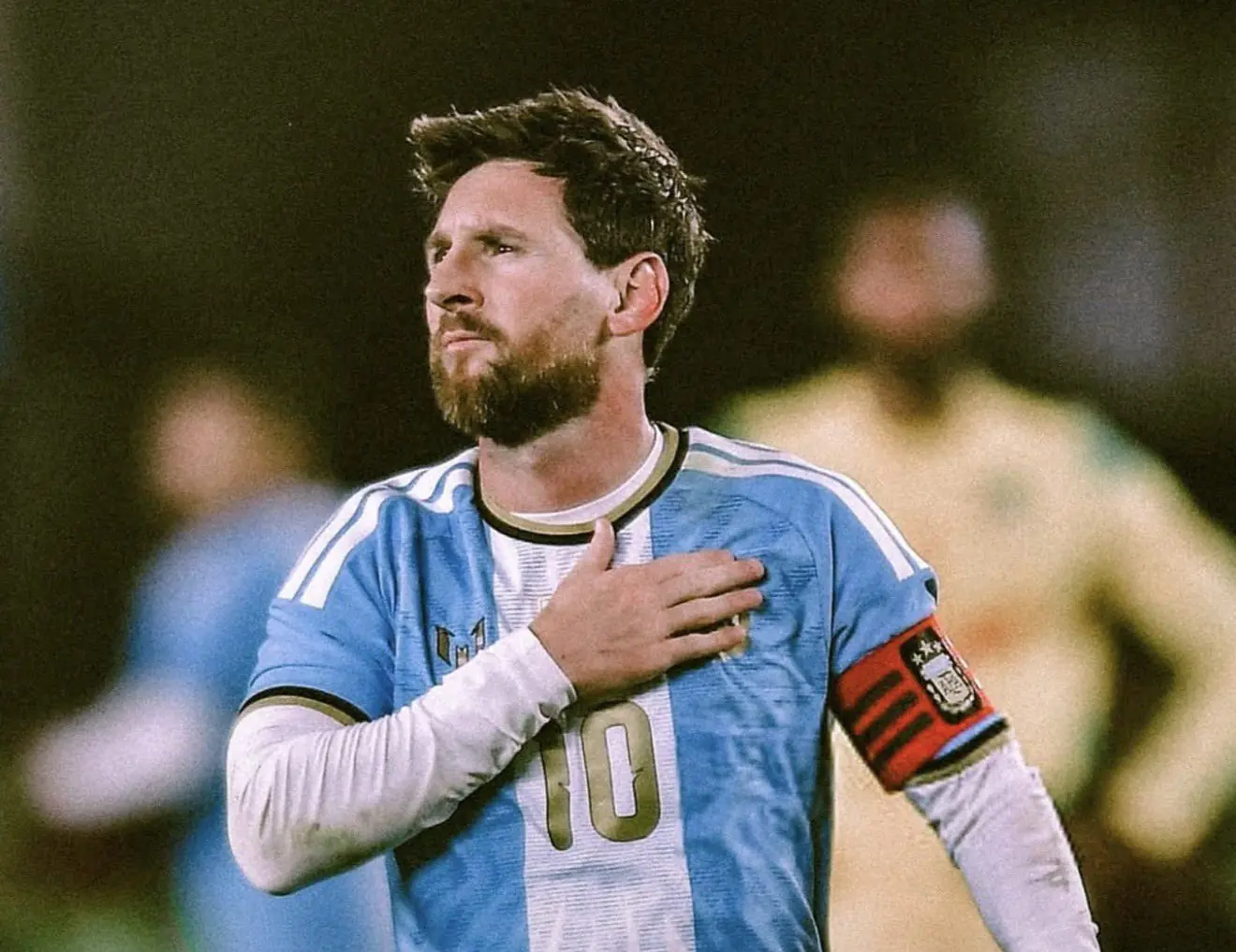
One Last Messi Masterclass
The farewell itself could hardly have been scripted better.
Messi had one final opportunity to perform at the Monumental in front of his home supporters, and he delivered almost everything they could have asked for. After a goalless first half, the 39-year-old began influencing the game in familiar fashion, providing the assist for Nicolás Otamendi to open the scoring.
He then created the second for Nico Paz, one of the young players who could eventually become part of Argentina’s post-Messi era. When the penalty arrived in the 71st minute, Messi stepped forward and completed the perfect ending, sending the ball into the net for his 126th and final Argentina goal.
It meant Messi was directly involved in all three goals of Argentina’s final game with him in the team.
The significance was not lost on the crowd. Every touch carried the weight of a farewell, while the stadium had already paused earlier in the match for a tribute in the 10th minute, honouring the number that has become synonymous with Messi and, before him, Diego Maradona.
When the final whistle eventually arrived, Messi was surrounded by teammates, opponents and officials. The football match had ended, but the celebration of his career was only beginning.
READ ALSO:
From Pain To Pride
There was a time when Messi’s relationship with Argentina was far more complicated.
For years, the Barcelona legend was expected to reproduce his club form in the national shirt while carrying comparisons with Maradona. Argentina’s failures in major finals intensified the criticism, particularly after defeats in the 2014 World Cup final and the 2015 and 2016 Copa América finals.
At one point, the disappointment became so heavy that Messi announced his international retirement after Argentina’s Copa América Centenario defeat to Chile in 2016.
He returned, however, and everything changed.
The 2021 Copa América finally delivered Messi’s first major senior international trophy with Argentina. The 2022 Finalissima followed before the defining achievement arrived in Qatar, where Messi captained Argentina to the World Cup title.
A second Copa América triumph in 2024 further transformed the relationship.
The player who once carried the burden of being told he had not done enough for Argentina eventually became the footballer the country could not imagine replacing.
By the time he walked onto the Monumental pitch for his final appearance, there was no argument left to settle.
There was only gratitude.
“Saddest Day Of My Career”
Messi also acknowledged the emotional weight of the moment, describing his retirement from international football as the saddest day of his career.
“Now I’m here on the saddest day of my career, which is the day I have to say goodbye to the national team, goodbye to all of you,” he told the crowd.
The occasion was made even more personal by the presence of his family and memories of his late father, Jorge Messi, whom the Argentina captain referenced while trying to process the emotion of the night.
“The first thing I think about is my old man”, Messi said.
It was an especially poignant moment for a player whose international journey began more than two decades ago as a teenager and ended at 39 as the most-capped player and record goalscorer in Argentina’s history.
Messi’s international career now stands at 208 appearances and 126 goals. He leaves having won four major senior trophies with Argentina: the 2021 Copa América, 2022 Finalissima, 2022 World Cup and 2024 Copa América.
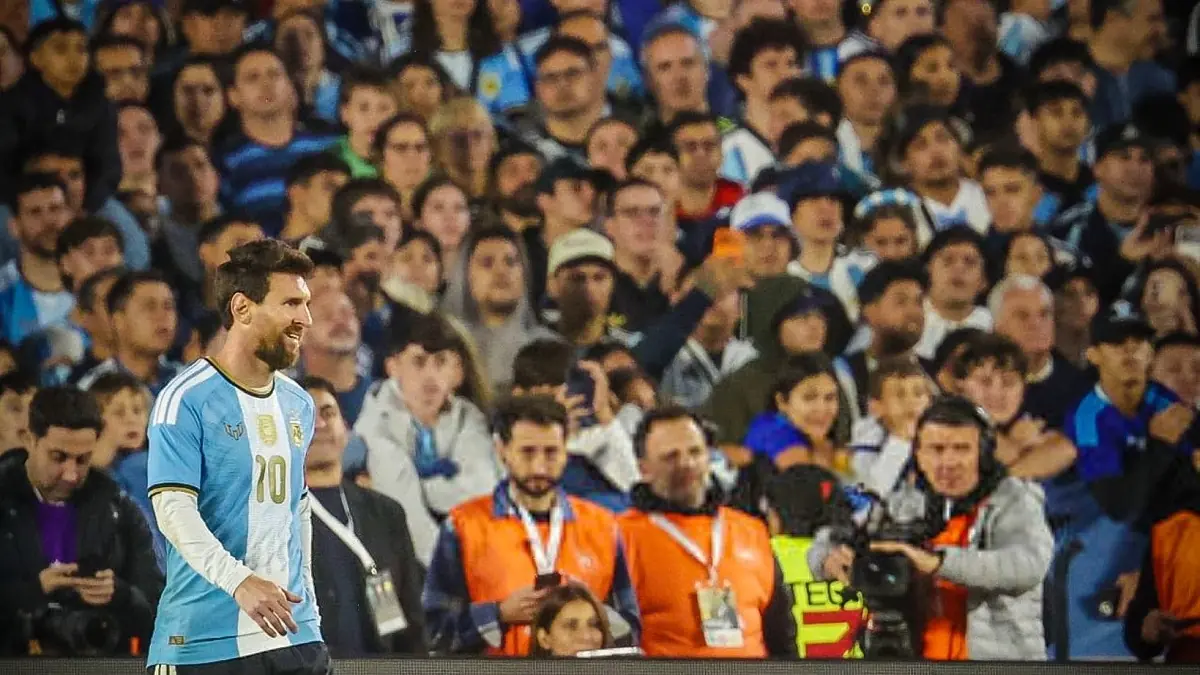
Argentina Must Now Learn To Live Without ‘The’ No.10
The emotional farewell also marked the beginning of a difficult question for Lionel Scaloni’s Argentina: what comes next?
For more than a decade, Argentina’s attack and identity have revolved around Messi. His ability to create chances, control matches and produce decisive moments made him the focal point of almost every generation he played with.
Now there will be no Messi to call upon.
Nico Paz may become one of the names associated with Argentina’s next era, having scored the second goal after receiving Messi’s assist on Tuesday. But replacing Messi is not simply a matter of finding another player to wear No.10.
It means replacing the captain, creator, record goalscorer and figure who became the emotional centre of the national team.
That process will begin immediately, but it will take years before Argentina can know what its football looks like without him.
Perfect Goodbye
Perhaps that is why Messi’s final words carried so much weight.
He did not pretend he wanted to leave. He admitted that he would have preferred to keep returning to Argentina for the rest of his life.
But after 21 years, six World Cups, 208 appearances, 126 goals and a collection of trophies that finally ended the debate over his international legacy, Messi knew the moment had arrived.
His final night offered almost everything: a packed Monumental, a standing ovation, two assists, a final goal, teammates surrounding him and a country saying goodbye.
And when the tears finally came, there was no pressure left.
Argentina no longer needed Messi to win another trophy.
It simply wanted to thank him.
For years, the country asked Messi to deliver.
On his final night, Argentina simply said goodbye.

Olumide Atiba is a sports journalist with THEWILL, known for his keen news sense and compelling storytelling. He has built a reputation for turning leads into clear, well-structured reports that resonate with readers, with a strong focus on football coverage