
-
The Nigeria Labour Congress (NLC) and Trade Union Congress of Nigeria (TUC) have resolved their differences over wage awards, salary increases and workers’ welfare negotiations.
-
The reconciliation followed the intervention of five former labour leaders, who expressed concern over the public disagreement between the two labour centres.
-
The dispute arose after the TUC complained that it was excluded from the October 27 negotiations with the Federal Government, which included a proposed N70,000 monthly transport allowance for public servants.
-
NLC President Joe Ajaero and TUC President Festus Osifo have pledged to restore cooperation and prioritise the interests of workers, pensioners and other vulnerable Nigerians.
November 18, (THEWILL) – The Nigeria Labour Congress (NLC) and the Trade Union Congress of Nigeria (TUC) have resolved their differences over wage awards, salary increases and negotiations with the Federal Government, pledging to close ranks and strengthen their collective struggle for workers’ welfare.
THEWILL reports that the resolution followed reconciliation efforts by five former labour leaders, who intervened after disagreements between the two labour centres over workers’ welfare negotiations became public.
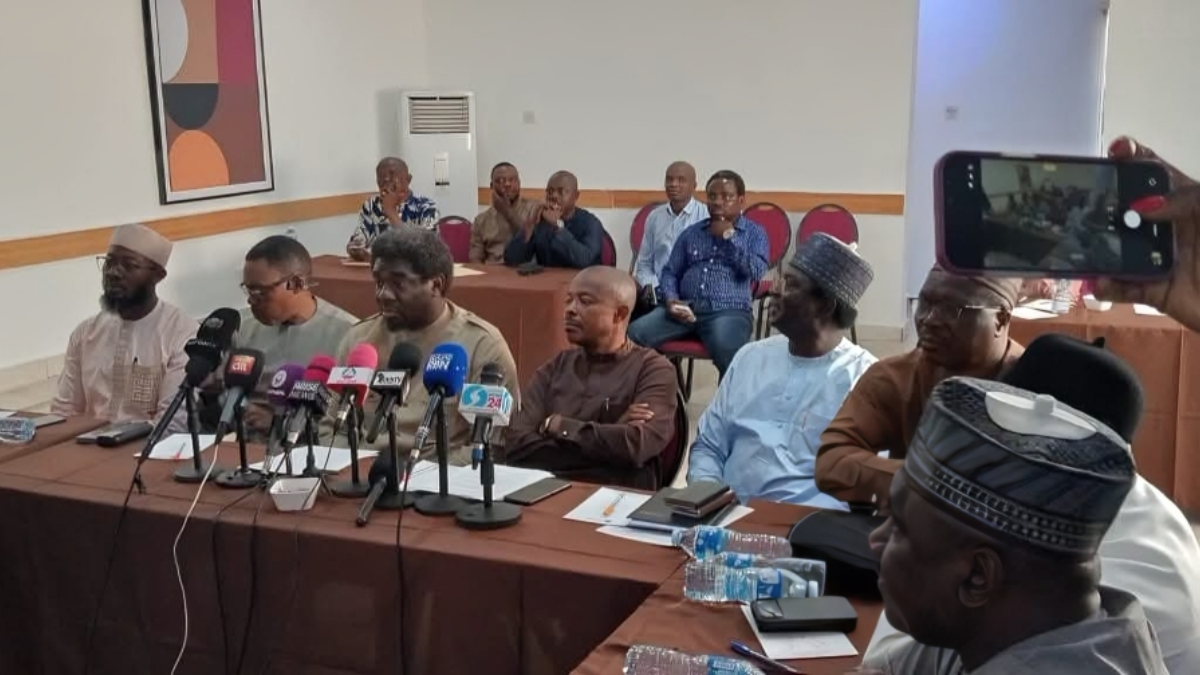
The agreement was announced on Wednesday at a joint press conference in Abuja attended by NLC President Joe Ajaero, TUC President Festus Osifo and veteran labour leaders.
In a joint statement read by Ajaero and Osifo, the two organisations reaffirmed their commitment to the unity of the Nigerian working class, declaring that their common struggle and responsibility to defend workers’ rights must take precedence over disagreements between their leaderships.
“The unity of the Nigerian working class is far greater than any disagreement between its leadership,” the statement declared.
The labour centres stressed that their common struggle, shared history and collective responsibility to defend workers’ rights must never be sacrificed on the altar of misunderstanding or institutional differences.

Consequently, both leaderships unanimously resolved to work together in an atmosphere of mutual respect, trust and cooperation in defending the interests of Nigerian workers, pensioners and the downtrodden.
They acknowledged the enormous challenges confronting working people across the country, insisting that the prevailing circumstances were not suitable for division, needless rivalry or distractions.
The reconciliation was facilitated by five former labour leaders, who became concerned about the public disagreement between the two organisations.
Speaking on behalf of the veteran labour leaders, one of the participants explained that their intervention became necessary because former leaders were uncomfortable with the differences between the NLC and TUC playing out publicly.
He acknowledged that disagreements were normal within the labour movement but maintained that allowing internal disputes to escalate publicly could undermine the collective struggle for workers’ welfare and rights.
According to him, the former labour leaders summoned the presidents of both organisations for discussions, with meetings held on Tuesday and continuing until late into the night.
Among the veteran labour leaders involved in the intervention were Comrades Hassan Sunmonu, Peace Obiajulu, Aliu Bawa, Bukoie Kagama and Kondrick, alongside members of the National Administrative Councils of both organisations.
He said the consultations produced an agreement that the differences should be resolved immediately and that state councils of the two labour centres should be informed about the outcome.
The joint press conference, he added, was organised to formally communicate the resolution to Nigerian workers and the general public.
Explaining the outcome of the discussions, he disclosed that both presidents had endorsed the agreement and resolved to put their differences behind them.
“To disagree, there is nothing wrong with that. In our movement, we disagree. But having that disagreement play out in the open was something that past presidents were not comfortable with,” he said.
He emphasised that the welfare of Nigerian workers remained the overriding concern of organised labour.
“The issue of Nigerian workers is paramount, and that is the struggle that they have decided to embark upon,” he added.
Reiterating the need for solidarity, the veteran labour leader stressed that an injury to one worker or union must be regarded as an injury to all.
“Bygones is bygones,” he declared.
READ ALSO:
 How Wage Negotiations Triggered Disagreement
The disagreement between the two labour centres intensified following negotiations between the Federal Government and a labour delegation led by Ajaero on October 27, 2026, over outstanding workers’ welfare issues.
A major component of the agreement was a proposed N70,000 monthly transport intervention for public servants for six months, beginning in November 2026.
Other issues discussed included the implementation of the 40 per cent peculiar allowance, minimum wage negotiations, welfare demands in the health sector and other outstanding agreements between the government and organised labour.
However, the TUC leadership protested its exclusion from the negotiations, questioning the authority of the NLC to reach agreements on matters affecting workers represented by both labour centres without its participation.
The disagreement raised concerns about the level of cooperation between the two organisations, which have historically worked together on major national labour issues, including minimum wage negotiations, industrial actions and campaigns for improved working conditions.
Former labour leaders intervene
Former labour leaders, including Hassan Sunmonu, Ayuba Wabba, Peter Esele, Bobboi Kaigama and Abdulwaheed Omar, subsequently intervened to prevent the disagreement from deepening.
Wabba, a former NLC president and former president of the International Trade Union Confederation, had disclosed that veteran labour leaders were engaging both organisations and urging them to halt further public exchanges.
He described the disagreement as a family misunderstanding, warning that allowing it to escalate could undermine the unity, strength and solidarity of Nigerian workers.
Wabba also cautioned against attempts by third parties to exploit the differences between the two labour centres to weaken organised labour.
The intervention paved the way for further consultations between the unions and culminated in Wednesday’s formal announcement of their reconciliation.
The NLC and TUC have historically played prominent roles in negotiations with successive Nigerian governments over minimum wages, workers’ entitlements, pension benefits, economic policies and conditions of service.
They have also jointly mobilised workers for nationwide protests and industrial actions over policies and economic conditions considered detrimental to workers’ welfare.
The reconciliation comes amid persistent economic difficulties confronting Nigerian workers, including rising transportation costs, high food prices, inflation and declining purchasing power.
With the agreement, both labour centres have pledged to put their differences behind them and concentrate on their common responsibility to protect workers’ interests, pursue improved wages and secure better working conditions.
Felix Ifijeh is a journalist with years of professional reporting experience. Known for his keen news sense, compelling storytelling and commitment to accurate, impactful reporting, he has built a reputation for turning leads into clear, engaging, and well-structured reports that resonate with readers. His work reflects deep newsroom experience and a commitment to accurate, impactful journalism.