
-
Nigeria’s headline inflation fell to 15.43 Percent in July from 15.91 percent in June, while monthly inflation also eased to 1.57 Percent.
-
Food inflation, however, accelerated sharply to 5.56 percent month-on-month from 3.75 percent in June, driven by higher prices of several food items.
-
Core inflation declined to 14.97 percent, while urban inflation remained higher than rural inflation at 16.12 percent and 13.77 percent, respectively.
August 17, (THEWILL) — Nigeria’s headline inflation rate declined to 15.43 percent in July 2026 from 15.91 percent in June, extending the moderation in annual price growth.
The latest Consumer Price Index report released by the National Bureau of Statistics (NBS) showed that the July rate was also significantly lower than the 24.94 percent recorded in July 2025.
On a month-on-month basis, inflation eased to 1.57 percent in July from 1.66 percent in June, indicating that the average price level continued to rise but at a slower pace.

The CPI itself increased to 145.3 points in July from 143.0 points in June, representing a 2.2-point increase.
The figures therefore show that the decline in the inflation rate does not mean prices fell during the month. Rather, prices continued to increase at a slower pace compared with the previous period.
Food inflation bucks the trend
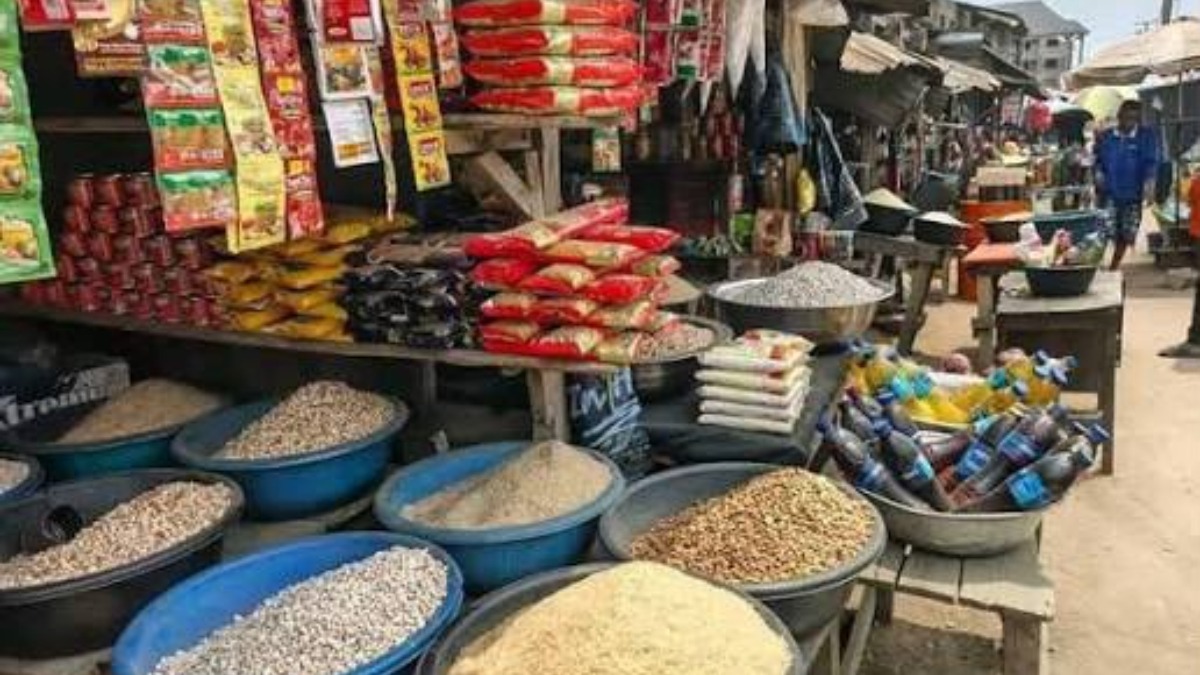
While annual food inflation continued to moderate, food prices recorded a sharper increase during July.
Food inflation stood at 20.31 percent year-on-year, down from 26.20 percent in July 2025.
However, the month-on-month food inflation rate rose sharply to 5.56 percent in July from 3.75 percent in June, representing a 1.82 percentage-point increase.
The NBS attributed the monthly increase to changes in the average prices of items including crayfish, fresh pepper, fresh onions, carrots, rice and water yam.
Other affected products included fresh tomatoes, garri, plantain, beef, eggs, guinea corn, ginger and plantain flour.
The 12-month average food inflation rate stood at 16.06 percent, down from 30.85 percent recorded a year earlier.
This means the annual food inflation rate is cooling, but households continued to face fresh price increases in several food categories during July.
Core inflation and regional trends
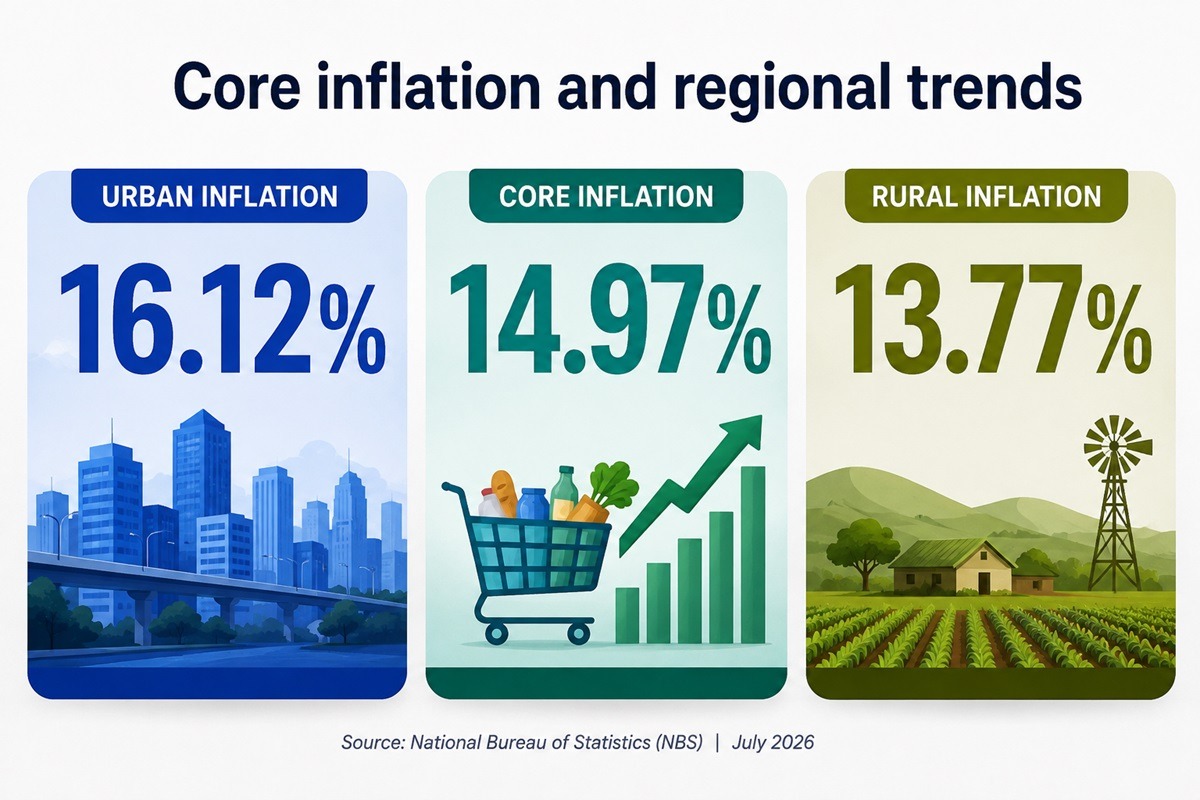 Core inflation, which excludes volatile agricultural produce and energy prices, also moderated to 14.97 percent year-on-year in July from 23.95 percent a year earlier.
Its month-on-month rate fell sharply to 0.15 percent from 1.66 percent in June, pointing to weaker underlying price pressures outside food and energy.
Inflation nevertheless differed significantly between urban and rural areas.
Urban inflation stood at 16.12 percent year-on-year in July, compared with rural inflation of 13.77 percent.
Urban month-on-month inflation declined to 1.90 percent from 2.13 percent in June, while rural month-on-month inflation moved in the opposite direction, rising to 0.78 percent from 0.52 percent.
The divergence suggests that the moderation in headline inflation was not uniform across locations.
READ ALSO:
Atiku Fires Back At Tinubu: Wrestle Inflation, Hunger, Insecurity—Not Political Opponents
Nigeria’s Inflation Slows to 15.91% in June as Food Prices Keep Pressure on Household Budgets
Overall, the July figures point to continued disinflation in Nigeria, with headline, core and annual food inflation all lower than their levels a year earlier.
However, the sharp monthly increase in food prices remains a concern for households, particularly as food accounts for a significant share of consumer spending.
The latest figures will also be closely watched by monetary policymakers as the Central Bank of Nigeria assesses whether the broader moderation in inflation is becoming sufficiently entrenched to influence its monetary policy stance.

Ogochukwu Onwaeze is a writer specializing in business and economic journalism. At THEWILL News Media, she translates market trends, financial developments, and policy shifts into clear and engaging stories.
