
-
Fitch says Nigeria’s $5bn Total Return Swap could create additional liquidity and debt-management risks, particularly if the value of the government bonds pledged as collateral falls.
-
The six-year facility requires collateral worth 133.3 per cent of the amount drawn, meaning a full $5bn draw would require about $6.67bn of Federal Government securities to secure the financing.
-
Fitch warns that secured lenders could potentially recover more than unsecured creditors in a future restructuring, changing how losses are distributed among Nigeria’s creditors.
September 16, (THEWILL) – Fitch Ratings has raised fresh concerns over Nigeria’s $5bn Total Return Swap with First Abu Dhabi Bank, warning that the financing structure could create additional risks for government liquidity, debt transparency and the treatment of creditors if Nigeria comes under financial stress.
The warning was contained in Fitch’s September 14 special report, “Sovereign Total Return Swaps and Repo Transactions: Q&A 2026,” which examined the growing use of collateralised derivative transactions by sovereign borrowers.
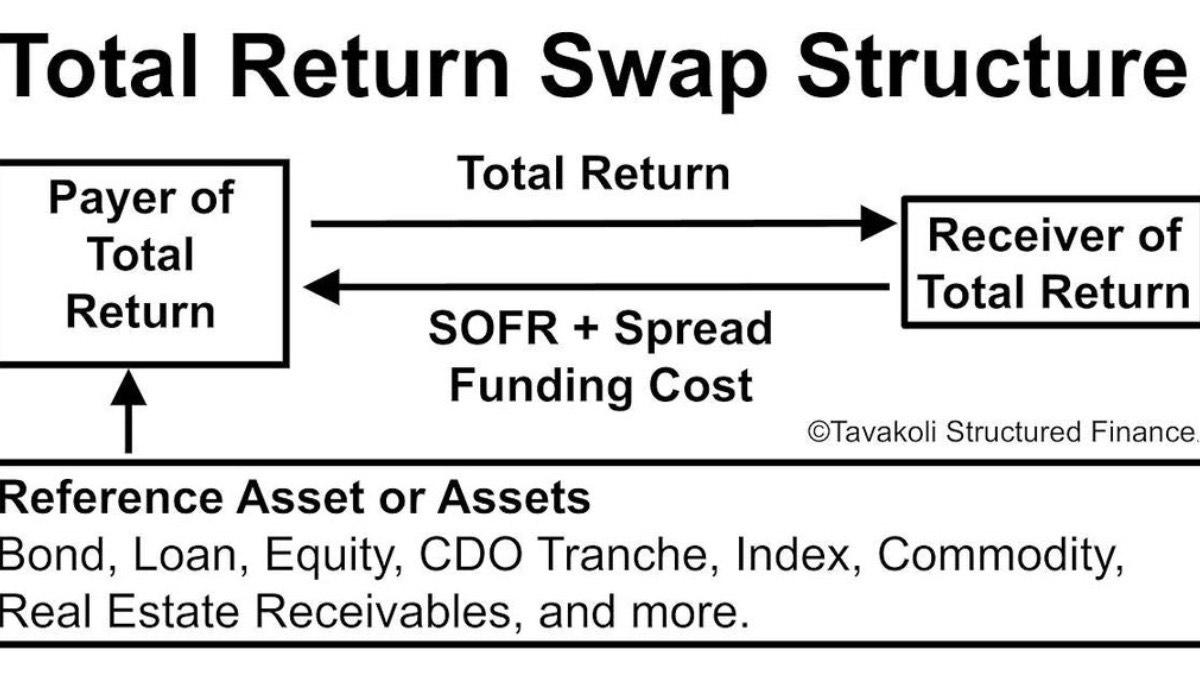
Nigeria’s transaction allows the government to obtain US dollar liquidity by pledging naira-denominated Federal Government securities to First Abu Dhabi Bank.

The Debt Management Office says the facility has a maximum value of $5bn and a six-year tenor. The collateral requirement is 133.3 percent of the amount drawn.
That means a full $5bn draw would require securities worth approximately $6.67bn to be pledged.

Why collateral could become a problem
The structure gives Nigeria access to dollar liquidity without relying entirely on conventional Eurobond issuance, but Fitch says the collateral arrangement could become a source of pressure during a market shock.
If the market value of the pledged government bonds falls sufficiently, the transaction could require additional collateral or other action under its margining provisions.
This creates a potential mismatch between when Nigeria most needs foreign exchange liquidity and when the swap could demand additional support.
The DMO has said the transaction provides for monthly margining and a five-business-day cure period if collateral falls below the required level.
READ ALSO:
The government has also said no oil revenues, ports, airports or other strategic assets were pledged; the collateral consists of naira-denominated FGN securities.
The first tranche carries pricing of SOFR plus 3.95 percentage points, while subsequent tranches are priced at SOFR plus 4 percentage points.
Nigeria has already drawn about $1.5bn from the facility, according to earlier reports.
Transparency is another concern
Fitch said the complexity of sovereign TRS arrangements can make it harder for investors, legislators and policymakers to determine the full scale of a government’s obligations.
The concern goes beyond the headline $5bn.
Contractual provisions covering collateral valuation, margin calls, fees and early termination can determine how much a sovereign ultimately has to provide under stressed conditions.
The rating agency said limited disclosure of such terms could make it harder to assess contingent liabilities and the true cost of sovereign borrowing.
The issue is particularly relevant for Nigeria because the government has described the facility as an additional financing channel that will support budget implementation, infrastructure, debt refinancing and other approved financing needs.
Finance Minister Taiwo Oyedele has said the government will not provide a transaction-specific breakdown of how the funds are being spent, while maintaining that the facility is intended largely to refinance more expensive debt.
What happens to other creditors?
Fitch’s third concern could become important if Nigeria ever needs to restructure its debt.
A TRS backed by government securities effectively gives the lender access to collateral that other unsecured creditors may not have.
If the sovereign comes under severe financial pressure, the secured lender could potentially recover a substantial portion of its exposure through the pledged securities.
Unsecured bondholders, by contrast, could be left with a larger share of the losses.
This does not mean Nigeria is heading towards a restructuring. Rather, Fitch is highlighting how the structure could affect creditor recoveries if such an event were ever required.
The rating agency therefore sees the size of TRS exposure relative to total sovereign debt as an increasingly important consideration for credit analysis.
Nigeria’s government, meanwhile, argues that the facility diversifies its funding sources and provides access to dollar liquidity while allowing it to refinance relatively expensive obligations.
The transaction consequently presents a trade-off: Nigeria gets an alternative source of foreign-currency funding, but in exchange it pledges domestic government securities and takes on collateral and market-value risks that conventional borrowing may not carry in the same form.
For policymakers, the key issue is therefore not simply whether Nigeria can access the full $5bn facility, but how the collateral, margining and creditor implications behave if market conditions deteriorate.

Ogochukwu Onwaeze is a writer specializing in business and economic journalism. At THEWILL News Media, she translates market trends, financial developments, and policy shifts into clear and engaging stories.