
-
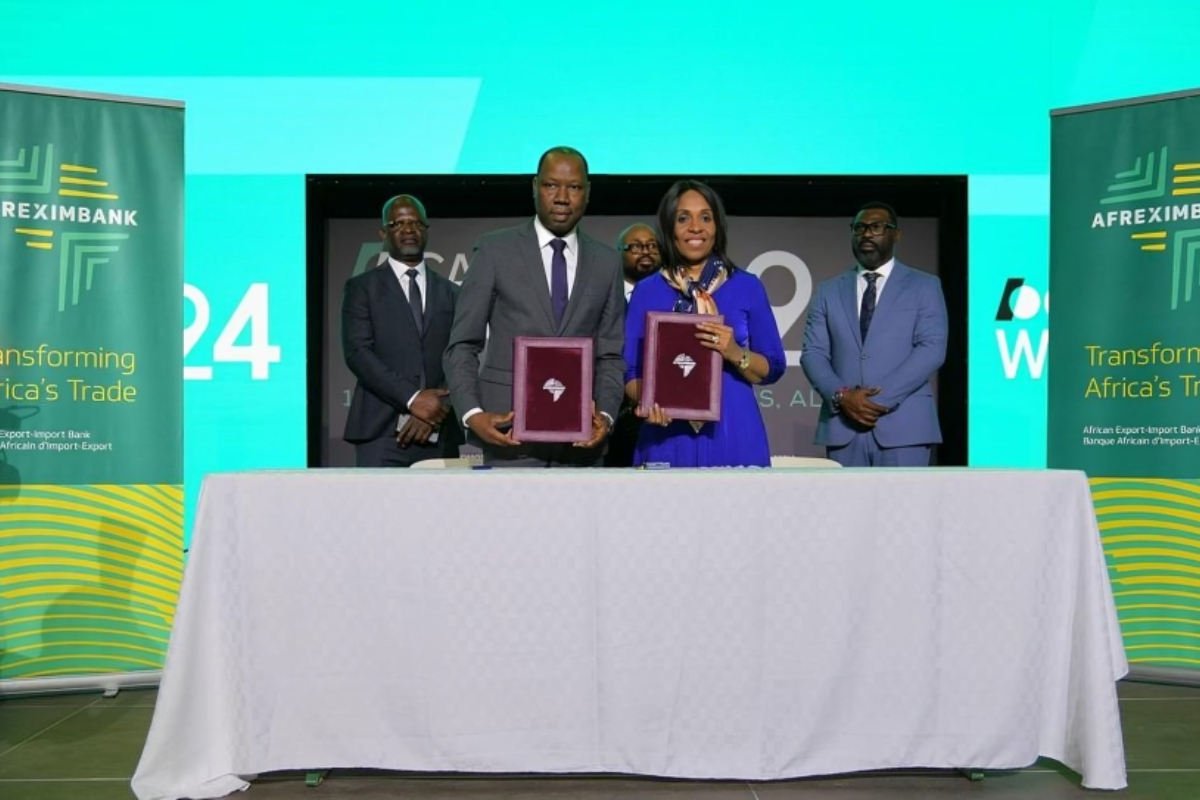
Afreximbank and Nigerian development finance institutions announced financing arrangements reported at $118 million during CANEX WKND 2026 in Lagos.
-
The package includes a $75 million facility involving DBN, a $30 million export-financing arrangement with NEXIM, and a reported $13 million grant.
-
Nigerian law permits certain intellectual property rights to serve as loan security, but access to IP-backed credit remains difficult.
-
Lenders must establish who owns creative assets, what they are worth, and how their income can be recovered if borrowers default.
November 17, (THEWILL) – Nigeria’s creative industries have a financing problem that is not immediately obvious from their commercial success.
Films travel across international markets, Nigerian music generates income from global streaming platforms, and fashion brands build audiences well beyond their home market.
However, many businesses behind this output still struggle to secure the institutional credit needed to finance production, acquire equipment, and expand distribution.
Afreximbank’s latest financing arrangements with Nigerian development finance institutions bring fresh capital into an industry that has long struggled to attract conventional lending.
Specifically, the package totals $118 million, comprising a $75 million facility involving the Development Bank of Nigeria (DBN) and a $30 million arrangement with the Nigerian Export-Import Bank (NEXIM).
The remaining $13 million is allocated as a grant under an arrangement involving NEXIM, the Small and Medium Enterprises Development Agency of Nigeria (SMEDAN), and Afreximbank.

These funding arrangements serve different purposes and follow separate routes to market, meaning the entire $118 million should not be mistaken for a dedicated creative-industry lending pool.
DBN’s $75 million facility supports eligible small and medium-sized enterprises through participating financial institutions.
Its scope includes working capital, productive assets, export activities, and supply chains, with creative businesses among its potential beneficiaries.
NEXIM’s $30 million facility has a broader export-financing mandate, comprising a $20 million revolving working-capital facility and a $10 million medium-to-long-term loan.
Its target businesses include manufacturers, commodity processors, and export-oriented SMEs.
Publicly available information on the remaining $13 million grant lacks detail regarding precise beneficiaries and disbursement conditions.
Alongside these arrangements, the Federal Government’s Investment in Digital and Creative Enterprises (iDICE) programme operates a separate funding envelope of approximately $617 million.
Implemented by the Bank of Industry with support from the African Development Bank, Agence Française de Développement, and the Islamic Development Bank, iDICE combines financing with enterprise development, skills, and infrastructure support.
Nigeria is assembling several channels of institutional financing for businesses in its creative and digital economy.
What remains less clear is how much of this capital will reach independent creative enterprises, particularly those whose strongest assets are intellectual property rather than property, machinery, or conventional security.
READ ALSO:
Legal Reality And Commercial Barrier
One assumption behind much of the discussion about creative financing is that Nigerian banks cannot accept intellectual property as collateral. That is inaccurate.
Nigeria’s Secured Transactions in Movable Assets Act 2017 provides for security interests in movable assets, while the Central Bank of Nigeria’s National Collateral Registry accommodates transferable intangible assets, including certain intellectual property rights and licences.
NEXIM also operates a Nigerian Creative and Entertainment Industry Loan Scheme whose application requirements include a valuation report for proposed intellectual property collateral.
The legal route exists, but the difficulty lies in making it commercially workable. Consider a music publisher seeking a loan against its catalogue.
A lender cannot establish the value of that asset simply by counting the number of songs it contains or reviewing past streaming revenue.
It needs to verify ownership, examine distribution agreements, identify existing claims over the rights, and determine how much income the catalogue can realistically generate over the loan period.
Film rights present similar complications; distribution agreements divide revenue among producers, investors, distributors, and other rights holders, while a film’s commercial performance varies across platforms and territories.
Fashion brands also carry intellectual property value, but establishing what a trademark or design portfolio fetches in a forced sale differs from estimating potential commercial value.
Lenders must also consider loan defaults. Recovering a building through an established mortgage process is familiar territory for commercial banks.
Taking control of a music catalogue, collecting royalties, or transferring film rights requires specialised legal and commercial expertise.
Without reliable ownership records, enforceable security agreements, and a practical route to collecting income, even a commercially successful creative asset proves difficult to finance.
Legal recognition alone has not produced widespread IP-backed lending. Banks decide whether they can establish value, monitor it, and recover capital if a business fails.
How the new facilities are administered proves just as important as their size. Under DBN’s wholesale financing model, individual businesses access credit through participating financial institutions, which assess applications and determine lending conditions.
Afreximbank’s commitment to DBN does not translate into filmmakers, music publishers, or fashion companies receiving loans directly from Afreximbank.
That arrangement puts responsibility on commercial lenders, many of which have limited experience assessing creative businesses.
A production company needs financing months before a film earns distribution revenue, while a music publisher holds valuable rights but lacks conventional assets required by bank credit policies.
Treating both businesses like ordinary trading companies overlooks how revenue is generated and when it becomes available.
Afreximbank and DBN included capacity-building support for participating financial institutions, recognising the need to improve their ability to assess and finance eligible enterprises.
Meaningful access depends on lenders’ willingness and ability to evaluate creative-sector businesses on their actual revenue models and assets.
Additional details remain important to establishing the package’s likely impact, including the proportion of DBN’s facility expected to reach creative businesses, applicable interest rates, collateral requirements, and disbursement schedules.
More information is required on the grant’s beneficiaries and how support complements lending facilities.
Nigeria’s creative businesses need capital to produce films, build music catalogues, acquire equipment, and take intellectual property into new markets.
Development finance helps close that gap, but lenders must be equipped to assess the assets and revenue streams these businesses actually possess.

Joy Onuorah is a business journalist and brand communications specialist covering financial markets, artificial intelligence, digital economy, and the ideas reshaping business across Africa and the global market. Beyond her reporting for TheWill, Joy uses brand strategy, storytelling, copywriting, and high-value SEO to help brands build lasting market authority.