September 06, (THEWILL) — Nigerian football has rarely been short of contradictions. The country can produce players capable of commanding enormous transfer fees in Europe, fill stadiumas when the national team is playing and generate passionate debate around the sport every week. Yet the structures responsible for turning that talent and passion into a sustainable football industry have repeatedly struggled to match the country’s potential.
Now, Nigerian football finds itself at another crossroads. The Nigeria Premier Football League is entering a new era of commercial optimism, while the Nigeria Football Federation is facing one of the most significant leadership crises in recent years. The timing is striking because both developments tell different stories about the same sport: one is about opportunity, the other about uncertainty.
The NPFL Finally Has Something to Build On
On August 26, the NPFL announced a three-year, $7.5 million title sponsorship agreement with EuroMatch Group. The deal, worth $2.5 million per season, represents a major commercial breakthrough for a league that has spent years searching for the stability and investment needed to compete with more established African domestic competitions.

It also ends a long period without a major title sponsor following the conclusion of Globacom’s partnership after the 2016 Super Four tournament.
More importantly, the agreement comes with an attempt to put money closer to where it matters most: the clubs.
About Sixty per cent of the annual sponsorship revenue is expected to go directly to participating teams, with player welfare and wages among the areas the funds are intended to support.
That could prove significant. For years, financial uncertainty has been one of the biggest obstacles facing Nigerian clubs. Players have dealt with delayed wages, inadequate facilities and inconsistent administrative standards, while clubs have struggled to build sustainable commercial models of their own.
The new money will not solve all of those problems overnight. But it will give the league something it has often lacked — room to plan.
More Than a Sponsorship Deal
The financial boost does not stop with the EuroMatch agreement. The NPFL is also heading into the new season with a record N1 billion prize fund for the champions, while a separate N12 billion federal government intervention has been announced to support the domestic game.
Taken together, the figures suggest that Nigerian football is beginning to attract serious financial attention. But money alone cannot transform a league. The real test will be whether clubs use the additional resources to become better-run organisations rather than simply better-funded ones. That means improving player welfare, strengthening club administration, upgrading match-day experiences, improving stadiums and finding ways to bring supporters back through the turnstiles.
The commercial opportunity is also larger than the league itself. EuroMatch’s reported global digital reach, including 101 million YouTube views from Nigeria, offers the NPFL an opportunity to package its players, clubs and stories for audiences beyond the traditional domestic market. For a league whose biggest challenge has often been visibility, that could be just as important as the money.
Then Nigerian Football’s Bigger Problem Returned
Yet barely had the NPFL’s commercial breakthrough settled in before Nigerian football was confronted with another reality.
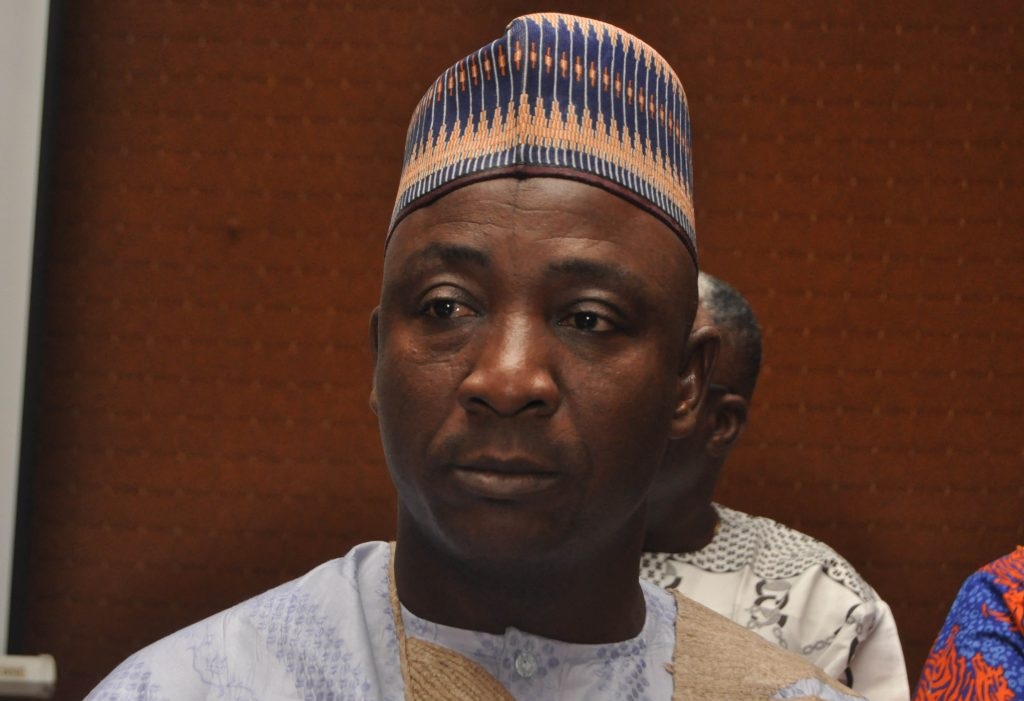
On August 27, NFF president Ibrahim Gusau, General Secretary Mohammed Sanusi and members of the federation’s executive committee resigned amid a growing leadership crisis. The timing could hardly have been more dramatic.
One day, Nigerian football was celebrating an investment that could strengthen its domestic competition. The next, its governing structure was facing a major upheaval.
READ ALSO:
And the crisis did not emerge in isolation
Nigeria’s national teams had endured a difficult period, with the Super Eagles failing to qualify for a second successive FIFA World Cup and the Super Falcons missing out on qualification for the 2027 Women’s World Cup for the first time.
For a country that traditionally measures much of its football identity through the success of its national teams, those setbacks have intensified scrutiny of the way the sport is being managed.
The NFF must now navigate the difficult process of restoring stability and confidence while Nigerian football attempts to take advantage of a rare period of commercial opportunity.
Two Problems, One Football System
This is where the contradiction becomes more important. The NPFL’s sponsorship deal proves that there is still commercial value in Nigerian football.
The leadership crisis shows that commercial value alone is not enough. A football league does not operate in isolation. Its clubs depend on a wider ecosystem involving the federation, government, sponsors, broadcasters, supporters and other stakeholders.
If one part becomes unstable, the effects can eventually spread.
That is why the NPFL’s progress should not be viewed simply as a league success story, nor should the NFF crisis be treated as an entirely separate administrative problem.
They are connected by the same question:
Can Nigerian football build institutions strong enough to sustain the opportunities it keeps creating?
The answer will determine whether the current momentum becomes a turning point or simply another brief period of optimism.
Nigeria Still Has Ground to Cover
There is also a danger in celebrating the numbers without context.
The $7.5 million EuroMatch agreement is significant for the NPFL, but it does not suddenly make Nigeria one of Africa’s most commercially powerful football markets.
Other major African leagues continue to attract larger sponsorship arrangements, while some have built stronger relationships between clubs, broadcasters, sponsors and supporters.
Nigeria’s advantage has never really been a lack of football interest.
It is the enormous size of the opportunity.
The country has a huge population, a deep pool of football talent and a passionate supporter base. What it has lacked is the consistency and institutional stability required to convert those advantages into a sustainable domestic football business.
The NPFL now has an opportunity to begin doing exactly that.
The Three-Year Test
Ultimately, the success of the EuroMatch partnership will not be determined by how impressive the announcement sounds in 2026.
It will be determined by what has changed when the three-year agreement expires.
Are players better paid?
Are clubs financially healthier?
Are stadiums fuller?
Are supporters more connected to the league?
Are Nigerian clubs more competitive?
And perhaps most importantly, has the NPFL become a product that can attract even greater investment when the next sponsorship cycle begins?
Those are the questions that matter.
Because Nigerian football does not need another temporary financial boost. It needs a system capable of turning investment into lasting progress.
The NPFL has taken an important step in that direction.
But at almost exactly the same moment, the crisis at the NFF has reminded everyone that Nigerian football’s biggest challenge may not be finding money.
It may be building the stability, leadership and institutions capable of making that money count.
For now, Nigerian football stands between those two realities a league with fresh commercial momentum and a federation searching for a new direction.
What happens next could determine whether this becomes another missed opportunity or the beginning of a genuine transformation.

Olumide Atiba is a sports journalist with THEWILL, known for his keen news sense and compelling storytelling. He has built a reputation for turning leads into clear, well-structured reports that resonate with readers, with a strong focus on football coverage