
-
Nigeria and the United States have intensified joint operations against sextortion, romance scams and other transnational cybercrimes.
-
Two alleged Nigerian cybercriminals were extradited to the US in August over separate sextortion cases involving American minors who reportedly died by suicide.
-
The FBI Legal Attaché Office in Abuja has collaborated with the EFCC on 41 extraditions since 2022, including five completed in 2026.
-
The US disclosed that more than 50,000 sextortion reports were received by the National Centre for Missing and Exploited Children in 2025, averaging 137 reports daily.
November 3, (THEWILL) – Nigeria and the United States have stepped up their joint offensive against sextortion, romance scams and other transnational cybercrimes, following the extradition of two alleged Nigerian cybercriminals to the US over separate cases involving American minors who reportedly died by suicide.
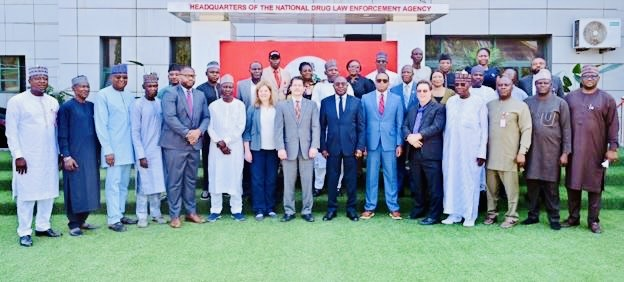
The renewed cooperation, which involves intensified investigations, intelligence sharing and coordinated law enforcement operations, was reaffirmed during a visit to Abuja by Michael Gonzales, United States Deputy Assistant Secretary of State for International Narcotics and Law Enforcement Affairs.
According to a statement issued by the US Embassy on Monday, Gonzales held discussions with senior officials of the Economic and Financial Crimes Commission (EFCC), the Office of the National Security Adviser (ONSA), the National Drug Law Enforcement Agency (NDLEA) and the Nigeria Police Force (NPF).

The visit coincided with Nigeria’s Cybercrime Awareness Week, with discussions focusing on expanding joint investigations and disrupting financially motivated sextortion, romance scams and other cyber threats involving criminal networks operating across international borders.
Gonzales challenged Nigerian and American law enforcement authorities to “match the speed of cybercriminals with stronger international cooperation”, stressing that digital crimes increasingly transcend national boundaries.
Citing recent extradition cases, he said coordinated investigations, diplomatic engagement and law enforcement collaboration had demonstrated the capacity of both countries to prevent alleged criminals from finding safe havens across international borders.
The US Embassy disclosed that Nigeria extradited two alleged cybercriminals to the United States in August over separate sextortion cases involving American minors who reportedly died by suicide.
The statement also revealed that the FBI Legal Attaché Office in Abuja had collaborated with the EFCC on 41 extraditions since 2022, including five completed in 2026.
This represents a significant increase from the four arrests and five extraditions recorded between 2012 and 2021.
Gonzales commended the EFCC, the Federal Ministry of Justice and the Office of the Attorney-General of the Federation for their contributions to investigations and extradition proceedings.
He stressed the importance of accountability, noting that effective investigations and prosecutions were necessary to deter cybercriminal activities and strengthen international efforts against digital fraud.
Sextortion Cases Raise Alarm
Sextortion involves the use of threats, intimidation or blackmail to compel victims to pay money or meet other demands, often following the acquisition of private or intimate images and videos.
The crime has increasingly drawn international attention because of its psychological and financial consequences, particularly for young people and minors.
Highlighting the devastating consequences of sextortion, Gonzales disclosed that the National Centre for Missing and Exploited Children received more than 50,000 reports relating to the crime in 2025, representing an average of 137 reports daily.
He said FBI investigations had identified Nigeria and other West African countries, alongside Southeast Asia, among locations where prominent sextortion networks operated.
Gonzales also cited Operation Artemis, an initiative targeting criminal networks involved in exploiting American victims.
READ ALSO:
Nigeria, US Expand War Against Online Fraud
Beyond sextortion, Nigeria and the United States are strengthening their efforts against romance scams, through which fraudsters exploit online relationships and emotional attachments to defraud unsuspecting victims.
The schemes often involve criminals creating false identities on social media, dating platforms and other online channels to gain the trust of victims before demanding money or manipulating them into making financial commitments.
Some victims lose their life savings and retirement funds after prolonged deception by fraudsters who exploit their emotional attachment.
The US Embassy recalled that the National Cybercrime Centre of the Nigeria Police Force launched a nationwide online-safety campaign in March to raise awareness about sextortion, romance scams, phishing, identity theft and business email compromise.
Gonzales commended the EFCC’s partnership with the FBI and called for stronger intelligence sharing, faster investigations, improved cybercrime reporting and coordinated action against criminal networks.
He emphasised the need for both countries to target not only individuals directly involved in cybercrime but also the financial infrastructure and facilitators that enable the networks to operate.
According to him, the success of bilateral cooperation should ultimately be measured by the number of victims protected, criminal networks disrupted, successful prosecutions secured and the strengthening of Nigerian institutions, rather than the number of programmes funded.
Nigeria and the United States have maintained law enforcement cooperation through their respective security and justice institutions, particularly in the investigation, arrest and extradition of suspects accused of committing financial and cyber-related offences across international borders.

Felix Ifijeh is a journalist with years of professional reporting experience. Known for his keen news sense, compelling storytelling and commitment to accurate, impactful reporting, he has built a reputation for turning leads into clear, engaging, and well-structured reports that resonate with readers. His work reflects deep newsroom experience and a commitment to accurate, impactful journalism.
