
-
Nigeria has formally raised recurring xenophobic and Afrophobic attacks against Africans and other foreign nationals in South Africa before the African Union (AU), calling for urgent continental intervention.
-
President Bola Tinubu, represented by Vice President Kashim Shettima at the AU Extraordinary Session in Luanda, Angola, asked the continental body to place the issue on the agenda of its 40th Ordinary Session in January 2027.
-
While recognising South Africa’s sovereign right to enforce its immigration laws and its contributions to Africa’s development, the President insisted that all African nationals must be protected from attacks, discrimination and violations of their fundamental rights.
-
The President also backed the Luanda Action Plan on conflict prevention, warning that growing reliance on foreign military forces, mercenaries and private defence contractors could undermine African ownership of the continent’s peace and security architecture.
August 31, (THEWILL) — Nigeria has formally brought the recurring xenophobic and Afrophobic attacks against Africans and other nationals in South Africa before the African Union, urging continental leaders to take decisive steps to protect Africans and strengthen peaceful coexistence across national borders.
President Bola Tinubu made the demand on Sunday through Vice President Kashim Shettima, who represented him at the 21st Extraordinary Session of the Assembly of Heads of State and Government of the African Union in Luanda, Angola.
The President said the attacks against Africans in South Africa were a matter of serious concern to Nigeria, warning that the trend undermined the principles of African solidarity, unity and peaceful coexistence.

“Nigeria wishes to express its concern over the recurring xenophobic and Afrophobic attacks against Africans and other nationals in South Africa,” Tinubu said.
He called for stronger continental action against xenophobia and Afrophobia, stressing the need for dialogue, preventive diplomacy and collective intervention to prevent tensions from escalating into violence.
According to him, African countries must reaffirm their commitment to protecting the safety, dignity and fundamental rights of Africans irrespective of the country in which they reside.
While raising concerns over the attacks, Tinubu acknowledged South Africa’s sovereign right to enforce its immigration laws and recognised the country’s contributions to Africa’s political, economic and developmental progress.
He, however, maintained that the enforcement of immigration policies should not result in attacks, discrimination or violations against other Africans.
“It is on this note that Nigeria calls on this august Assembly to place the matter on the agenda,” the President said.
Tinubu specifically requested that the issue be considered at the AU’s 40th Ordinary Session scheduled for January 2027, with a view to determining appropriate continental measures.
He said collective intervention was necessary to address the recurring incidents and reinforce peaceful relations among Africans living and working across the continent.
Conflict Prevention
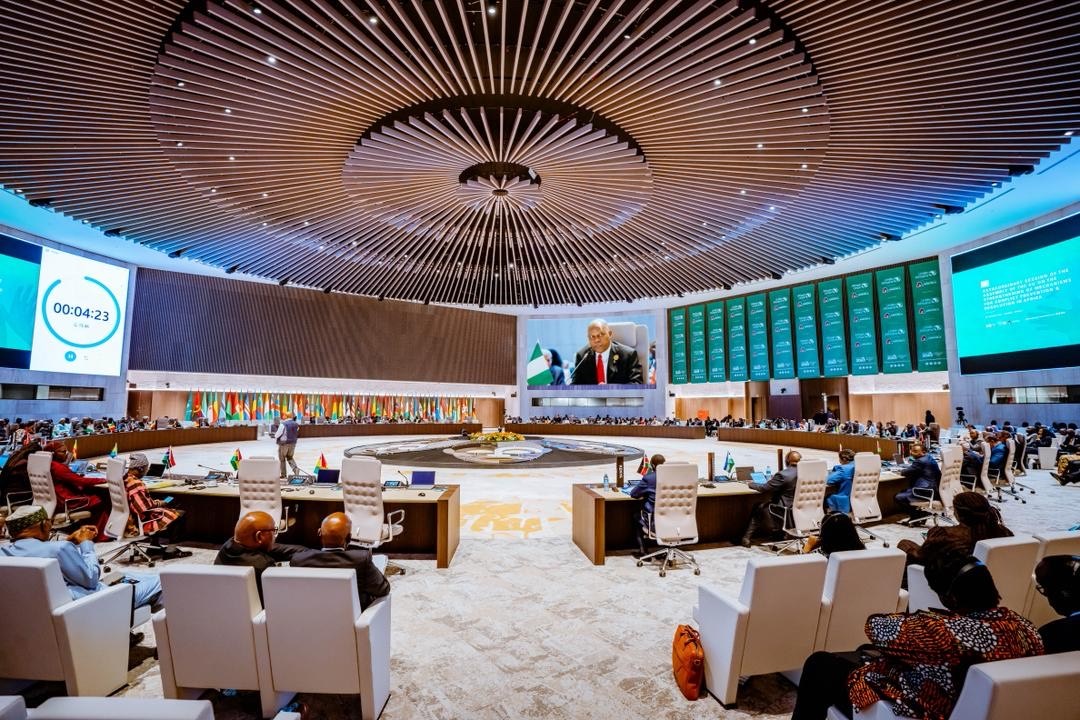
The President also used the occasion to canvass stronger African-led mechanisms for preventing and resolving conflicts, backing the adoption of the Luanda Action Plan as a practical framework for strengthening the continent’s conflict-prevention architecture.
Tinubu argued that preventing conflicts before they escalate into full-scale crises was more cost-effective and sustainable than managing the consequences of violence after it had erupted.
“For Nigeria, conflict prevention remains more cost-effective and sustainable than conflict management,” he said.
The Nigerian leader warned that fragmented peace initiatives and increasing external interference could weaken the AU’s ability to effectively prevent conflicts and undermine the principle of African ownership of African security challenges.
Tinubu identified the growing involvement of foreign military forces, mercenaries and private defence contractors as developments that could weaken continent-led peace and security initiatives.
“The growing reliance on external actors risks weakening African institutions and the principle of African ownership,” he warned.
The President also called on countries that manufacture and export arms to strengthen cooperation with African states to prevent weapons and ammunition from falling into the hands of terrorist organisations and other non-state armed groups.
He urged arms-producing and exporting countries to put in place effective safeguards to ensure that weapons manufactured within their jurisdictions were not diverted to terrorists or other armed groups operating across Africa.
Tinubu said the African Union already had robust mechanisms for preventing and resolving conflicts but noted that limited trust among member states and inconsistent implementation had continued to weaken their effectiveness.
He therefore urged AU member states to renew their commitment to collective responsibility for peace and security, insisting that Africa’s challenges required African-led and sustainable solutions.
The President called for stronger cooperation among member states and greater reliance on home-grown mechanisms in tackling insecurity, terrorism, armed conflicts and other threats to stability across the continent.
“Let us therefore renew our collective commitment to solidarity, cooperation, and shared responsibility as we build the Africa we want,” he said.
READ ALSO:
“…Nigeria wishes to express its concerns about the recurring xenophobic and Afrophobic attacks against Africans and other nationals in South Africa.
“While recognising South Africa’s sovereign right to enforce immigration laws and acknowledging its contributions to the… https://t.co/6wgxt8x7zF pic.twitter.com/U8jDBqZQZM
— Stanley Nkwocha (@stanleynkwocha_) August 30, 2026
Background
Relations between Nigeria and South Africa have periodically been strained by attacks and discrimination against foreign nationals in South Africa. Nigerians have, at various times, been among Africans affected by xenophobic violence and anti-immigrant sentiments, particularly during periods of heightened tensions over immigration, employment and access to economic opportunities.
The issue has remained a sensitive one because of the long-standing political and economic ties between Nigeria and South Africa, two of Africa’s most influential countries. Both nations have historically played significant roles in continental diplomacy and regional peace and security.
Nigeria’s decision to formally place the matter before the AU therefore moves the issue beyond bilateral concerns, seeking a broader continental response to xenophobia and Afrophobia.
Felix Ifijeh is a journalist with years of professional reporting experience. Known for his keen news sense, compelling storytelling and commitment to accurate, impactful reporting, he has built a reputation for turning leads into clear, engaging, and well-structured reports that resonate with readers. His work reflects deep newsroom experience and a commitment to accurate, impactful journalism.