
-
The National Assembly will transmit the State Police Constitution Alteration Bill, 2026, to President Bola Tinubu for assent this week after securing approval from at least 32 State Houses of Assembly.
-
Senate Leader Opeyemi Bamidele says the constitutional requirement under Section 9(2) of the 1999 Constitution has been met, insisting that the process will proceed regardless of whether the remaining four states submit their reports.
-
The proposed legislation provides for the establishment of Federal and State Police Services, with constitutional safeguards against the creation of ethnic or state-based armies.
-
Bamidele also challenges media organisations to address alleged abuses on social media and defends the National Assembly’s legislative record, citing more than ₦204 billion disbursed through NELFUND and other major legislative interventions.
November 16, (THEWILL) – The National Assembly will transmit the State Police Constitution Alteration Bill, 2026, to President Bola Tinubu for assent this week after securing the approval of at least 32 State Houses of Assembly, Senate Leader, Senator Opeyemi Bamidele, has announced.
Bamidele said the required constitutional threshold for the proposed amendment had been satisfied, paving the way for the National Assembly to forward the bill to the President, irrespective of whether the remaining four state legislatures submit their reports.
Speaking at the weekend when he received ‘The Sun Senator of the Year’, award, Bamidele said the approval secured from 32 state legislatures meets the requirement under Section 9(2) of the 1999 Constitution, as amended, for alterations to the Constitution.
“We are now under obligation to transmit the bill to the President for assent”, Bamidele declared.
He described the development as a major breakthrough in the country’s prolonged efforts to establish state police, noting that the initiative had moved beyond years of political debate and public advocacy.
The Senate Leader disclosed that four additional State Houses of Assembly were expected to submit their reports on or before November 17, when the National Assembly is scheduled to reconvene.

Describing the coming week as decisive and defining, Bamidele, however, ruled out any further delay in the process, insisting that the outstanding reports would not prevent the National Assembly from fulfilling its constitutional responsibility.
“Whether the remaining states turn in their reports or not, we must move forward and fulfil the aspirations of our people”, he stated.
The proposed constitutional amendment seeks to establish a Federal Police Service alongside State Police Services, providing a constitutional framework for policing at both levels of government.
The demand for state police has gained momentum over the years amid persistent security challenges across Nigeria, including terrorism, banditry, kidnapping, communal violence and other forms of criminality.
Proponents of decentralised policing have consistently argued that the existing centralised police structure is overstretched and unable to respond adequately to the country’s diverse security threats. They maintain that state governments, being closer to local communities, are better positioned to gather intelligence and address security challenges within their jurisdictions.
However, concerns have persisted over the possibility of state governors using local police formations to intimidate political opponents, persecute critics or undermine citizens’ fundamental rights.
Addressing such concerns, Bamidele insisted that the proposed arrangement was not intended to create ethnic or state armies but to establish community-anchored policing structures operating within clearly defined constitutional safeguards.
He said the objective was to strengthen security administration through state-led policing while preserving the country’s constitutional order.
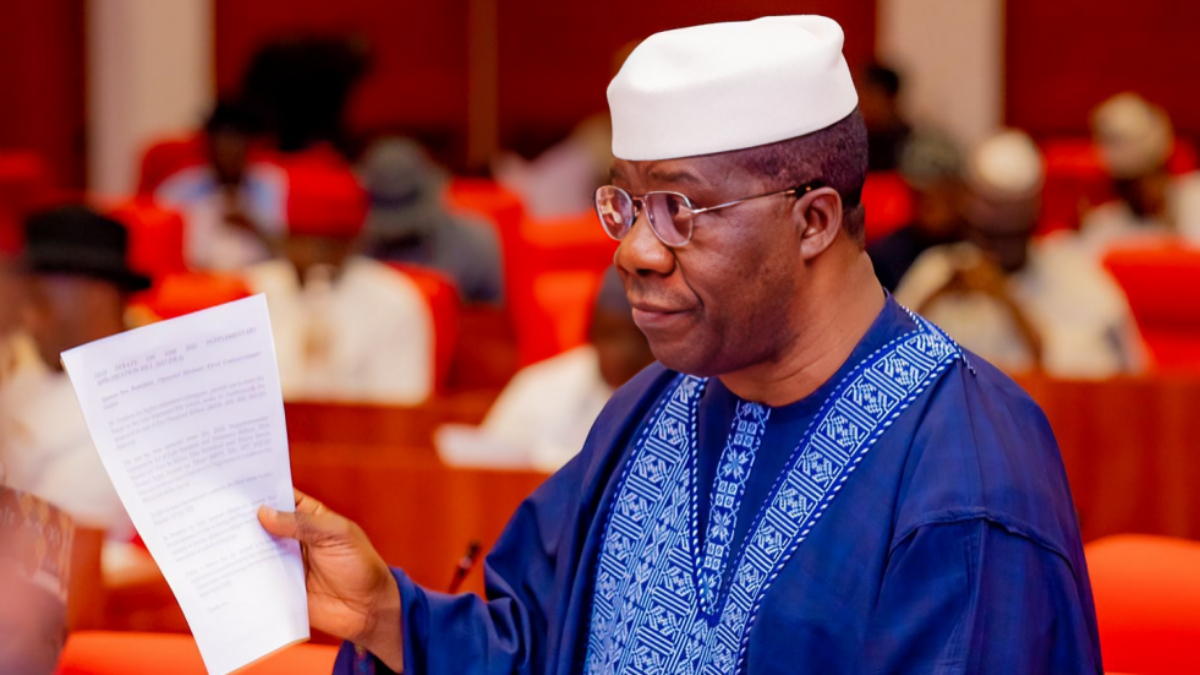
Bamidele Raises Alarm Over Social Media Abuse
Beyond the state police bill, the Senate Leader expressed concern over what he described as the growing abuse of social media, accusing some users of engaging in character assassination, blackmail and deliberate distortion of facts.
He said the activities of such individuals had damaged reputations and undermined public institutions, adding that he had personally been a victim of online attacks.
“We have seen characters assassinated. We have seen public institutions blackmailed. We have watched people deliberately distort facts”, he noted.
Questioning whether the digital space should be allowed to operate without appropriate regulation, Bamidele challenged leading media organisations to take a clear position on the issue.
He specifically called on the Newspaper Proprietors’ Association of Nigeria, Broadcasting Organisations of Nigeria, Nigerian Guild of Editors and Nigeria Union of Journalists to honestly examine the situation and determine the appropriate response.
He warned that failure to act when necessary could have serious consequences.
“If they do not, we must all brace up for the consequences of our inability to act at the time that matters most”, he said.
READ ALSO:
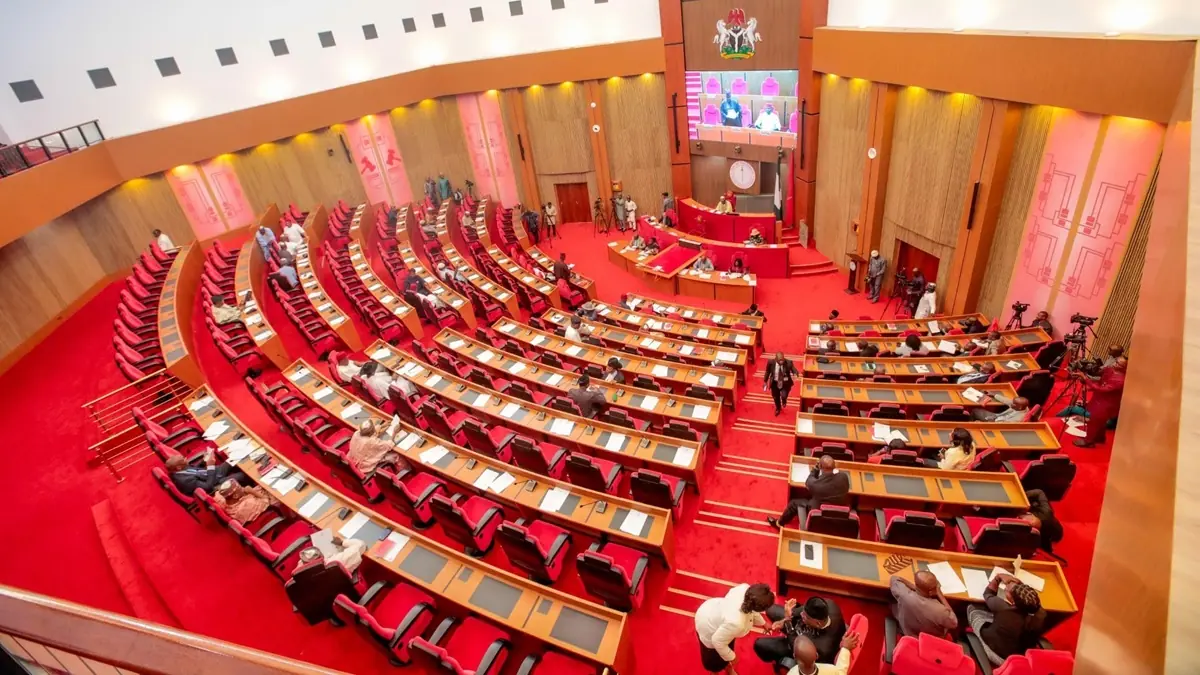 Senate Leader Defends National Assembly’s Legislative Record
Bamidele also defended the performance of the National Assembly, arguing that the legislature should be assessed by the impact of its laws on citizens rather than the number of bills it passes.
He cited the Student Loan (Access to Higher Education) Act, 2024, as one of the major legislative interventions of the current National Assembly, saying the programme had expanded access to higher education and helped reduce student dropouts caused by financial difficulties.
According to him, more than ₦204 billion has been disbursed through the Nigerian Education Loan Fund (NELFUND) to applicants in 89 colleges, 108 polytechnics and 126 universities.
He said the initiative had provided financial support to students who might otherwise have been unable to continue their education because of economic constraints.
The Senate Leader also listed the National Social Investment Programmes Act, 2023; Minimum Wage (Amendment) Act, 2024; Tax Reform Acts, 2025; Investments and Securities Act, 2025; Electoral Act, 2026; and Nigerian Insurance Industry Reform Act, 2024, among the significant legislation passed by the National Assembly.
He said the laws were to strengthen public finance, improve economic administration, expand social intervention programmes and deepen electoral credibility.
Bamidele maintained that the ultimate measure of legislative performance was the extent to which laws translated into tangible improvements in the lives of Nigerians.
Bamidele Dedicates Award To Tinubu, Senators, Constituents
The Senate Leader dedicated the “Sun Senator of the Year” award to God, President Tinubu, his colleagues in the Senate and his constituents, describing the recognition as a validation of collective responsibility rather than a personal achievement.
He acknowledged the contributions of the 108 other senators, stressing that the award reflected the collective efforts of the 109-member Senate in discharging its legislative responsibilities.
Several senators, governors and political associates attended the ceremony, including former Ogun State Governor, Chief Olusegun Osoba, and Senators Gbenga Daniel, Adetokunbo Abiru, Patrick Ndubueze and Francis Onyewuchi.

Felix Ifijeh is a journalist with years of professional reporting experience. Known for his keen news sense, compelling storytelling and commitment to accurate, impactful reporting, he has built a reputation for turning leads into clear, engaging, and well-structured reports that resonate with readers. His work reflects deep newsroom experience and a commitment to accurate, impactful journalism.