
-
US President Donald Trump admits that the Iran war contributed to Republican losses, declaring: “Iran was a piece of it,” but insists he would launch the military campaign again.
-
Democrats seize control of both the Senate and House of Representatives, ending Republican dominance of Congress in a major setback for Trump’s administration.
-
Democratic candidates overturn Republican strongholds in Texas, Kansas, South Carolina, Ohio, Iowa, North Carolina and Maine, recording historic victories.
-
Trump congratulates Democrats but warns that he will veto legislation he considers unacceptable as the opposition prepares to exercise greater oversight over his administration.
November 4, (THEWILL) – US President Donald Trump has admitted that the war against Iran contributed to the Republican Party’s sweeping losses in Tuesday’s midterm elections, as Democrats seized control of both chambers of Congress in a major setback for his administration.
Trump acknowledged that the conflict had become a political liability for Republican candidates, particularly because of its impact on fuel prices and the cost of living, but insisted that his decision to launch military operations against Iran was justified.
The Democratic victories in the November 3 elections ended Republican control of the Senate and House of Representatives, giving the opposition party control of Congress for the final two years of Trump’s second presidential term.

In a telephone interview with The Wall Street Journal on Tuesday night, Trump admitted that the Iran conflict had contributed to the Republican Party’s poor electoral performance.
“Iran was a piece of it”, he said when asked whether the war contributed to Republican losses.
The president, however, dismissed suggestions that he regretted the military action, declaring: “I don’t think about it. I did the right thing. I would have done it again.”
His admission came as Democrats recorded significant victories across the country, defeating Republican candidates in states that had supported Trump during the 2024 presidential election.
According to Reuters and the Associated Press (AP), voter dissatisfaction over the war, rising living costs and concerns about the administration’s handling of the economy contributed to the Democratic gains.
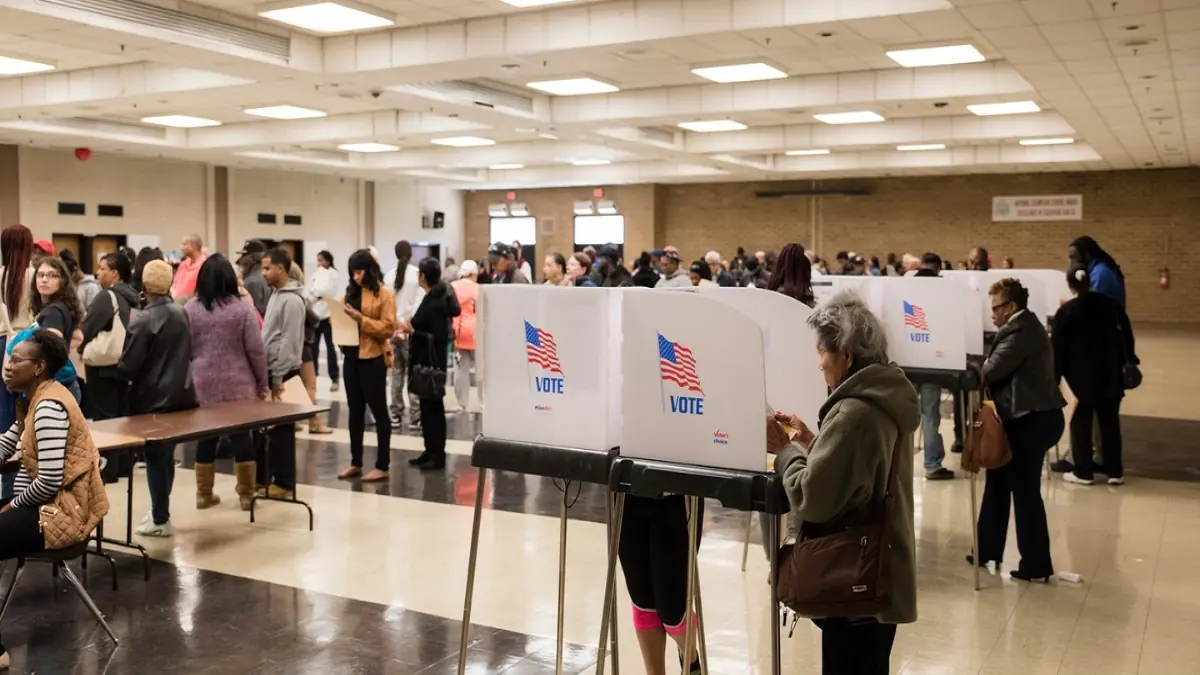
Democrats Seize Both Chambers Of Congress
Democrats secured control of the Senate and House of Representatives, delivering a major setback to Trump’s legislative agenda and changing the balance of political power in Washington.
In the Senate, Democrats flipped seven Republican-held seats in Texas, Kansas, Iowa, Ohio, North Carolina, South Carolina and Maine, according to Reuters election results.
The victories included historic breakthroughs in states that had remained firmly Republican for decades.
In Kansas, Democrat Adam Hamilton defeated incumbent Republican Senator Roger Marshall, ending a 94-year Democratic drought in Senate elections in the state.
In Texas, Democrat James Talarico defeated Republican Ken Paxton, giving Democrats their first Senate victory in the state since 1988.
South Carolina also recorded a historic change, with Democratic candidate Annie Andrews defeating Republican Darline Graham. It was the first time Democrats had won a Senate election in the state since 1998.
In Ohio, former Democratic Senator Sherrod Brown defeated Republican incumbent Jon Husted, returning to the Senate.
Democrat Josh Turek also defeated Republican Ashley Hinson in Iowa, while Roy Cooper won North Carolina’s open Senate seat.
In Maine, Democrat Troy Jackson defeated Republican Senator Susan Collins, ending her three-decade tenure in the Senate.
The victories gave Democrats a Senate majority and the power to influence legislative proceedings, presidential nominations and congressional oversight.
In the House of Representatives, Democrats also crossed the 218-seat threshold required for a majority, ending Republican control of the chamber.
The outcome marked a significant reversal of the political landscape that emerged after Trump’s return to the White House in January 2025.
Trump’s Handpicked Candidates Suffer Defeats
The election results also dealt a blow to Trump’s efforts to strengthen his influence over the Republican Party through endorsements and direct involvement in key Senate contests.
Trump had personally backed several Republican candidates who subsequently lost their elections, including Paxton in Texas and Graham in South Carolina.
In Texas, Trump had supported Paxton during the Republican nomination contest against incumbent Senator John Cornyn. Paxton won the party’s nomination but subsequently lost to Talarico in the general election.
In South Carolina, Trump backed Graham, who was defeated by Andrews in a state the president had carried by nearly 18 percentage points in 2024.
The defeats came despite Trump’s extensive campaign appearances and efforts to mobilise Republican supporters ahead of the elections.
At a campaign rally, he told supporters: “I really want you to pretend I’m on the ballot.”
However, as the results turned against his party, Trump sought to distance himself from the outcome.
In a post on his Truth Social platform, he wrote: “I wasn’t on the ballot, and if I was, we would have won IN A LANDSLIDE! Thank you for your attention to this matter.”
He also acknowledged that some Republican candidates he supported had failed to appeal to voters.
“Some of them had a lot of flaws, and obviously they were not acceptable to the voters”, he told The Wall Street Journal.
READ ALSO:
Trump Congratulates Democrats, Rejects Personal Blame
Despite the scale of the Republican losses, Trump congratulated Democrats and indicated that he was prepared to work with the opposition on areas of common interest.
In an interview with Fox News, he said: “Congratulations to the Democrats. They did a good job. They’ve been looking for this one for 11 years, and they finally got it. But I don’t view it as a hit on me.”
The president maintained that the election outcome was not a personal rejection of his leadership, arguing that his absence from the ballot was a significant factor.
In another post on Truth Social, he reiterated that he believed Republicans would have performed better if he had contested the election.
Trump also indicated that he would cooperate with the incoming Democratic-controlled Congress on selected issues but warned that he would reject legislation he considered unacceptable.
“They’ll send over things that are insane, and I’ll veto them”, he said.
He added that after repeated disagreements, both parties could eventually reach compromises.

Iran War And Rising Fuel Prices Dominate Campaign
The Iran conflict and its economic consequences featured prominently in the Democratic campaign, with opposition candidates linking the military operation to rising energy prices and the increasing cost of living.
Democrats blamed Trump’s policies, including tariffs and the war, for worsening economic pressures on American households.
The conflict has disrupted energy supplies and contributed to higher international oil prices, with the Strait of Hormuz, a critical international shipping route for crude oil and petroleum products, affected by the hostilities.
The resulting pressure on energy prices has increased transportation costs and added to the financial difficulties confronting American households.
In his interview with Fox News, Trump acknowledged the impact of higher petrol prices on Republican candidates, although he maintained that voters understood the importance of his actions against Iran.
“I think a part of it was Iran, but at the same time people understood the importance of what I’ve done with Iran”, he said.
He further acknowledged that voters were concerned about the immediate economic consequences of the military campaign.
“People agree with what I am doing on Iran, but they probably weren’t willing to do the short-term consequence of paying more for gasoline. I understand that; I don’t agree with that,” he said.
Democrats concentrated their campaign on economic affordability, corruption and the financial consequences of the administration’s policies, while Republicans largely focused on cultural and social issues. Exit polling also indicated widespread dissatisfaction with the direction of the country and a desire among voters for Congress to exercise stronger oversight over the president.
The economic concerns, coupled with opposition to the Iran conflict, became major issues in the election campaign.
Historic Firsts In Gubernatorial Elections
The midterm elections also produced significant milestones in gubernatorial contests across the United States.
In Georgia, Democrat Keisha Lance Bottoms won the governorship, becoming the first Black woman elected governor of an American state.
Democrat Gina Hinojosa won the Texas governorship, becoming the state’s first Latina governor.
Democrats also captured governorships in Ohio and Iowa, with Amy Acton and Rod Sand emerging victorious in their respective contests.
The victories further demonstrated the extent of Democratic gains in states that had supported Trump in the 2024 presidential election.
Background
Midterm elections are held halfway through a United States president’s four-year tenure and determine the composition of the House of Representatives, a portion of the Senate and several state governorships.
They are traditionally regarded as an important measure of public support for the sitting president and his party.
Trump’s Republicans entered the November 3, 2026 elections controlling both chambers of Congress, providing the administration with the legislative support needed to advance its domestic and foreign policy priorities.
However, the elections produced a major reversal, with Democrats capturing both chambers and making significant gains in states that had traditionally supported Republican candidates.
The outcome leaves Trump facing an opposition-controlled Congress for the final two years of his presidency, setting the stage for increased legislative confrontations, congressional investigations and disagreements over the direction of his administration.

Felix Ifijeh is a journalist with years of professional reporting experience. Known for his keen news sense, compelling storytelling and commitment to accurate, impactful reporting, he has built a reputation for turning leads into clear, engaging, and well-structured reports that resonate with readers. His work reflects deep newsroom experience and a commitment to accurate, impactful journalism.
