
-
INEC urges Nigerians to participate in its November 28 nationwide mock accreditation exercise.
-
The exercise will cover 17,676 polling units across the country.
-
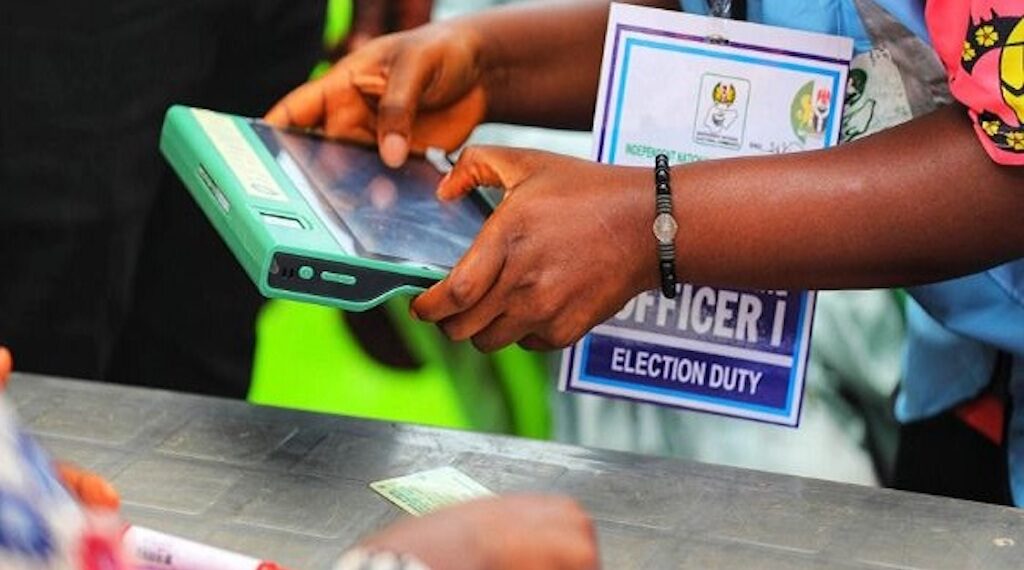
BVAS and electronic result transmission systems will be tested ahead of the 2027 elections.
-
INEC has reduced the maximum number of voters assigned to each BVAS machine from 1,250 to 850.
November 24, (THEWILL) – The Independent National Electoral Commission (INEC) has urged Nigerians to participate in its nationwide mock accreditation exercise scheduled for Saturday, November 28, 2026.
It warned that public participation is critical to identifying potential challenges and strengthening the credibility of the 2027 general elections.
The commission’s Publicity Director, Victoria Mesi, appealed to eligible voters to turn out for the exercise, stressing that the success of the electoral technology test depends largely on citizens’ willingness to participate.
“We expect Nigerians to turn up because if Nigerians do not turn up to test the system, then we probably would not succeed,” Mesi said.
The exercise is part of INEC’s preparations for the 2027 elections and is designed to test the functionality of the Bimodal Voter Accreditation System (BVAS), assess accreditation procedures and identify technical challenges that could affect the conduct of the polls.
READ ALSO:

INEC Chairman, Prof. Joash Amupitan, had earlier announced the November 28 exercise during a dialogue at Chatham House in London, explaining that it would simulate aspects of the presidential election and test the Commission’s accreditation and electronic result transmission systems.
According to the commission, the exercise will take place in two polling units in each of the country’s 8,838 Registration Areas, bringing the total number of participating polling units to 17,676 nationwide.
The exercise will run from 8:30 a.m. to 2:30 p.m., with INEC publishing the list of selected polling units across the 36 states and the Federal Capital Territory.
The commission has specifically encouraged voters in the designated polling units to participate with their Permanent Voter Cards (PVCs) to enable it to assess the accreditation process under conditions similar to those expected during the 2027 elections.
The mock exercise comes against the backdrop of controversies surrounding the deployment of BVAS and electronic transmission of results during the 2023 general elections, which generated widespread criticism and contributed to public distrust in the electoral process.
INEC has subsequently introduced measures to strengthen its electoral technology ahead of the next general elections.
Amupitan disclosed that the Commission had procured additional BVAS devices and reduced the maximum number of voters assigned to each machine from 1,250 to 850. Polling units with more than 850 registered voters will be provided with additional devices.
He also revealed that INEC was constructing climate-controlled storage facilities across the states to address concerns about BVAS malfunctions previously linked to extreme temperatures and storage conditions.
The INEC chairman further said the Commission had introduced technical safeguards to prevent inaccurate polling unit results and figures indicating over-voting from being uploaded to its INEC Result Viewing Portal (IReV).
He said a post-2023 audit identified collation centres as a major source of result management failures, prompting the Commission to strengthen its validation processes.
