
-
IRGC confirms removal of Iran’s self-imposed 2,000km ballistic missile range restriction.
-
Supreme Leader Mojtaba Khamenei orders the military to respond to threats without geographical limitations.
-
Tehran signals readiness to expand its military response options against the United States and Israel.
-
No immediate evidence that Iran has deployed operational missiles capable of exceeding the former range limit.
November 07, (THEWILL) – Iran’s Islamic Revolutionary Guard Corps (IRGC) has announced the removal of the country’s self-imposed 2,000-kilometre limit on ballistic missile ranges, following a directive by Supreme Leader Ayatollah Mojtaba Khamenei ordering the military to respond to threats without geographical restrictions.
The announcement, made on Saturday by the IRGC spokesman, Brigadier General Hossein Mohebbi, signals a significant shift in Tehran’s missile policy amid heightened tensions with the United States and Israel and growing concerns over the possibility of renewed military confrontation in the Middle East.
Speaking at a press conference in Tehran, Mohebbi confirmed that the restriction had been lifted when asked whether the Supreme Leader’s directive meant Iran was no longer bound by the 2,000km missile-range limit.

“This restriction has been lifted for us”, he said.
The IRGC spokesman indicated that Iran would rely on a broader range of military options to confront its adversaries, including striking targets at unexpected locations to undermine their military capabilities.
Describing the confrontation as an asymmetric war, Mohebbi said Iran had the capacity to exploit the vulnerabilities of its enemies by targeting both their physical and non-physical assets.
He, however, declined to provide technical details about any new missile capabilities, stressing that Iran would demonstrate its military strength through action rather than declarations.
“Our duty is to show our capabilities on the battlefield”, he said.
READ ALSO:
Supreme Leader Orders Wider Military Response
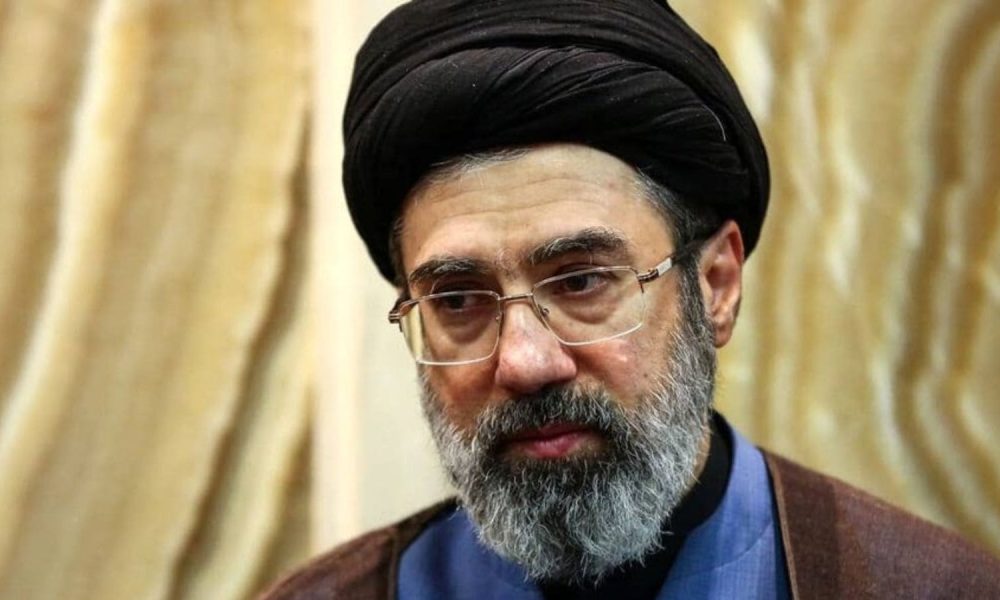
The announcement followed a directive by Khamenei, who is also commander-in-chief of Iran’s armed forces, that the country’s military should respond immediately and effectively to threats without geographical restrictions.
THEWILL gathered that the directive followed consultations with senior military commanders and formed part of a broader instruction to strengthen Iran’s military preparedness against potential attacks.
Iran’s Tasnim News Agency reported that Khamenei also ordered a comprehensive review and update of the military’s target database to include the physical and non-physical assets of the United States and Israel.
Background To Iran’s 2,000km Missile Limit
Iran’s 2,000-kilometre missile-range restriction was a self-imposed policy introduced under former Supreme Leader Ayatollah Ali Khamenei in 2017.
The policy was intended to limit the range of the country’s ballistic missiles, although Tehran maintained that its existing arsenal was sufficient to deter regional adversaries and protect its national security interests.
The restriction placed Israel, Saudi Arabia and several other Middle Eastern countries within the potential reach of Iranian missiles, alongside American military installations across the region.
However, questions have persisted over Iran’s ability to develop missiles capable of travelling considerably farther, particularly as the country continued to advance its missile and space-launch programmes.
The United States and some European governments have repeatedly expressed concerns that technologies developed through Iran’s space programme could also support the development of longer-range ballistic missiles.
The United States Congressional Research Service has previously noted that Iran’s space-launch vehicle technology could potentially contribute to the development of an intercontinental ballistic missile if Tehran chose to pursue such a capability.
Questions over Iran’s actual missile capabilities intensified following reports of a March 2026 attempt to strike the joint United States-United Kingdom military base at Diego Garcia in the Indian Ocean, approximately 4,000 kilometres from Iranian territory.
Although Iran denied involvement in the reported incident, it renewed debate over whether the country had already developed missile systems capable of exceeding its publicly declared 2,000km limit.
Defence analysts have also pointed to Iran’s advances in missile technology as evidence that its technical capabilities may extend beyond the restrictions it previously announced.
Iran’s ballistic missile programme has remained a major source of tension between Tehran and Western governments, particularly over concerns about regional security, military proliferation and the potential use of the technology against American and allied interests.

Felix Ifijeh is a journalist with years of professional reporting experience. Known for his keen news sense, compelling storytelling and commitment to accurate, impactful reporting, he has built a reputation for turning leads into clear, engaging, and well-structured reports that resonate with readers. His work reflects deep newsroom experience and a commitment to accurate, impactful journalism.
