
-
President Donald Trump confirms fresh US strikes on Iranian air defence installations after Tehran claims it shot down an American MQ-1 Predator drone over Qeshm Island.
-
Iranian state media reports two projectiles struck the island in the strategic Strait of Hormuz, raising fresh tensions between Washington and Tehran.
-
US Central Command announces a $20 million reward, with possible relocation, for information on Iran’s nuclear facilities, equipment and personnel.
-
Qatar intensifies mediation efforts with a proposed two-day confidence-building arrangement, but Iran insists on sanctions relief, release of frozen assets and compensation for war damage before substantive nuclear negotiations.
November 7, (THEWILL) – The United States has carried out fresh military strikes against Iran, targeting its air defence installations near the strategically important Strait of Hormuz, after Tehran claimed its forces had shot down an American military drone over the area.
President Donald Trump confirmed the latest military action, describing it as limited, as Iranian state media reported explosions on Qeshm Island and the US announced a $20 million reward for information about Iran’s nuclear programme.
The developments came amid renewed military tensions between both countries and intensified diplomatic efforts by Qatar and other regional governments to secure an agreement to end the more than eight-month-old conflict.

Iran’s state-run Islamic Republic News Agency (IRNA) reported that two projectiles struck the Suza area of Qeshm Island on Saturday after witnesses heard an aircraft overhead.
The agency quoted local residents as saying the projectiles hit the island, which is located in the Strait of Hormuz, a critical maritime corridor for international oil shipments.
The reported explosions followed claims by Iranian media, citing the Islamic Revolutionary Guard Corps (IRGC), that the country’s air defence systems had destroyed a US MQ-1 Predator drone over Qeshm Island on Friday night.
Washington had not immediately confirmed the reported destruction of the drone.
Trump, however, acknowledged the latest American military operation, saying US forces had destroyed an Iranian anti-aircraft installation.
“They knocked out — they built a little bit of an anti-aircraft device and we knocked it out in about 15 minutes, maybe five”, he told reporters shortly after arriving in West Palm Beach, Florida, on Friday evening.
The strikes followed another US military operation on Monday, which Washington described as defensive. Explosions were reported on Qeshm and Hengam islands in the Strait of Hormuz, as well as in the nearby mainland city of Bandar Abbas.
Qeshm Island lies off Iran’s southern coast, close to Bandar Abbas and the narrow passage through which a significant proportion of the world’s seaborne oil trade moves.
The latest military action came as diplomatic efforts intensified to prevent a further escalation of the conflict, which has disrupted regional stability and heightened concerns over global energy supplies. It also followed a major electoral setback for Trump’s Republican Party in Tuesday’s US midterm elections, in which Republicans lost control of both chambers of Congress. The outcome came amid voter dissatisfaction with the administration’s handling of the war and rising fuel prices linked to the conflict.
Since the elections, Trump has alternated between threatening further military action against Iran and expressing confidence that negotiations could produce an agreement to end the hostilities.
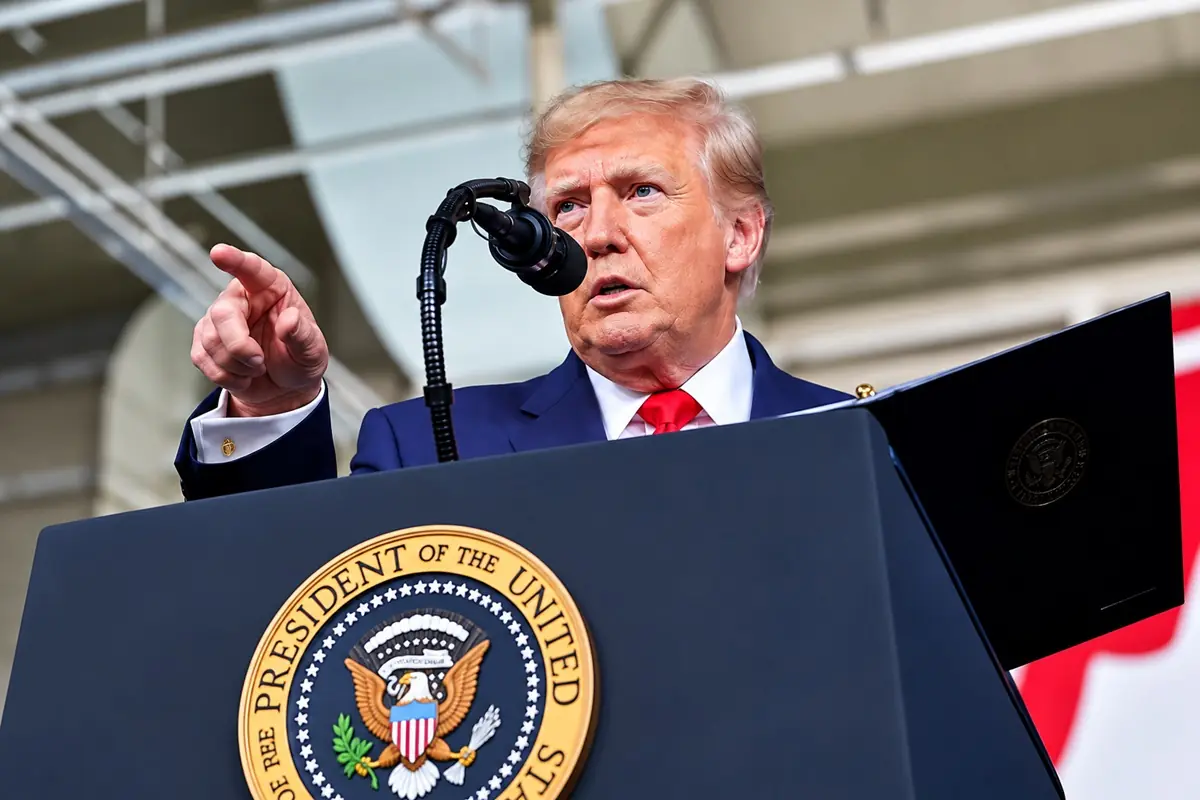
US Offers $20m For Iran Nuclear Information
In a related development, the United States has announced a reward of up to $20 million, alongside possible relocation, for information about Iran’s nuclear programme, including its facilities, equipment and personnel.
US Central Command (CENTCOM), which oversees American military operations in the Middle East, announced the offer in a post on X late Friday.
The reward is being administered through the State Department’s Rewards for Justice programme, established in 1984 to obtain information that could protect American lives and national security interests.
CENTCOM said the offer covered information about Iran’s nuclear facilities, equipment and associated personnel, including members of its scientific community, as well as the movement of relevant materials and equipment.
The State Department said Iran’s failure to comply with its safeguards obligations to the International Atomic Energy Agency (IAEA) had resulted in the agency losing what it described as “continuity of knowledge” regarding the country’s production and inventory of critical nuclear components, including centrifuges.
The announcement comes despite Trump’s repeated claims that American military operations have effectively destroyed Iran’s nuclear programme.
Speaking to reporters on Friday, the US President again defended the military campaign, arguing that the strikes had prevented Iran from acquiring nuclear weapons.
“If we didn’t hit Iran, you wouldn’t have Israel today. If they had nuclear, they would have used nuclear. They would have obliterated the Middle East”, he said.
Iran has consistently maintained that its nuclear programme is peaceful and not intended for weapons development.
However, the IAEA has reported that Iran possesses 440.9 kilogrammes of uranium enriched to 60 per cent purity, a level significantly above that required for most civilian nuclear applications and relatively close to the 90 per cent enrichment generally associated with weapons-grade uranium.
Trump also maintained that Iran’s military and economy had suffered severe damage from the conflict, insisting that Tehran was eager to reach an agreement.
“We’re dealing with them now. They want to make a deal very badly”, he added.
Earlier in the week, Trump indicated that further targets remained under consideration, including the so-called Pickaxe Mountain site in central Iran, which Washington suspects could be linked to Iran’s nuclear programme. Tehran has denied that the location is a nuclear facility.
READ ALSO:
Qatar Presents Fresh Proposal For Nuclear Talks
Meanwhile, Qatar has presented fresh proposals to Iranian officials in an effort to bridge differences between Washington and Tehran over Iran’s nuclear programme and the conditions for ending the war.
Two Middle Eastern government officials said on Friday that Iran was reviewing the proposals, which are designed to establish confidence-building measures ahead of broader negotiations.
The officials, who were not authorised to discuss the sensitive diplomatic engagements publicly, spoke on condition of anonymity.
Under the proposed two-day arrangement, the United States would first lift its blockade of Iranian ports and release some of the billions of dollars in Iranian assets frozen under American sanctions.
In return, Tehran would allow inspectors from the International Atomic Energy Agency access to nuclear facilities previously bombed by the United States and Israel.
On the second day, Iran would reopen the Strait of Hormuz under a modified arrangement reportedly agreed with Oman but yet to receive American approval.
The proposed mechanism would be temporary, pending a permanent agreement on the management of the strategic waterway involving other Gulf countries.
Following the implementation of the confidence-building measures, Washington and Tehran would begin wider negotiations covering Iran’s stockpile of highly enriched uranium and other aspects of its nuclear programme.
The White House declined to comment on the specific proposals, but Trump confirmed that discussions with Iran were continuing through mediators.
“We are talking to Iran. We have been”, he stated.
However, Tehran has maintained that it would not enter substantive negotiations over its nuclear activities until Washington addresses several conditions it considers essential to any ceasefire agreement.
Iran’s demands include an end to the US blockade of its ports, the lifting of economic sanctions, the release of frozen Iranian assets and compensation for damage caused by the war.
Tehran is also demanding an end to hostilities across the region, including Israeli military operations in Lebanon.
The nuclear programme remains the most contentious issue in the negotiations, with Trump insisting that any agreement to end the conflict must address Iran’s nuclear capabilities.
Regional Leaders Intensify Diplomatic Efforts
Diplomatic engagements among Middle Eastern governments have intensified amid concerns that the latest military confrontation could derail efforts to secure a ceasefire.
Qatar’s Emir held discussions with Trump on efforts to de-escalate tensions, while Qatari Defence Minister Sheikh Saoud bin Abdulrahman Al Thani spoke with US Defence Secretary Pete Hegseth on Friday.
The Qatari government said the discussions focused on developments in the region and efforts to prevent further escalation.
Iranian Foreign Minister Abbas Araghchi also held telephone conversations with his Iraqi and Tunisian counterparts on Friday to discuss the conflict and possible diplomatic solutions.
During his conversation with Iraqi Foreign Minister Fuad Hussein, Araghchi reportedly outlined Tehran’s position on the resumption of negotiations with Washington.
Egyptian Foreign Minister Badr Abdelatty, who held two telephone conversations with Araghchi earlier in the week, called on both sides to demonstrate flexibility in reaching a diplomatic settlement.
In a post on X on Friday, Abdelatty said it was important for both parties to demonstrate “flexibility” in achieving the “compromise solutions” necessary to prevent the region from sliding into another wave of escalation.
He also spoke with his United Arab Emirates counterpart, Abdullah bin Zayed Al Nahyan, with both diplomats emphasising the importance of political negotiations in preventing another military confrontation that could deepen violence and destruction across the region.
Iranian President Masoud Pezeshkian had also reaffirmed earlier in the week that his government remained committed to resolving the crisis through dialogue.

Felix Ifijeh is a journalist with years of professional reporting experience. Known for his keen news sense, compelling storytelling and commitment to accurate, impactful reporting, he has built a reputation for turning leads into clear, engaging, and well-structured reports that resonate with readers. His work reflects deep newsroom experience and a commitment to accurate, impactful journalism.
