
-
Nigeria’s Super Falcons have failed to qualify for the Women’s World Cup for the first time since the tournament began in 1991.
-
South Africa defeated Nigeria 2-1 in a dramatic WAFCON play-off in Casablanca to end the Falcons’ nine-tournament World Cup streak.
-
The defeat comes months after the Super Eagles also missed out on the 2026 men’s World Cup, leaving Nigeria without either senior national team at the global showpiece.
-
For a country accustomed to seeing its football teams on the biggest stage, the back-to-back failures have raised difficult questions about the state of Nigerian football.
August 14, (THEWILL) — Nigeria’s World Cup nightmare has taken another painful turn. After the Super Eagles failed to qualify for the 2026 men’s tournament, the Super Falcons have now suffered an even more historic setback, losing 2-1 to South Africa in Casablanca and missing out on the 2027 Women’s World Cup for the first time in their history.
For a country where football is more than simply a sport, the significance of the two failures is difficult to ignore. Nigeria will now have no senior men’s or women’s team at the World Cup stage, an outcome that would have been difficult to imagine only a few years ago. The Super Eagles had already left supporters disappointed by missing the expanded 2026 tournament, but the Falcons’ defeat has now turned that disappointment into a wider national football crisis.
The Super Falcons had appeared at every Women’s World Cup since the inaugural tournament in 1991. Nine consecutive appearances had made Nigeria the only African nation with such an unbroken record, while their 10 Women’s Africa Cup of Nations titles had established them as the dominant force on the continent. That history made their elimination in Casablanca particularly painful because this was supposed to be the team that could always find a way through.

This time, there was no escape.
South Africa Delivered the Final Blow
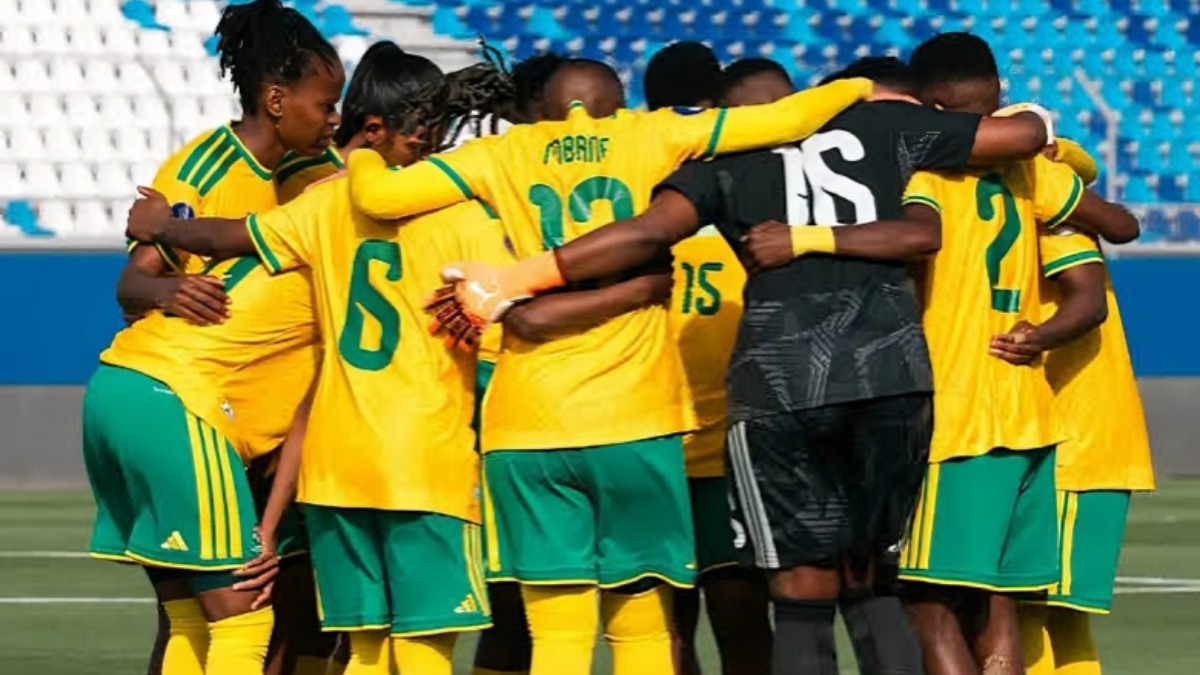
Nigeria entered the play-off against South Africa knowing exactly what was at stake. Having been eliminated by Cameroon in the WAFCON quarter-finals, the Falcons had already lost their automatic route to the World Cup and needed to win this final opportunity to remain alive in the qualification race.
South Africa, however, had other plans.
The first half in Casablanca produced little, but the contest changed dramatically after the break. In the 56th minute, Ronnel Donnelly produced an excellent pass from inside her own half to release Hildah Magaia, who raced forward before sending the ball across the Nigerian defence. Thembi Kgatlana arrived at the right moment and struck the ball towards goal.
Chiamaka Nnadozie got a strong hand to the effort, but she could not prevent it from crossing the line. South Africa had the lead, and suddenly Nigeria’s World Cup dream was in serious danger.
The Falcons tried to respond, but Banyana Banyana continued to create opportunities. Nnadozie kept out another effort from Kgatlana, while South African goalkeeper Kaylin Swart produced a brilliant save to deny Uchenna Kanu’s header as Nigeria searched for an equaliser.
The second South African goal arrived in the 77th minute when Refiloe Jane’s effort took a deflection off Christy Ucheibe and found its way into the net. At 2-0, Nigeria were staring directly at the end of their extraordinary World Cup record.
The Falcons Found a Late Lifeline
Just when it appeared that Nigeria’s fate had been sealed, the game produced one final twist.
South Africa captain Jane was penalised after VAR spotted her handling the ball inside her own six-yard box. The decision gave Nigeria a penalty and a chance to drag themselves back into the contest.
Christy Ucheibe stepped up in the 93rd minute and calmly converted, reducing the deficit to 2-1.
Suddenly, South Africa were under pressure.
Jane was sent off after receiving a second yellow card, leaving Banyana Banyana with 10 players as Nigeria pushed forward in search of an equaliser. The Super Falcons had the numerical advantage and the momentum, but they could not find the decisive second goal.
The closest they came was almost the final kick of the game. Michelle Alozie received the ball and drilled it across goal, only for Swart to produce an extraordinary reaction save with her left foot. The goalkeeper’s intervention preserved South Africa’s victory and ended Nigeria’s last realistic hope of reaching the World Cup.
The celebrations that followed told the story. South Africa knew they had survived one of the biggest tests in African women’s football. Nigeria knew an era had just ended.
READ ALSO: Super Falcons Pay Heavy Price For WAFCON Exit, Face Tough Route To 2027 World Cup
South Africa Ready to Finish What Cameroon Started Against Super Falcons
A Record That Had Survived Everything Is Gone
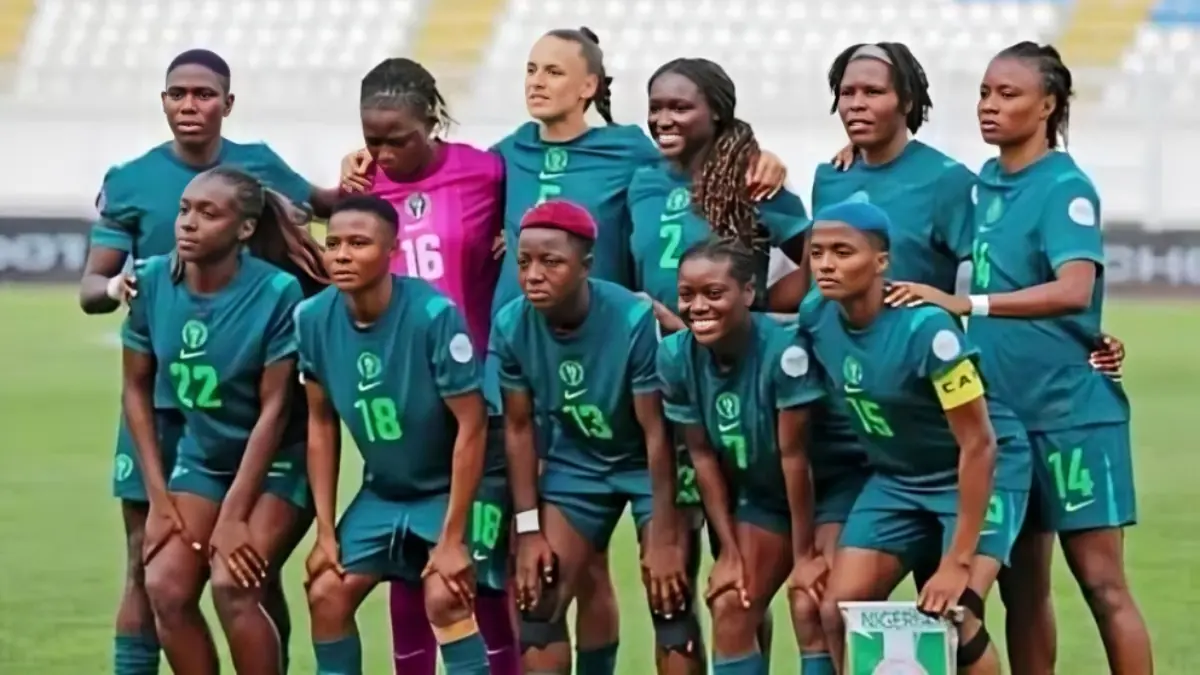
The Super Falcons’ World Cup record had become part of their identity.
Since the first Women’s World Cup in China in 1991, Nigeria had never failed to qualify. Through different generations, different coaches and different levels of success, the Falcons had always found their way onto the global stage.
They were not always among the favourites to win the tournament, but they were always there.
That consistency mattered. It meant Nigerian players grew up believing that representing the country at a World Cup was almost a rite of passage. It gave the nation a permanent presence in the world’s biggest women’s football tournament and reinforced Nigeria’s status as the leading power in African women’s football.
Now that record has disappeared.
The Falcons will not be in Brazil for the 2027 Women’s World Cup, and the significance goes beyond one disappointing qualifying campaign. It represents a changing landscape in African women’s football, where South Africa, Morocco, Ghana, Zambia, Cameroon and other nations are increasingly capable of challenging Nigeria.
The gap is no longer what it once was.
Oshoala’s Future Adds Another Question
Nigeria’s defeat also leaves uncertainty around one of the biggest figures of the Super Falcons’ modern era.
Asisat Oshoala has been one of the defining players in African women’s football for more than a decade. A six-time African Footballer of the Year, the forward has represented Nigeria at multiple major tournaments and carried the expectations that come with being one of the country’s most recognisable footballers.
Against South Africa, however, she could not provide the breakthrough Nigeria needed. Oshoala had an opportunity inside the six-yard box after fighting through several challenges, but her effort lacked the power required to trouble Swart.
She was substituted soon afterwards, and the defeat inevitably raised questions about whether the 31-year-old might have made her final WAFCON appearance.
There is no certainty that this was the end of Oshoala’s international career, but the possibility adds another emotional layer to Nigeria’s defeat. A generation that included some of the greatest players in the country’s history is gradually approaching its final chapter, and the next generation will now have to rebuild without the security of another World Cup appearance.
Ghana Also Finds a Way Through
Nigeria’s disappointment became even more difficult to swallow because another West African rival managed to keep its World Cup dream alive on the same day.
Ghana’s Black Queens defeated Ivory Coast 2-1 in Casablanca after falling behind early in the match. Ines Konan converted a fourth-minute penalty for Ivory Coast after VAR intervention, leaving Ghana facing the possibility of another major disappointment.
Instead, the Black Queens fought back.
Princess Marfo equalised in the 59th minute with a header from a corner, and Josephine Bonsu completed the comeback from the penalty spot in the 72nd minute after another VAR review identified a handball inside the Ivory Coast penalty area.
The victory means Ghana, like South Africa, will continue through the inter-confederation qualification route for the 2027 World Cup.
That route is far from straightforward. The two African teams will join Uzbekistan, Chinese Taipei, Papua New Guinea and Ecuador in a six-team league in November and December. The top two teams will then progress to a final intercontinental qualifying stage, where three World Cup places will be available.
Nigeria, meanwhile, will have no further opportunity.
The Super Eagles Started This Painful Story
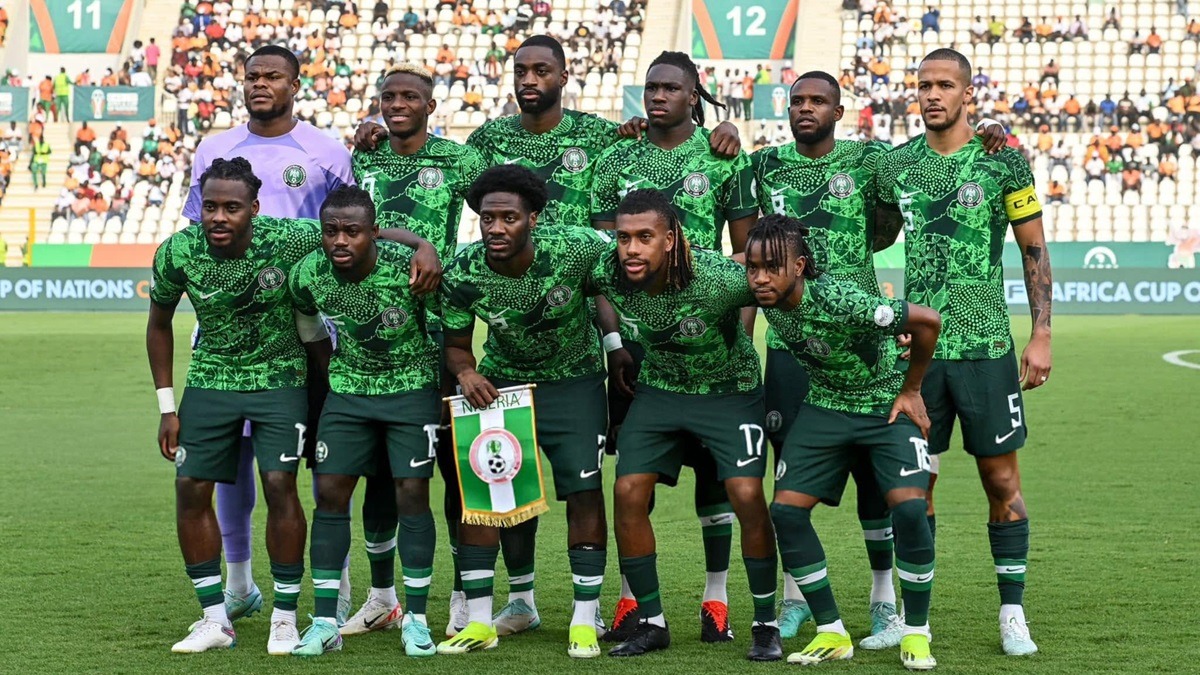
The Falcons’ elimination cannot be discussed without remembering what happened to Nigeria’s men’s team.
The Super Eagles had already failed to qualify for the 2026 FIFA World Cup, missing out on the tournament despite the country’s long history of appearances and a squad containing several players who operate at the highest level of European football.
That failure was already a major blow to Nigerian football.
The men’s World Cup remains one of the country’s biggest sporting obsessions, and the Super Eagles have traditionally carried enormous expectations whenever qualification begins. Their absence from the 2026 tournament therefore represented a serious disappointment for supporters who had expected Nigeria to be among Africa’s representatives.
The Falcons’ failure now makes the situation considerably worse.
For the first time, Nigeria will not have either senior national team at a World Cup. The men’s team will miss the 2026 tournament, while the women’s team will miss the 2027 edition.
The two qualification campaigns have their own circumstances and should not be treated as identical failures, but together they create a picture that Nigerian football cannot simply dismiss as bad luck.
The Questions Nigeria Must Now Answer
The most uncomfortable part of this situation is that Nigeria does not lack football talent.
The country continues to produce players capable of succeeding at the highest levels of the sport. Nigerian footballers are starring in Europe’s biggest leagues, while the domestic game continues to provide a huge pool of young players dreaming of international careers.
The problem is translating that talent into consistent success at national-team level.
The men’s failure raised questions about preparation, coaching, administration and decision-making. The women’s defeat now demands another examination of the structures supporting the Super Falcons and the wider development of women’s football.
Nigeria cannot rely forever on reputation.
The Super Falcons’ record of nine consecutive World Cup appearances created an expectation that qualification would always be achieved, while the Super Eagles’ history of regular World Cup participation created a similar sense of security on the men’s side. But football has changed. Other African countries have invested, improved their structures and narrowed the gap.
South Africa’s rise is perhaps the clearest example. Banyana Banyana are now African champions and have developed into a team capable of beating Nigeria in high-pressure matches. Ghana, Morocco and Zambia have also demonstrated that the continent’s women’s game is becoming increasingly competitive.
Nigeria’s old advantage can no longer be taken for granted.
A New Reality for Nigerian Football
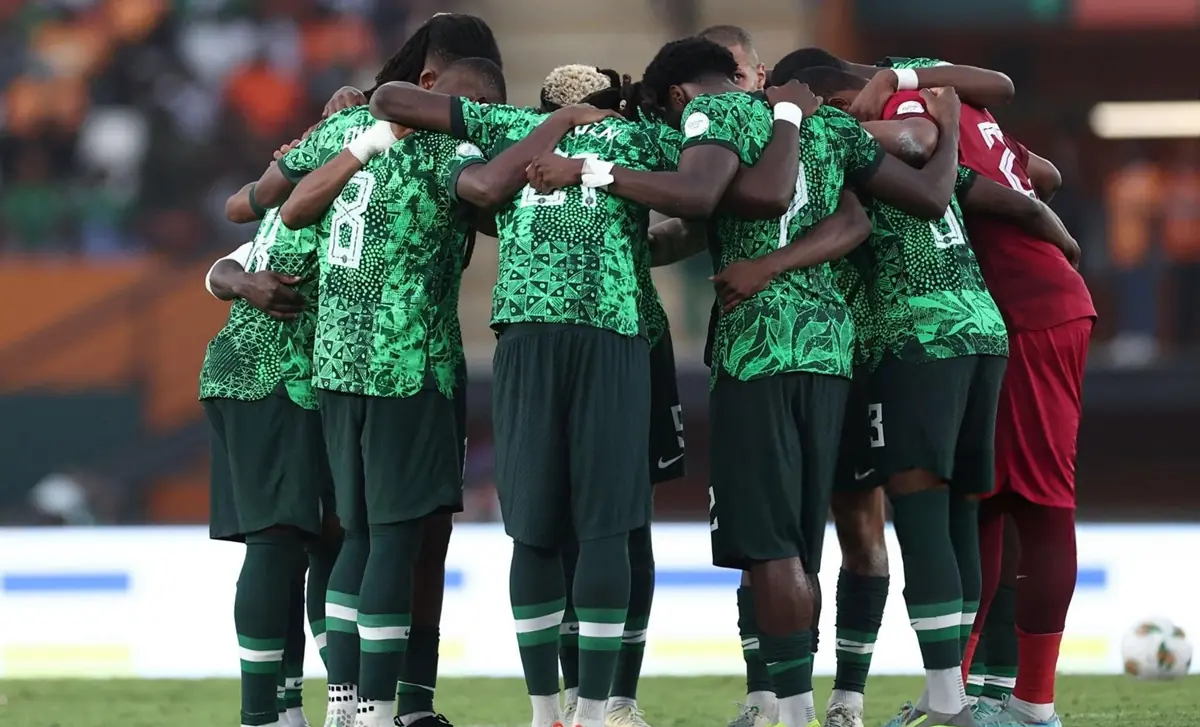
There was a time when a Nigerian World Cup without either the Super Eagles or Super Falcons would have seemed almost unthinkable.
The men’s team became regular participants on football’s biggest stage, while the women built an even more impressive record by appearing at every Women’s World Cup since 1991. For generations of Nigerians, watching one of the national teams compete at a World Cup became part of the country’s sporting calendar.
That tradition has now been broken.
The Super Eagles will watch the 2026 men’s World Cup from home. The Super Falcons will do the same during the 2027 Women’s World Cup. For Nigerian supporters, there will be no senior national team to follow at either tournament.
The pain is therefore bigger than one defeat in Casablanca.
It is the realisation that Nigeria’s football dominance can no longer be assumed. It is the end of the Super Falcons’ remarkable World Cup streak. It is another warning for the Super Eagles. And it is a moment that should force Nigerian football to look beyond individual players and coaches and confront the deeper issues that have repeatedly turned potential into disappointment.
South Africa delivered the final blow in Casablanca, but Nigeria’s World Cup nightmare did not begin there.
It began with the gradual erosion of the assumption that Nigeria would always find a way.
Now, for the first time, both the Super Eagles and Super Falcons have nowhere to go when the world’s biggest football tournaments begin.

Olumide Atiba is a sports journalist with THEWILL, known for his keen news sense and compelling storytelling. He has built a reputation for turning leads into clear, well-structured reports that resonate with readers, with a strong focus on football coverage
