
-
The Federal Government is coordinating NIMC, CAC, NIPOST and other agencies to create a unified digital addressing system for people, businesses and properties across Nigeria.
-
The system is expected to improve address verification for financial services, logistics, emergency response, security and government planning.
-
The initiative comes ahead of the planned October rollout of a GIS-enabled digital postcode system assigning unique codes to buildings nationwide.
August 25, (THEWILL) — The Federal Government has moved to establish a unified digital addressing system that will link identity, business and property information across Nigeria, as part of efforts to improve economic planning, financial inclusion, security and public service delivery.
The National Addressing Council (NAC), chaired by Vice President Kashim Shettima, ratified a preliminary framework for the implementation of the system at a meeting in Abuja on Monday.
Under the framework, the Federal Ministry of Science, Technology and Innovation will serve as the Council’s secretariat and coordinate technical implementation, interoperability standards and systems integration among participating government agencies.

The initiative is designed to address one of Nigeria’s long-standing infrastructure gaps: the difficulty of accurately identifying and locating people, businesses and properties, particularly in areas where formal street addresses are limited or unreliable.
Why the digital address system matters
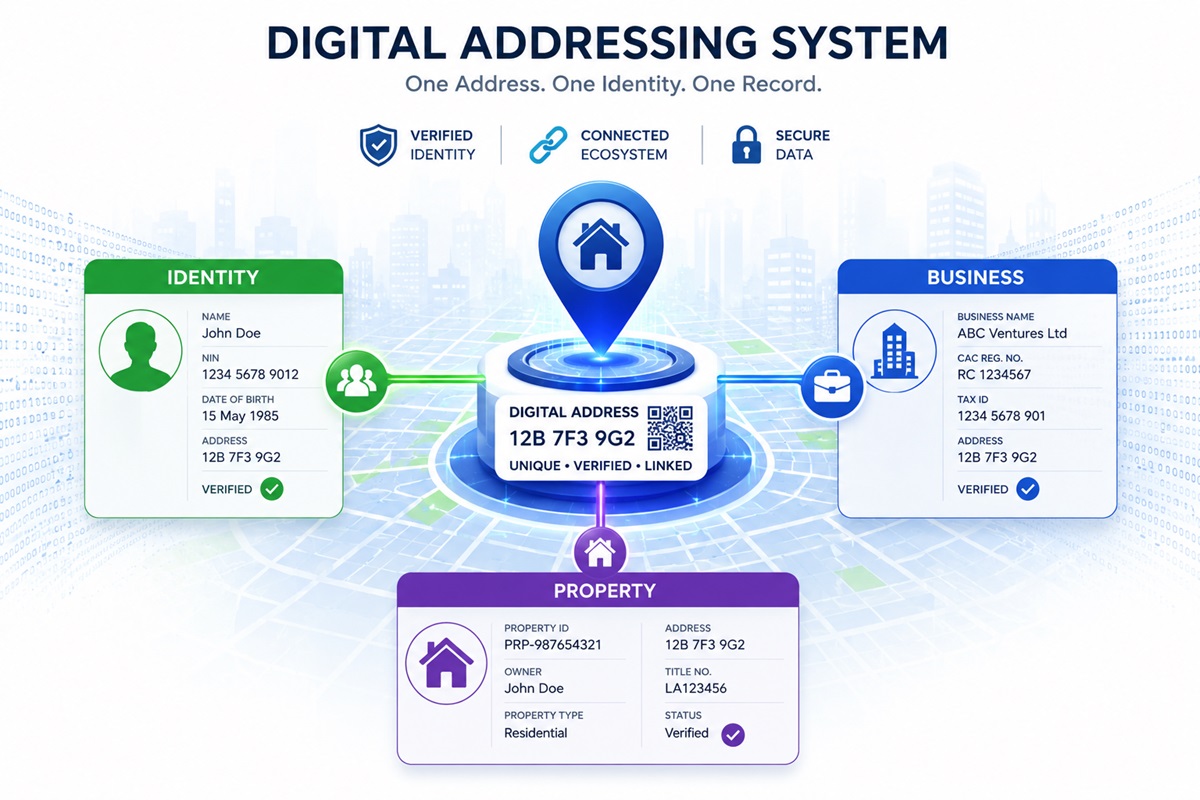
Speaking at the meeting, Shettima said a reliable national addressing system would create a link between citizens, businesses and government, with applications ranging from commerce and logistics to security and emergency response.
He said the system should also connect securely with existing digital public infrastructure, particularly identity databases.
“When a verified identity can be linked securely to a verified address, the gains extend across financial inclusion, social interventions, logistics, planning and emergency response,” he said.
For businesses, a reliable digital address could make it easier to verify customers, deliver goods and assess locations. Banks and other financial institutions could also use verified addresses alongside identity information when onboarding customers or assessing credit risks.
The system could also improve the delivery of government programmes by making it easier to determine, where beneficiaries live, while emergency agencies could locate households and businesses more accurately.
NIMC, CAC, NIPOST get key roles
The government has assigned different responsibilities to agencies involved in the project.
NIMC will oversee identity verification and authentication, while the Corporate Affairs Commission will support the verification of business addresses.
NIPOST will be responsible for postcode administration and postal infrastructure, while state governments and local councils will drive implementation at the community level through the Nigeria Governors’ Forum and the Association of Local Governments of Nigeria.
Other institutions, including NITDA, the Nigeria Data Protection Commission, Office of the National Security Adviser, CBN, NCC and private-sector operators, are expected to contribute to the system.
The involvement of the data protection and security authorities will be particularly important because linking identity and location information creates significant privacy and security considerations.
READ ALSO:
Digital postcode rollout
The renewed push comes ahead of the Federal Government’s planned rollout of a GIS-enabled alphanumeric digital postcode system in October 2026.
Communications Minister Bosun Tijani said the system would assign a unique digital code to every building in Nigeria, including properties in rural and underserved communities.
The proposed postcode system could therefore provide the location layer required for the broader national addressing framework, while NIMC and CAC provide verified identity and business information.
The National Addressing Council was first inaugurated in September 2017 under the administration of former Vice President Yemi Osinbajo. The Federal Government announced plans to revive and modernise it in 2024 after years of limited progress.
If successfully implemented, the latest framework could give Nigeria a common digital addressing infrastructure rather than leaving different government agencies and businesses to rely on separate location databases.

Ogochukwu Onwaeze is a writer specializing in business and economic journalism. At THEWILL News Media, she translates market trends, financial developments, and policy shifts into clear and engaging stories.