
-
China is building an AI-generated video industry around cheaper production, government support and new distribution channels.
-
The cost of producing AI short dramas has fallen sharply in 2026, according to Chinese state broadcaster CCTV.
-
Local governments are offering computing support, subsidies and other incentives to attract AI film businesses.
-
But a surge in production is already raising concerns about oversupply, originality and copyright.
September 25, (THEWILL) – China is no longer treating AI-generated video simply as another demonstration of what generative artificial intelligence can do. Cities, film studios, technology companies and streaming platforms are building businesses around it.
Reuters reported on Friday that Chinese cities and industrial parks are competing to attract AI filmmakers, offering incentives including subsidised computing, rent support and other assistance.
The push is turning AI-generated video into an emerging production industry rather than a technology experiment.

Zhu Zhili, who heads the AI-Generated Content department at China Wit Media in Shenzhen, told Reuters that he is being approached by cities and industrial parks seeking to attract his business.
China’s approach resembles the industrial policy used to build domestic capacity in sectors such as electric vehicles, solar panels and robotics. This time, the product is entertainment content.

AI Is Cutting the Cost of Making Video
The strongest incentive is cost. According to CCTV, the cost of producing AI short dramas in China fell from about 5,000 yuan ($747) per minute in early 2026 to a few hundred yuan.
One filmmaker interviewed by Reuters said a conventional wedding scene that might cost about 60,000 yuan to shoot could be recreated with AI for roughly 1,400 yuan.
The economics change further when production does not require the same combination of actors, sets, cameras, crews and physical locations.
That does not mean AI can replace conventional filmmaking across the board. It does mean that producers can test ideas, create scenes and produce short-form content at costs that would have been difficult to justify using traditional methods.
Chinese technology companies are also building the tools needed to support the industry.
Zhu told Reuters that models including Kling and Seedance are competitive internationally, while the country’s wider computing and technology infrastructure is helping support AI film production.
READ ALSO:
Local governments are adding another layer of support.Shanghai introduced measures in May aimed at accelerating AI-powered micro-drama production, including access to computing resources and cloud-based AI models.
Hainan has also offered subsidies and rent waivers to filmmakers, according to Reuters.
For China, the objective is not simply to produce cheaper videos. It is to build the companies, tools, talent and distribution networks around them.
More Content Does Not Mean More Hits
The rapid fall in production costs is creating another problem: too much content.
In the first half of 2026, 221,900 new AI shows were launched on Douyin, China’s version of TikTok, according to DataEye figures.
Only 1,055 attracted more than 100 million views, a commonly used benchmark for major success on the platform.
That gap points to the central commercial problem facing AI video.
When production becomes extremely cheap, making another programme is no longer the hardest part. Getting people to watch it becomes the scarce resource.
Streaming platforms and short-video companies could therefore face an even larger supply of content competing for the same viewers.
The experience also raises questions about whether cheaper production will lead to better entertainment or simply more material.
Some Chinese viewers have complained about plagiarism and a lack of originality, while the unexpected success of the conventionally produced animated film “Niu Lai” has been interpreted by some as evidence of audience resistance to AI-generated content.
China requires AI-generated content to be clearly labelled, but Reuters reports that clear copyright rules governing such material have yet to be introduced.
That leaves producers with a cheaper way to make content but a less settled legal environment around what they are allowed to create.
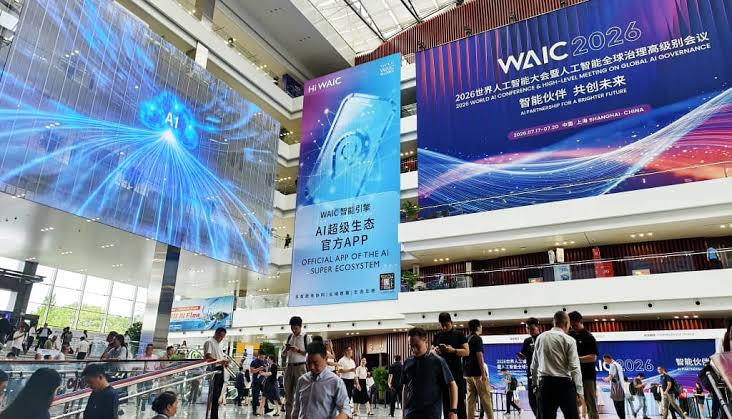
China Is Betting on a Global AI Video Market
The Chinese industry is already looking beyond its domestic audience.
Shanghai’s policy measures include support for overseas distribution, while Chinese AI filmmakers are beginning to present their work internationally.
Director Cao Yiwen, whose AI-animated film premiered at the World AI Film Festival in Cannes in April, told Reuters that China was taking a leading position in the sector.
That gives the industry a potentially larger market to pursue, particularly as AI-generated video improves and production costs fall.
It also changes the competitive landscape for traditional studios.
A conventional production company has to finance a project before knowing whether audiences will respond.
An AI studio can potentially make more experiments at lower cost, learn which formats attract viewers and scale the successful ones.
That advantage is not guaranteed to translate into profitable businesses. Cheap production can encourage a flood of competitors, while copyright disputes, audience resistance and weak demand can undermine the economics.
For investors and technology companies, China’s AI-video push therefore offers a glimpse of where generative AI may be heading.
The business is moving beyond selling access to an AI model.
It is beginning to build an entire production chain around the technology, from computing and video-generation tools to studios, streaming platforms and international distribution.

Joy Onuorah is a business journalist and brand communications specialist covering financial markets, artificial intelligence, digital economy, and the ideas reshaping business across Africa and the global market. Beyond her reporting for TheWill, Joy uses brand strategy, storytelling, copywriting, and high-value SEO to help brands build lasting market authority.