
October 11, (THEWILL) – The Nigeria Premier Football League wants to change when Nigerians watch it, not just what they watch. But floodlights and a new broadcast schedule will mean little if the league cannot deliver a better experience for supporters.
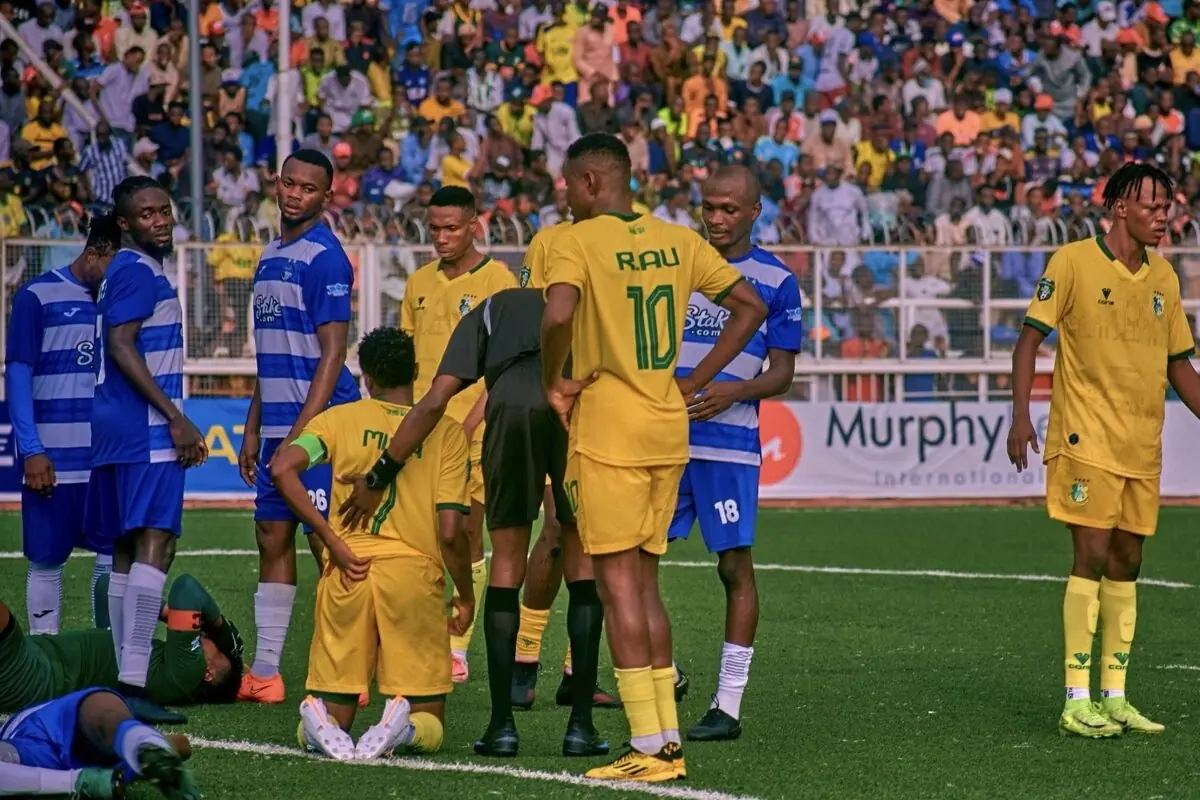
When Katsina United defeated Enyimba 4-2 at the Muhammadu Dikko Stadium on Friday night, the result delivered more than three points for the hosts. It also offered Nigerian domestic football a chance to test an idea it has struggled to establish: making Friday night a regular destination for NPFL supporters.
The Matchday Eight encounter marked the return of scheduled NPFL football under floodlights for the first time in two seasons, according to The Guardian. Katsina United started aggressively, scoring twice in the opening 12 minutes before extending their advantage after the break. Enyimba threatened a comeback with two goals, but the hosts restored their cushion and secured a convincing victory. The result moved Katsina United to sixth in the table, while Enyimba remained 17th.

The match was significant beyond the scoreline. It arrived as the Nigeria Premier Football League (NPFL) prepares to introduce a more varied matchday calendar, with Friday evening fixtures and earlier kick-offs on selected Saturdays and Sundays intended to give supporters more opportunities to watch the competition.
The league’s next major test comes on October 16, when Shooting Stars host Ranchers Bees at the Lekan Salami Stadium in Ibadan. Kick-off is scheduled for 6pm, with the fixture billed as the start of the new Friday-night format for Matchday Nine.
It sounds like a modest change to the fixture list. Yet the experiment raises a much bigger question: can changing when the NPFL plays help change how Nigerians feel about watching it?
Beyond the Fixture List
For years, the NPFL has relied heavily on weekend afternoon kick-offs, with matches often competing for attention at the same time. The revised schedule is intended to create a more flexible calendar for fans, clubs and commercial partners.
Friday evenings could attract supporters who cannot attend traditional afternoon games because of work or other commitments. Earlier weekend kick-offs could also give fans more options while allowing individual fixtures to receive greater attention rather than being lost among several simultaneous matches.
But convenience alone will not rebuild a fan culture. Supporters need a reason to choose the stadium or an NPFL broadcast over the many alternatives available to them.
That means the league’s challenge is not simply to put matches under floodlights. It must make attending or watching those matches a reliable, enjoyable experience.
The Cameras Behind the Change
The strongest force behind the scheduling adjustment may be the league’s broadcast ambitions.
In a memo dated October 2, NPFL chief operating officer Dr Ayo Abdulrahman told clubs that the changes followed meetings with broadcast partners Murphy Ben International (MBI) and AfroSoccer. The league said the original fixture structure did not provide broadcasters with enough matchdays to deliver the intended coverage. Under the revised arrangement, fixtures will be spread across Friday, Saturday and Sunday, with clubs grouped into regional clusters to reduce the cost and logistical difficulties of transporting outside-broadcast equipment over long distances.
MBI has also acquired new digital production equipment, including Sony PXW-Z200 cameras and an OSEE GoStream Duet 8 ISO system. The equipment is designed to support a more mobile production model, reducing dependence on large outside-broadcast trucks and extensive cabling.
The development builds on the NPFL’s digital broadcasting partnership with MBI, announced in August, which aims to make selected matches available live and through delayed broadcasts on the league’s official YouTube channel. The league has presented the partnership as a way to improve visibility, attract commercial opportunities and bring domestic football to supporters beyond the stadium.
This is where Friday-night football could make its greatest difference. A match that receives its own broadcast window can attract attention from supporters who live too far away to attend, Nigerians abroad and viewers who have struggled to find accessible coverage of the domestic league.
However, better equipment is only part of the equation. The broadcasts must be consistent, easy to find and good enough to encourage viewers to return for the next fixture.
READ ALSO:
A Promise Nigerian Football Has Made Before
Friday football is not an entirely new idea in Nigeria.
The NPFL announced plans to introduce Friday evening matches in December 2023, citing the need to expand commercial opportunities and attract supporters at the end of the working week. Shooting Stars also hosted Inter Lagos on a Friday during the opening matchday of the current campaign, winning 2-1. Their October 16 meeting with Ranchers Bees will therefore be their second Friday home fixture this season.
The distinction between an isolated Friday fixture and an established Friday-night format matters. One match can generate excitement, but a sustainable schedule requires consistency. Fans must know when their teams are playing, where they can watch them and whether the experience will be worth their time.
The league’s challenge is to ensure that the latest initiative does not become another announcement that generates early enthusiasm but fails to become part of the competition’s identity.
Floodlights Are Only The Beginning
Night football also places greater demands on stadium infrastructure.
The NPFL has instructed clubs to meet floodlighting standards and provide backup generators, with the possibility of losing hosting rights for failing to satisfy the requirements. The aim is to ensure that matches can be played safely and broadcast to an acceptable standard.
But lighting the pitch does not automatically solve the problems surrounding a matchday. Supporters still have to consider transport, security, ticket prices and how they will get home after an evening fixture.
For families and fans travelling long distances, a 6pm kick-off could be convenient in some locations and difficult in others. Clubs will need to consider how supporters arrive and leave, while stadium operators must provide an environment that encourages people to return.
There is also the question of value. A supporter comparing a trip to the stadium with watching international football at home will expect more than a brightly lit pitch. The atmosphere, organisation, facilities and quality of the matchday experience all matter.
These are not problems that a broadcast schedule can resolve on its own. They require clubs and league organisers to treat the supporter as a central part of the product rather than simply the audience in the stands.
Can Friday Become An NPFL Habit?
The October 16 meeting between Shooting Stars and Ranchers Bees will provide another opportunity to assess the format. Its significance will lie not only in the attendance or the result, but also in whether the fixture is delivered as promised and reaches supporters through the intended broadcast channels.
The league will need to demonstrate that the schedule can be sustained across different venues, that clubs can meet infrastructure requirements and that fans have enough information to plan around the fixtures.
It must also maintain a predictable calendar. Supporters cannot build a routine around a format if match times and broadcast arrangements remain difficult to follow.
Friday-night football offers the NPFL a practical way to improve visibility and create more space for its matches. It could help the league reach viewers who have been left out of traditional schedules and give clubs additional opportunities to engage supporters and commercial partners.
But the long-term measure of success will not be how modern the schedule looks on paper. It will be whether people keep coming back.
Katsina United’s 4-2 victory over Enyimba has given the return of floodlit football a memorable opening. The next task is to turn that moment into a dependable experience.
Friday night can give the NPFL a new window. Winning back the fan will require the league to give supporters a reason to look through it.

Olumide Atiba is a sports journalist with THEWILL, known for his keen news sense and compelling storytelling. He has built a reputation for turning leads into clear, well-structured reports that resonate with readers, with a strong focus on football coverage