
-
Cameroon finally won their first-ever Women’s Africa Cup of Nations title after suffering three previous defeats in the final.
-
The Indomitable Lionesses defeated tournament debutants Malawi 3-0 in Rabat to complete a historic campaign.
-
Goalkeeper Michaely Bihina played a decisive role in Cameroon’s semi-final victory over hosts Morocco.
-
Malawi made history by reaching the WAFCON final on their debut, while Temwa Chawinga finished as the tournament’s Golden Boot winner.
August 18, (THEWILL) — Cameroon have finally reached the summit of African women’s football, ending decades of near misses with a memorable 3-0 victory over Malawi in the WAFCON final in Rabat. The triumph delivered the Indomitable Lionesses their first continental title and brought an end to one of the competition’s longest-running stories of heartbreak.
The victory was about much more than what happened during the 90 minutes of the final. Cameroon had spent years coming close to glory, while Malawi had produced one of the most remarkable debut campaigns in the tournament’s history. Along the way, several players and moments helped shape a WAFCON campaign that could prove to be a turning point for women’s football across the continent.
Here are eight things to know about Cameroon’s historic WAFCON triumph.

1. Cameroon Finally Ended Their Final Heartbreak
For Cameroon, lifting the trophy represented the end of a painful chapter that had lasted for decades. Before this tournament, the Indomitable Lionesses had reached three WAFCON finals in 2004, 2014 and 2016, but lost each of them.
Even more painful was the identity of their opponents. Nigeria defeated Cameroon in all three finals, establishing the Super Falcons as the biggest obstacle between the Lionesses and their first continental crown.
This time, however, Cameroon managed to overcome Nigeria before the final. Their quarter-final victory over the defending champions removed one of the biggest psychological barriers from their path before they went on to defeat hosts Morocco in a dramatic semi-final.
When they faced Malawi in the final, Cameroon made sure there would be no repeat of the previous disappointments. Marie Ngah Manga scored twice, while Naomi Ndjoah Eto also found the net as the Lionesses raced into a 3-0 lead before half-time and eventually secured the trophy.
2. Cameroon Became Only the Fourth WAFCON Champion
Cameroon’s victory also changed the history of the competition. Before their triumph, only three nations had ever lifted the WAFCON trophy in its modern era: Nigeria, Equatorial Guinea and South Africa.
Nigeria remain comfortably the most successful team in the tournament’s history with 10 titles, while Equatorial Guinea have won twice and South Africa once. Cameroon are now the fourth country to join that exclusive group.
The achievement is particularly significant because Cameroon have been one of Africa’s most consistent women’s teams without ever managing to win the tournament. Their breakthrough finally turns years of potential and disappointment into silverware.
It could also mark the beginning of a more competitive era in African women’s football, with more nations increasingly capable of challenging the traditional giants.
3. Michaely Bihina Was a Hero Before the Final
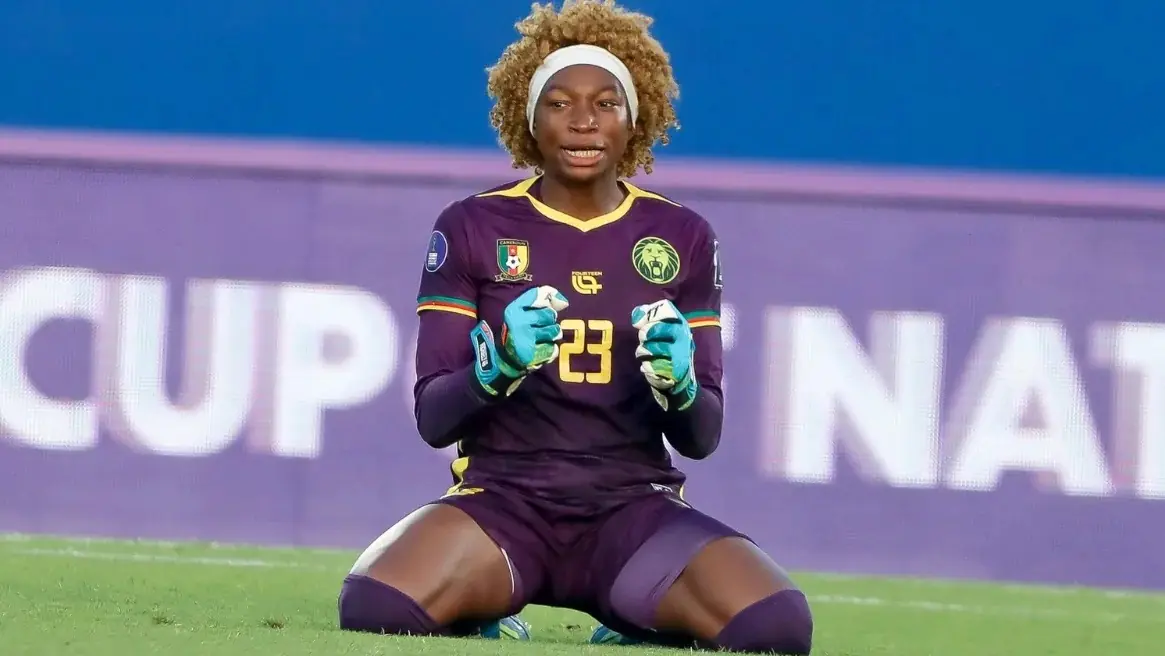
While Cameroon’s attackers dominated the headlines in the final, goalkeeper Michaely Bihina had already played one of the most important roles in getting the team there.
The Benfica goalkeeper produced a sensational performance against Morocco in the semi-final, where Cameroon needed more than 120 minutes and a penalty shootout to secure their place in the championship match.
Bihina saved a penalty at the end of extra time before producing three further saves during the shootout. Her performance ended Morocco’s hopes of winning the tournament on home soil and sent Cameroon into the final.
Her contribution was eventually recognised with the Best Goalkeeper award. Without her intervention against Morocco, Cameroon may never have had the opportunity to play for the title.
4. Valentine Nguele Completed a Remarkable Journey
Cameroon’s historic victory also has a personal significance for coach Valentine Nguele, whose connection with the national team began long before she took charge from the technical area.
Nguele represented Cameroon internationally between 2000 and 2010 and featured at the 2006 WAFCON before beginning her coaching journey. She continued her development away from the pitch and obtained her CAF A Licence in 2023.
Years later, she found herself leading Cameroon in a tournament where the country finally conquered the competition that had repeatedly caused them heartbreak.
Her experience of Cameroon’s football history made the achievement even more significant. She understood what previous generations had gone through and helped guide a new group of players beyond those old disappointments.
5. Malawi Made History Despite Losing the Final
Although Cameroon ultimately lifted the trophy, Malawi will leave Morocco with their own piece of WAFCON history.
The Scorchers were appearing at the tournament for the first time, yet they managed to go all the way to the final. No previous debutant had reached the championship match, making Malawi one of the biggest surprises of the competition.
Their attacking football was particularly impressive. They scored five goals against Nigeria during the group stage and continued their impressive run through the knockout rounds.
The Chawinga sisters, Temwa and Tabitha, were central to Malawi’s success, combining their individual quality with the team’s fearless approach.
The final defeat cannot take away from what Malawi achieved. Their campaign has raised expectations for the future and could inspire a new generation of footballers in the country.
6. Temwa Chawinga Still Left With a Major Prize
Malawi may have missed out on the trophy, but Temwa Chawinga finished the tournament with one of its biggest individual honours.
The forward won the Golden Boot after scoring five goals and providing two assists during Malawi’s historic run.
She finished level on goals with several other players, including Barbra Banda, Ines Konan and Cameroon’s Marie Ngah. However, her two assists ultimately gave her the advantage in the tiebreak process.
Chawinga’s award reflected the influence she had throughout the tournament. She was one of the main reasons Malawi were able to produce such a remarkable run on their first appearance at the WAFCON.
7. Nigeria Were Still Part of Cameroon’s Story
Nigeria may not have reached the final, but the Super Falcons remained an important part of Cameroon’s journey to the title.
The three previous WAFCON finals lost by Cameroon had all ended against Nigeria. The Super Falcons had therefore become closely associated with the Lionesses’ biggest disappointments at the tournament.
This time, Cameroon had to eliminate Nigeria in the quarter-finals before they could seriously dream of lifting the trophy.
That victory was more than just another knockout result. It represented an opportunity for Cameroon to finally overcome a team that had repeatedly ended their hopes of becoming African champions.
After defeating Nigeria, Cameroon beat Morocco in another dramatic contest before completing their journey against Malawi. In many ways, the Lionesses had to defeat the ghosts of their past before they could write a new chapter.
READ ALSO:
South Africa Ready to Finish What Cameroon Started Against Super Falcons
WAFCON: Cameroon Knocks Out Holders Nigeria In Shock Quarter-Final Defeat
8. African Women’s Football Has Entered a New Era
Perhaps the biggest lesson from the tournament is that the balance of power in African women’s football is changing.
Cameroon are now champions, Malawi reached the final on their debut and Cape Verde also made their first appearance at the tournament.
Meanwhile, traditional giants such as Nigeria are facing increasingly serious competition from nations that are developing their women’s football structures and producing talented players.
The WAFCON is becoming less predictable, and that can only be positive for the growth of the women’s game on the continent.
Nigeria remain the most successful nation in the competition, but Cameroon’s breakthrough has shown that history does not guarantee future dominance.
The Indomitable Lionesses have finally climbed to the top of African women’s football. Their victory in Rabat could therefore represent more than the end of a long wait it could be the beginning of a new era in which the battle for continental supremacy becomes wider, tougher and far more unpredictable.

Olumide Atiba is a sports journalist with THEWILL, known for his keen news sense and compelling storytelling. He has built a reputation for turning leads into clear, well-structured reports that resonate with readers, with a strong focus on football coverage