
-
Glo turns 23 with Mike Adenuga still in full control.
-
MTN Nigeria and Airtel Africa went public in 2019.
-
Glo challenged the market with cheaper calls and SIMs.
-
Its Glo-1 cable helped expand Nigeria’s internet capacity.
August 08, (THEWILL) — Globacom has spent 23 years competing in Nigeria’s fiercely contested telecom market without selling a single share to the public.
Mike Adenuga remains the company’s sole owner, according to recent ownership profiles, making Glo an unusual case in an industry where its closest rivals have taken very different paths.
MTN Nigeria listed on the Nigerian Exchange in 2019, Airtel Africa listed in London that same year, while 9mobile has passed through multiple ownership arrangements since lenders took control of the former Etisalat Nigeria.

Adenuga has kept Globacom private since its mobile service launched in August 2003.
Forbes currently estimates his fortune at $6.8 billion and describes Globacom as Nigeria’s third-largest mobile operator, with more than 17 million subscribers.
That makes the story less about a billionaire holding onto a telecom company and more about what has happened to one of Nigeria’s most recognisable businesses without public shareholders looking over its books.
Glo Entered A Market Built Around Scarcity
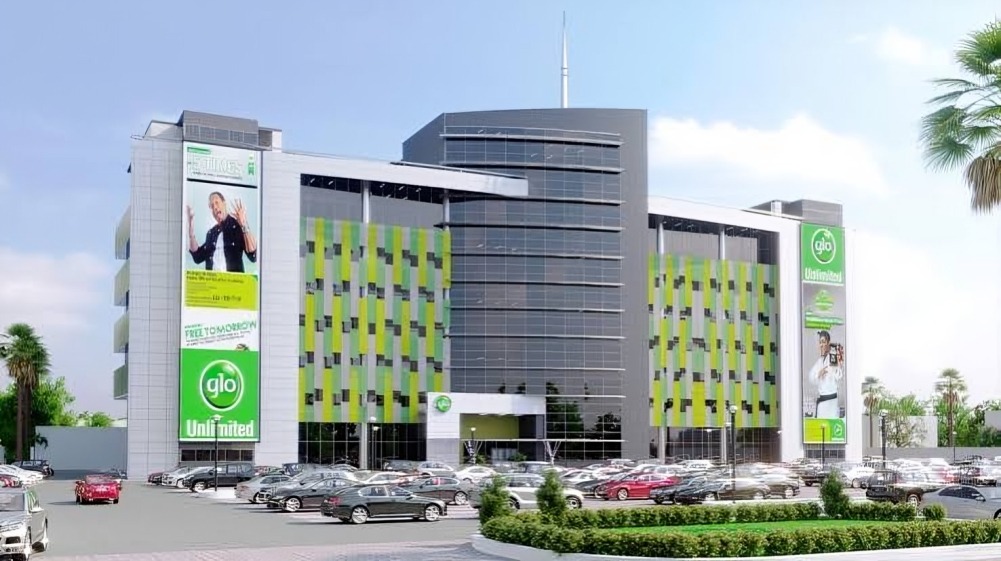
Nigeria had only about 400,000 active telephone lines in 2001, when the country began opening its telecommunications market to GSM operators.
MTN, Econet and state-owned M-Tel received GSM licences that year. Globacom arrived later after receiving a Second National Operator licence in 2002 but it happened with an aggressive pricing strategy.
At launch in August 2003, it introduced per-second billing at one kobo per second, challenging operators that were charging around ₦50 per minute.
SIM cards that had previously cost thousands of naira also became dramatically cheaper as Glo pushed prices down.
Competitors responded with their own price reductions and per-second billing.
That competition helped change the economics of owning a mobile phone in Nigeria. Mobile subscriptions eventually moved from the tiny base of the early 2000s to more than 200 million lines.
Glo did not create that growth alone. MTN, Airtel, 9mobile and later operators all contributed to the expansion.
Still, its arrival gave consumers another major operator willing to compete aggressively on price.
READ ALSO: NCC Begins First Major Telecom Pricing Review in Nearly a Decade
A few years later, Glo made another move that went beyond mobile calls.
Globacom invested in its own international submarine cable, Glo-1, connecting Nigeria to the United Kingdom and other points along the West African coast.
The 9,800-kilometre system landed in Lagos in 2009 and became operational in 2010. Its capacity has since been upgraded to 2.5 terabits per second, according to submarine cable industry data.
At the time, that infrastructure mattered because Nigeria had limited international bandwidth. Glo-1 added capacity and challenged the dominance of the older SAT-3 system.
MainOne followed with its own privately owned cable, while other operators and technology companies later invested in additional subsea connections.
Nigeria now sits on several international cables that support everything from mobile internet and banking to streaming, cloud services and data centres.
Glo’s ownership structure has remained unchanged through all of that.
No public share sale has brought outside shareholders into Globacom. No stock-market valuation tells investors what the company is worth.
Its financial performance is therefore not subjected to the same level of public disclosure as listed competitors such as MTN Nigeria.
That difference is becoming more noticeable as Nigeria’s telecom industry enters a more capital-intensive phase.
Operators need billions of naira for spectrum, fibre, data centres, network upgrades and the transition toward faster connectivity. At the same time, rising operating costs and currency depreciation have made telecom infrastructure considerably more expensive.
Publicly listed operators can raise equity from shareholders when they need fresh capital. Private companies have to rely on their owners, lenders or other private financing arrangements.
Adenuga has chosen to keep Glo within that private structure for more than two decades.
The decision has given him complete control over the company while keeping one of Nigeria’s biggest telecom businesses outside the stock market.
Glo’s story therefore sits in an unusual place within Nigerian business.
It helped make mobile communication cheaper, invested in infrastructure that expanded international connectivity and built a brand that remains familiar to millions of Nigerians.
Yet after 23 years, none of those achievements has resulted in a public shareholding structure.
Mike Adenuga still owns all of Glo.
And unlike MTN Nigeria and Airtel Africa, anyone looking to own a piece of the telecom giant cannot simply buy it on a stock exchange.

Joy Onuorah is a business journalist and brand communications specialist covering financial markets, artificial intelligence, digital economy, and the ideas reshaping business across Africa and the global market. Beyond her reporting for TheWill, Joy uses brand strategy, storytelling, copywriting, and high-value SEO to help brands build lasting market authority.