
-
Aigboje Aig-Imoukhuede has challenged political and economic leaders in the Niger Delta to account for the enormous resources that have flowed into the region since 1999.
-
The intervention came against the backdrop of persistent poverty and poor social infrastructure in the oil-producing region, with WTO Director-General Ngozi Okonjo-Iweala putting the number of multidimensionally poor people in the Niger Delta at about 24 million out of an estimated 50 million population.
-
Okonjo-Iweala urged the private sector to take the lead in rebuilding the regional economy through investments in critical minerals, agriculture, manufacturing and the coastal economy.
-
NDDC Managing Director Samuel Ogbuku and other stakeholders called for regional-scale solutions, including an integrated rail network, common energy system.
September 16, (THEWILL) – The debate over the future of the Niger Delta took a sharper turn on Tuesday as leading business figures and development stakeholders questioned why decades of oil wealth and public spending have failed to produce a commensurate transformation in the region.
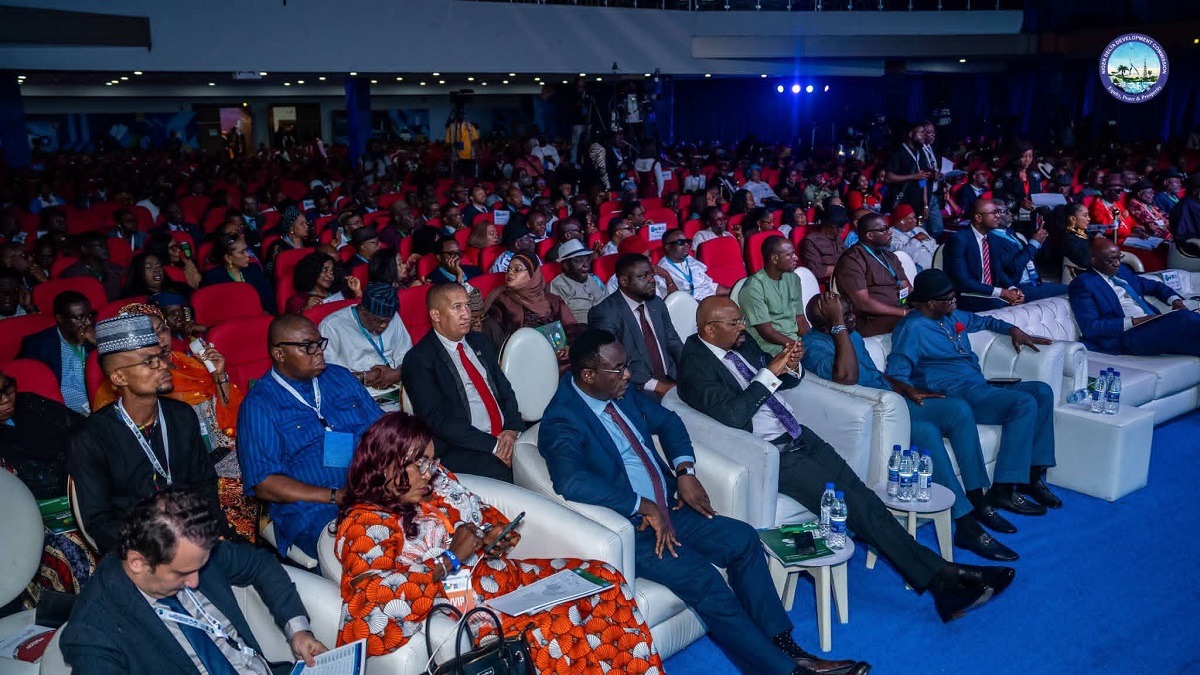
Chairman of Access Holdings and Coronation Group, Aigboje Aig-Imoukhuede, told participants at the 2026 Niger Delta Economic and Investment Summit in Port Harcourt that the region needed to stop measuring its progress by the amount of money received from the Federal Government and begin assessing what those resources had actually built.
He said the fundamental issue was the absence of sufficient productive assets capable of generating wealth, employment and economic value long after government allocations had been spent.

THEWILL reports that Aig-Imoukhuede, who delivered the keynote address at the summit, estimated that the nine Niger Delta states and their local governments had received the equivalent of about $140 billion in federal allocations since 1999.
With resources channelled through the Niger Delta Development Commission (NDDC) included, he put the total at approximately $160 billion over 27 years.
“The question is no longer how much came to the Niger Delta. The question is, what stock of productive capital did this $160 billion leave behind?” he asked.
The question, he said, went beyond financial accountability to the broader issue of whether public resources had translated into infrastructure, industrial capacity, competitive enterprises, stronger institutions and sustainable employment.
Aig-Imoukhuede described the Niger Delta’s predicament as a “conversion problem”, arguing that the region had not adequately converted its resource wealth into productive economic capacity.
“The Niger Delta has a conversion problem. Natural resources do not create prosperity by themselves. Natural resources create possibilities, but it is institutions that determine what happens to our possibilities and our dreams,” he said.
He urged the region to abandon what he described as a “rent-focused economy” and embrace a productive economic model driven by investment, enterprise and long-term capital.
He also called for a transition from fragmented public expenditure to integrated regional economic platforms and from nine largely separate state economies to a more coordinated Niger Delta economy.
According to him, continued emphasis on derivation, revenue allocation and federal intervention would not by itself solve the region’s development problems.
“Distributive justice and economic development are not the same thing,” he said.
The businessman proposed a Niger Delta Development and Investment Compact involving the nine state governments, Federal Government, NDDC, private sector, communities, development institutions and providers of long-term capital.
He said the compact should identify a limited number of regional priorities and establish clear mechanisms for financing, implementation and measurement.
Aig-Imoukhuede also challenged the region’s political, business, professional, traditional, academic and religious elite to accept responsibility for its development shortcomings instead of attributing every failure to the Federal Government.
He argued that the Niger Delta’s resource base could have been deployed to build institutions and financial assets capable of funding development on a sustainable basis.
He cited the African Export-Import Bank (Afreximbank) as an illustration of the type of institution that could have been built with a fraction of the resources available to the region.
Okonjo-Iweala Raises Poverty Alarm
Adding an international development perspective to the discussion, Director-General of the World Trade Organisation, Dr Ngozi Okonjo-Iweala, warned that the region’s development indicators remained deeply troubling despite its enormous natural endowment.
Speaking through a virtual goodwill message at the summit, Okonjo-Iweala said the Niger Delta, with a population of about 50 million, had approximately 24 million people classified as multidimensionally poor.
She also said about 60 per cent of households lacked access to clean drinking water, while 72 per cent lacked adequate sanitation facilities.
For the WTO chief, the figures underline the need to move urgently from resource extraction and public spending to productive investment capable of improving household incomes and living conditions.
She therefore called for private-sector-led regeneration of the Niger Delta.
Okonjo-Iweala identified critical minerals, agriculture and the coastal economy as areas where the region could diversify its economic base.
She said deposits of kaolin, silica, clay and bentonite could provide the raw materials needed to develop manufacturing industries and regional supply chains.
Agriculture, she added, should not remain centred on the production and sale of raw commodities, but should be developed around processing and higher-value products.
The region’s coastline and seaports, she said, also presented opportunities for the development of shipping, fisheries and aquaculture.
Okonjo-Iweala urged businesses owned by people from the Niger Delta to demonstrate confidence in the region by investing locally.
READ ALSO:
She said local investment would send a strong signal to outside investors that the region could support viable businesses and attract capital.
The WTO Director-General also charged the newly revived Niger Delta Chamber of Commerce, Industry, Trade, Mines and Agriculture (NDCCITMA) to operate with private-sector discipline and focus its activities on measurable investment and job-creation outcomes.
Ogbuku Wants Regional Infrastructure
Managing Director of the NDDC, Dr Samuel Ogbuku, said the region’s greatest resource remained its people and urged stakeholders to develop systems that would enable them to drive economic transformation.
Ogbuku proposed a common regional energy system and integrated rail network connecting the nine Niger Delta states.
He said such infrastructure would help reduce the cost of doing business, improve movement across the region, support industrialisation and make the Niger Delta more attractive to investors.
He also proposed a Niger Delta think tank comprising professionals, bankers, entrepreneurs and other influential people from the region.
The body, he said, should help sustain the implementation of summit resolutions and provide technical direction for regional economic initiatives.
‘From Resources To Productivity’
Chairman of NDCCITMA, Idaere Gogo Ogan, said the summit was intended to change the way the region viewed its economic future.
He said the objective was to move “from resources to productivity, from extraction to value, and from dependence to sustainable economic diversification.”
Ogan said the Niger Delta had opportunities across agriculture and agro-processing, oil and gas value chains, gas utilisation, petrochemicals, maritime activities, tourism and digital technology.
He also stressed the importance of human capital development and stronger partnerships between government and the private sector.
Representing Abia State Governor Alex Otti, Director-General/Chief Executive Officer of the Abia State Public-Private Partnership and Investment Promotion Office, Chinedum Chijioke, warned against allowing the summit to end with another communiqué that would not be implemented.
He urged participants to agree on measurable targets covering security, infrastructure, land access, electricity and ease of doing business.
“What gets measured gets fixed,” Chijioke said, warning that without clear responsibilities and timelines, the summit risked becoming another talking shop.
The common thread running through the interventions was that the Niger Delta’s next phase of development must be measured not by the size of allocations it receives, but by the infrastructure, businesses, jobs, institutions and productive assets those resources help create.
For the region’s leaders and private-sector stakeholders, the challenge is now to turn the recurring debate over its vast oil wealth into a sustained programme of investment and economic diversification capable of delivering measurable improvements in the lives of its people.

Felix Ifijeh is a journalist with years of professional reporting experience. Known for his keen news sense, compelling storytelling and commitment to accurate, impactful reporting, he has built a reputation for turning leads into clear, engaging, and well-structured reports that resonate with readers. His work reflects deep newsroom experience and a commitment to accurate, impactful journalism.