
-
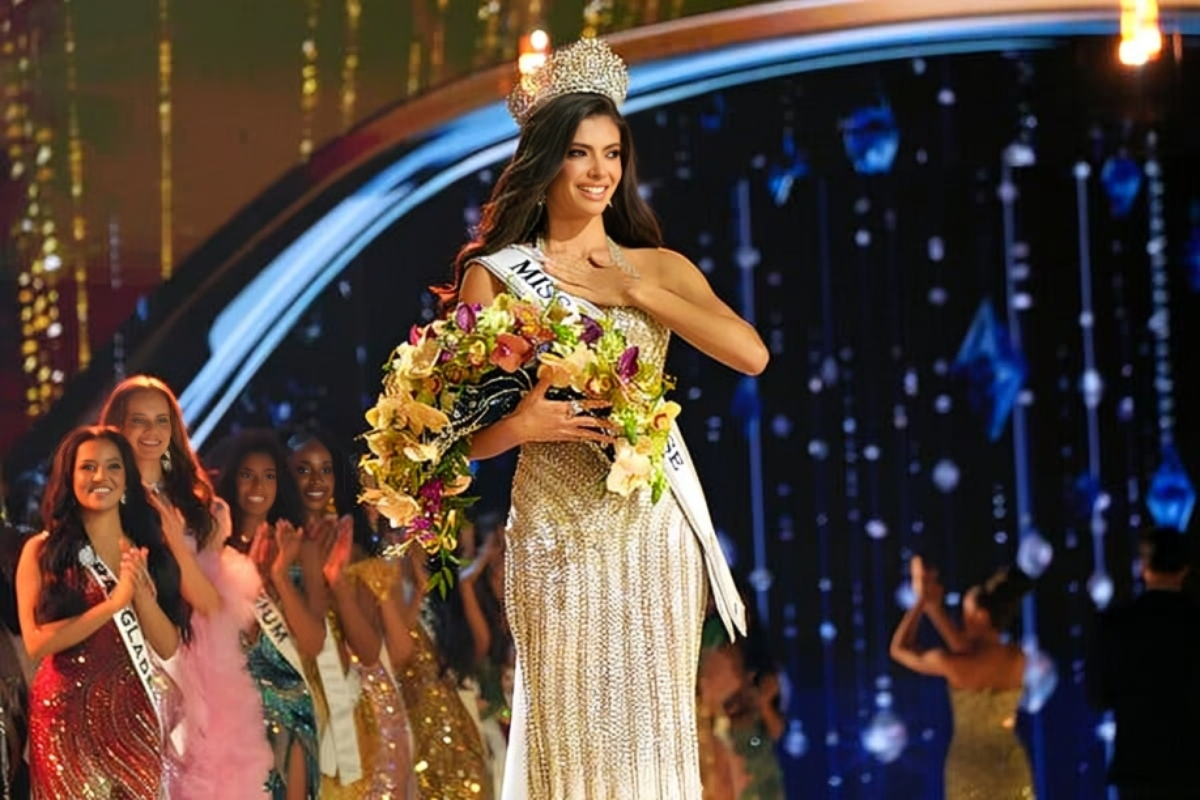
Puerto Rico’s Jennifer Barreto has been crowned Miss Universe 2026, becoming the first mother and married woman to win the international beauty title.
-
The 27-year-old made history on home soil in San Juan, securing Puerto Rico’s sixth Miss Universe crown.
-
Her victory follows the organisation’s landmark 2023 eligibility changes, which opened the competition to married women and mothers.
-
Barreto’s achievement represents a significant moment in the evolving conversation around motherhood, representation and women’s opportunities on the global stage.
November 25, (THEWILL) – Puerto Rico has a new reason to celebrate after Jennifer Barreto emerged victorious at the 75th edition of the Miss Universe competition, delivering a historic moment for the Caribbean territory and the international pageant industry.
The 27-year-old was crowned Miss Universe 2026 on Tuesday, 24 November, at the José Miguel Agrelot Coliseum in San Juan, where she competed against delegates from around the world. Her victory carries significance beyond the traditional glamour associated with the competition, as she becomes the first married woman and mother to wear the coveted international crown.
“I was committed to represent Puerto Rican women and all women”, she said.
For Barreto, the achievement represents a breakthrough in an industry whose eligibility requirements historically excluded women who had married or become mothers. Her triumph demonstrates how changing perceptions of womanhood are gradually finding expression in one of the world’s most recognisable beauty competitions.
A mother herself, Barreto has a seven-year-old daughter, Penélope, with her husband. She also brings an impressive professional background to the title, having studied psychology and social work and earned two master’s degrees. Her career has included working as a prevention specialist with the United States Department of Defense, focusing on strategies to address harmful behaviours and strengthen community wellbeing.
Her academic and professional experiences provide another dimension to her new international platform, positioning her as a representative whose story extends beyond fashion, appearance and the traditional expectations of a beauty queen.

The final night saw Mexico’s Fátima Bosch pass the crown to her successor after a competition featuring 116 delegates. Barreto’s victory was greeted with excitement in Puerto Rico, particularly in her hometown of San Sebastián, where residents gathered to follow the competition and celebrate the historic result.
The win also ends Puerto Rico’s 20-year wait for another Miss Universe title. The territory’s previous victories came through Marisol Malaret in 1970, Deborah Carthy-Deu in 1985, Dayanara Torres in 1993, Denise Quiñones in 2001 and Zuleyka Rivera in 2006.
Barreto’s achievement therefore carries both personal and national significance. Beyond bringing another crown to Puerto Rico, she has become a symbol of a changing pageant landscape in which motherhood and marriage no longer automatically disqualify women from pursuing international recognition.
As she begins her reign, the spotlight will turn to how she uses the Miss Universe platform to advance her interests in community development, prevention and social advocacy.
READ ALSO:
The Miss Universe Pageant
Established in 1952, Miss Universe has grown from an American beauty competition into one of the world’s most internationally recognised pageant institutions. Its inaugural edition took place in Long Beach, California, with Finland’s Armi Kuusela becoming the first titleholder.
Over the decades, the competition has expanded its international reach, bringing together women representing countries and territories across different continents. Its annual showcase combines fashion, evening wear, interviews, public presentation and other competitive segments, while the winner assumes a year-long role involving international appearances, advocacy and promotional engagements.
The competition has also become an influential platform for conversations about culture, identity, representation and women’s participation in public life. One of the most significant developments in the pageant’s modern history came in 2023, when the Miss Universe Organisation introduced new eligibility rules allowing married women and mothers to compete.
Previously, contestants were required to be unmarried and without children, with restrictions also applying throughout a titleholder’s reign. The decision represented a major departure from more than seven decades of traditional eligibility requirements and reflected changing attitudes towards women’s personal and professional lives. Although mothers and married women subsequently entered the competition, Barreto’s 2026 coronation marks the first time a contestant in either category has gone on to win the international title.

Gertrude Oby is a writer and journalist passionate about the creative industries. Works span fashion, film, media, art, and culture.