
-
Niger Delta Stakeholders from oil and gas host communities have called for increased engagement between the federal government and host communities to work in synergy for increased output for the country.
-
They spoke against the backdrop of the bi-monthly engagement between the Pipeline Infrastructures Nigeria Limited and Stakeholders from oil and gas producing communities.
-
Stakeholders not only appreciated Pipeline Infrastructures Nigeria Limited for the regular interface, but solicited improved corporate social responsibility for the host communities.
-
Chief Akppos Meze, the General Manager, Community and Government Relations of Pipeline Infrastructures Nigeria Limited, informed that the state recorded a long period of zero infractions on the Trans Niger pipeline (TNC).
October 13, (THEWILL) – Stakeholders from oil and gas host communities in Bayelsa State, including the Ijaw National Congress (IYC) Worldwide, have called for increased engagement between the Federal Government and the communities to ensure maximum security of the pipelines and increased output for the country.
The stakeholders who spoke in Bayelsa State at the bi-monthly stakeholders forum with host communities convened by Pipeline Infrastructure Nigeria Limited (PINL) urged the Federal Government to copy the PINL model of regular engagement with host communities.
Comrade Famous Daunemigha, Second National Deputy President of the Ijaw Youth Council (IYC) Worldwide, told journalists that since PINL started operations in the Eastern Corridor, it has maintained regular meetings with host communities along the Trans Niger Pipeline (TNP), which he said has contributed greatly to the successes they have recorded in securing the lines.

He noted that the host communities are critical stakeholders and, as such, could not be ignored in the oil and gas value chain.
“PINL has done well; they are relating with all the critical stakeholders for over a period now. We can see there is ownership of the process. We all own it. We are now like partners in progress.
“The Nigerian government have also seen that when the people that own the pipeline, own the resources, are part of the process of securing it, it’s easier for them to achieve peace. You can put 1,000 soldiers on the pipeline; you will not achieve it. But when the people are okay and happy with you, with the way PINL is doing, the people will be part of it, they will own it, leading to steady oil production”, he said.
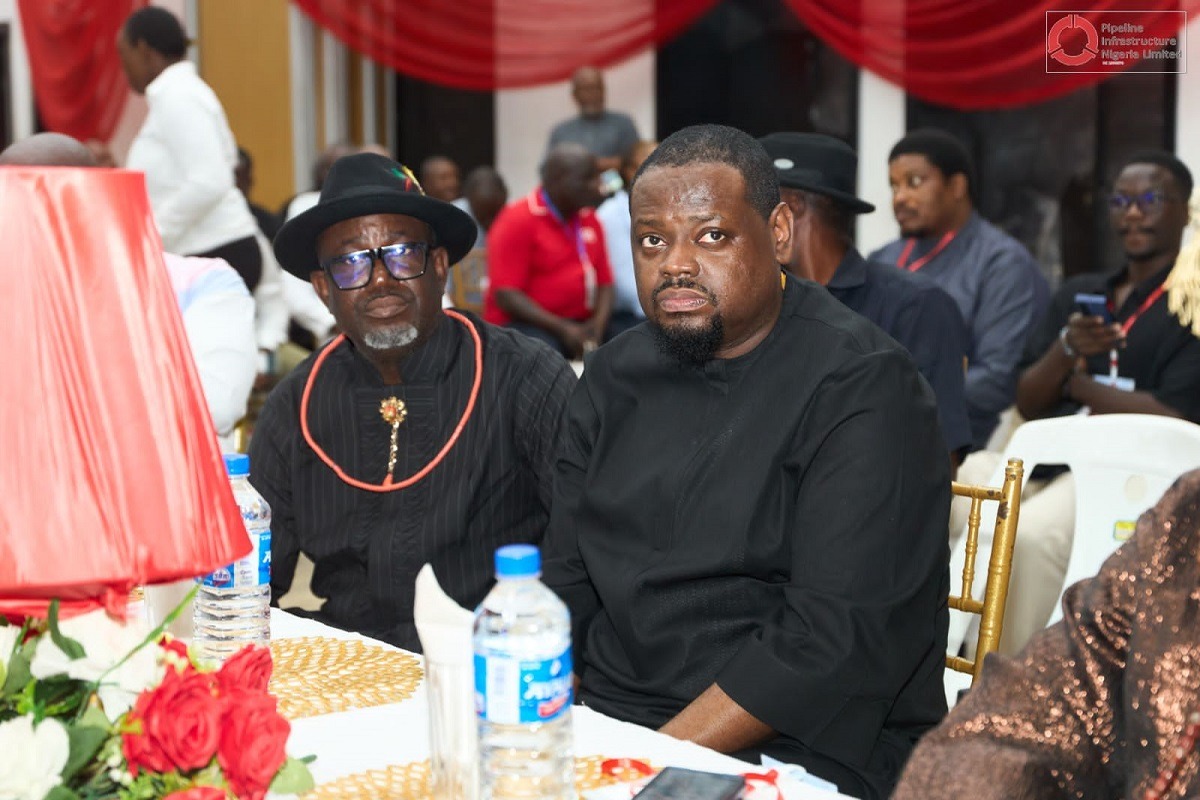
The Ijaw youth leader noted that the state is recording zero infractions on the lines because they have owned the process courtesy of PINL’s regular engagement with the host communities.
“There is no infraction. It means that the people that own the resources are ready to protect it. This is feedback to the Federal Government that: look at the model that is being used by PINL by engaging the host communities as the owners of the resources and their subsidiaries. They can use that model and apply it to their own dealings with us as well. By so doing, Nigeria will have a steady revenue which will trickle down to all of us”, he added.
A community leader, HRH David Oseni Oseni of Elebele Community, Bayelsa State, acknowledged the company’s role in safeguarding their environment.
He also warned youths against tampering with oil and gas pipelines because of the negative impacts on the communities and environment.
The monarch said PINL’s engagement with host communities has become a game-changer in the surveillance activities.
“Oil spills are doing more damage to the environment. Our food, our crops, our aquaculture, the negative impact is coming back to us, not the Federal Government, not these multinationals, but to us.
“If we destroy the pipes today and the negative impact comes to the environment, your family, your mother, your parents, everybody will suffer. So please, it’s a take-home message.
“Since PINL have decided to integrate the traditional rulers and the leaders of various communities, there is relative peace, and we must learn how to sustain it and build on it”, he stated.
READ ALSO:
For Hon. Living Meeting, the lawmaker representing Ekeremor Constituency 2: “What the PINL is doing is seemingly primarily benefiting the Federal Government, but in truth, our communities tend to benefit more. At one point, our oil infrastructure was suffering a lot of sabotage, and the impact of the sabotage was always creating havoc on our communities.
“When the pipeline is tampered with and oil leaks into the rivers, it becomes a problem for our local fishermen to survive. Our environment cannot thrive without its natural habitat. So, what the PINL has done has also benefited us by way of protecting the infrastructure so that the devastation that comes with the equipment failure and everything can be contained”, he said.
The lawmaker, while commending the operational strategy of the company, called on stakeholders of the host communities to sustain their support for the company.
Earlier in his address, Dr Akpos Mezeh, General Manager, Community and Government Relations of PINL, in his brief, informed the stakeholders that the state recorded a long period of zero infractions on the TNP, especially from August.
He reminded the stakeholders of their critical role in helping the federal government achieve its 2027-2030 benchmark for oil and gas production.
“NNPC Limited has set ambitious production targets of 2 million barrels per day by 2027 and 3 million barrels per day by 2030, alongside a target of 12 billion standard cubic feet of natural gas production per day by 2030.
“For these ambitions to become sustainable realities, the security and integrity of pipelines and other critical infrastructure will be fundamental. This is where the role of host communities becomes particularly important.
“The communities through which these assets pass are not passive observers. They are partners in protecting the infrastructure that supports our national economy. Every pipeline protected is an asset preserved. Every incident prevented is production protected. Every timely piece of intelligence shared can help prevent disruption”, he stressed.

Amos Okioma is a Correspondent at THEWILL
