
November 23, (THEWILL) – NVIDIA’s board took eleven days to go from accepting co-founder Jensen Huang’s resignation to publicly ruling out his return, and then reversing itself to put him back in charge.
On November 12, 2026, NVIDIA announced that Huang had stepped down as president, chief executive officer, and board member, naming Chief Financial Officer Colette Kress as interim CEO.
That exit followed revelations regarding his personal conduct alongside contested allegations involving a businesswoman suspected by U.S. authorities of links to Chinese intelligence, a claim Beijing has denied.
Five days later, on November 17, the board publicly stated it had no intention of reinstating him, even after Huang signalled he was open to returning.
By November 23, that position had collapsed. Facing intense pressure from employees, institutional shareholders, and commercial partners, alongside public backing from technology leaders and President Donald Trump, NVIDIA’s board reinstated Huang with immediate effect.
Wall Street wasted no time pricing in its relief. NVIDIA shares surged roughly 33% following the announcement, recovering billions in market value that had evaporated during the eleven-day leadership vacuum.

Market enthusiasm, however, measures short-term certainty rather than institutional health. Bringing Huang back solves an immediate commercial crisis while exposing a much deeper governance vulnerability at the centre of the global artificial intelligence economy.
Why Investors And Partners Demanded His Return
Understanding why shareholders and customers pushed so aggressively for Huang’s reinstatement requires looking at how NVIDIA operates. Since co-founding the company in 1993, Huang has turned a graphics-chip maker into the primary supplier of the computing infrastructure running modern artificial intelligence.
His value inside NVIDIA goes far beyond standard executive management. Over three decades, he has served as the primary architect linking NVIDIA’s GPU hardware roadmap with its proprietary CUDA software ecosystem, the platform that locks AI developers into NVIDIA chips.
He personally manages supply-chain allocations with semiconductor foundries and maintains direct commercial relationships with the company’s largest buyers, including Microsoft, Amazon, Google, and Meta.
In a sector moving at breakneck speed, losing that institutional memory overnight introduced severe execution risk. Industry analysts at IDC warned after the initial resignation that a prolonged transition threatened product roadmaps, ecosystem investments, and customer commitments.
When billions of dollars in data-centre orders hang on delivery timelines for next-generation AI processors, shareholders prioritised operational continuity over formal succession protocols.
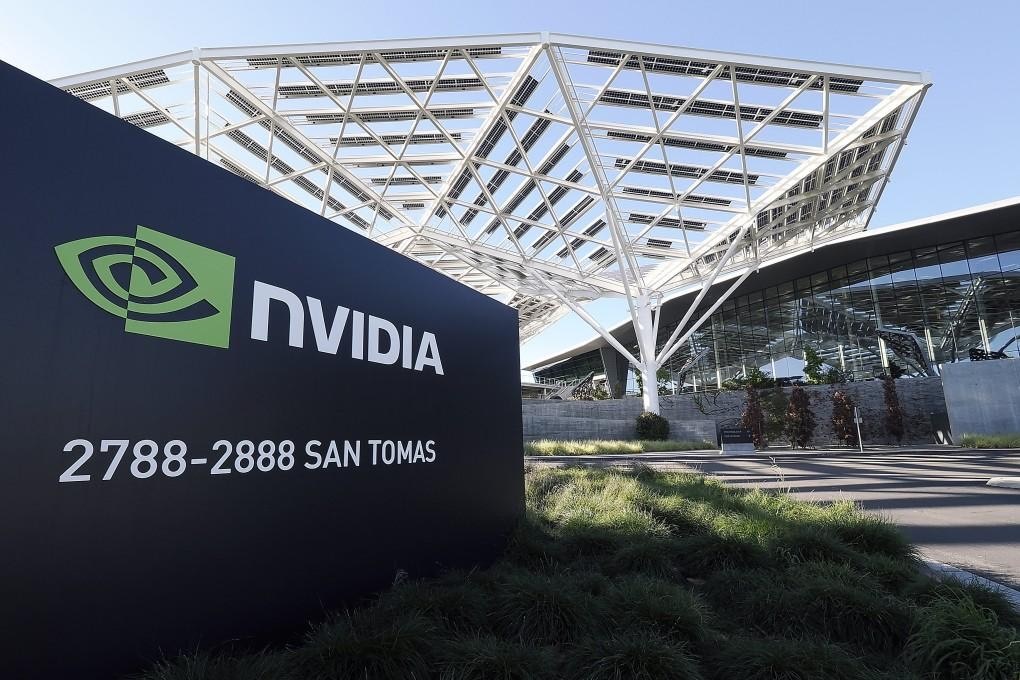
The Institutional Cost Of A Eleven-Day Reversal
Commercial logic explains the board’s decision, though it does not erase the governance damage left behind.
Modern corporate governance rests on the principle that rules apply uniformly and no individual outgrows the institution.
When NVIDIA accepted Huang’s resignation on November 12 and doubled down on November 17, the board signalled that specific standards of conduct and risk management outweighed commercial convenience.
Reversing that decision less than two weeks later creates a visible two-tier standard inside the company: one set of rules for rank-and-file executives, and another for a founder deemed too valuable to lose.
That tension sharpens when national security enters the picture. NVIDIA sits at the centre of U.S.–China technology competition, supplying advanced processors subject to strict U.S. export controls.
While the intelligence allegations involving Huang remain unproven and denied by Beijing, Reuters reports that NVIDIA has formed a committee to investigate potential foreign intelligence efforts targeting its CEO and is recruiting a new chief compliance officer.
Reinstating a chief executive while compliance reviews are still unfolding puts enormous pressure on the board to prove its independence.
The board stated it was satisfied with Huang’s candour and saw no national-security risk after receiving input from senior U.S. government officials. Even with political backing from Washington, corporate boards owe shareholders an independent fiduciary judgment rather than one shaped by external lobbying or stock-price panic.
READ ALSO:
The Founder Dependency Trap
Beneath the politics and stock charts sits a structural flaw that extends well beyond Silicon Valley. If the departure of one executive triggers enough market panic and internal revolt to force a board reversal inside eleven days, the company has a succession problem.
Technology giants have wrestled with this founder paradox before, from Apple under Steve Jobs to Tesla and SpaceX under Elon Musk.
Founders bring unmatched product conviction and strategic speed, though over-reliance on one leader hollows out institutional resilience.
Reinstating Huang removes today’s uncertainty at the cost of reinforcing NVIDIA’s dependence on a single individual.
That lesson carries direct weight for ambitious businesses in Nigeria and across Africa, where high-growth companies frequently revolve around a single founder who serves as chief strategist, primary fundraiser, and public face.
Early-stage speed often depends on that concentration of authority, though long-term durability requires building executive benches and governance rules strong enough to survive a founder’s exit.
What Determines If the Gamble Pays Off
NVIDIA has made its bet on continuity. Over the next six to eighteen months, five concrete markers will determine how well that decision holds up:
- Board Oversight and Compliance: NVIDIA must follow through on hiring an empowered chief compliance officer and concluding its internal review transparently so governance credibility is restored.
- Succession Depth: The board needs to elevate senior leaders capable of managing key hyperscaler relationships and product lines independently, reducing single-person risk before the next crisis hits.
- Export Control Navigation: Huang must manage Washington’s tightening semiconductor export rules without triggering fresh regulatory friction around global sales.
- Product Execution: Maintaining delivery schedules for next-generation AI chips remains the core commercial justification for his return.
- Competitive Retention: Rivals including AMD, Intel, and custom-chip designer Broadcom will use any lingering instability to pitch cloud buyers on diversifying away from NVIDIA’s ecosystem.
Jensen Huang’s return proves just how much economic power a visionary founder can command in modern capitalism.
Proving that NVIDIA is an enduring institution rather than a one-man enterprise remains the harder test still ahead.

Joy Onuorah is a business journalist and brand communications specialist covering financial markets, artificial intelligence, digital economy, and the ideas reshaping business across Africa and the global market. Beyond her reporting for TheWill, Joy uses brand strategy, storytelling, copywriting, and high-value SEO to help brands build lasting market authority.