
-
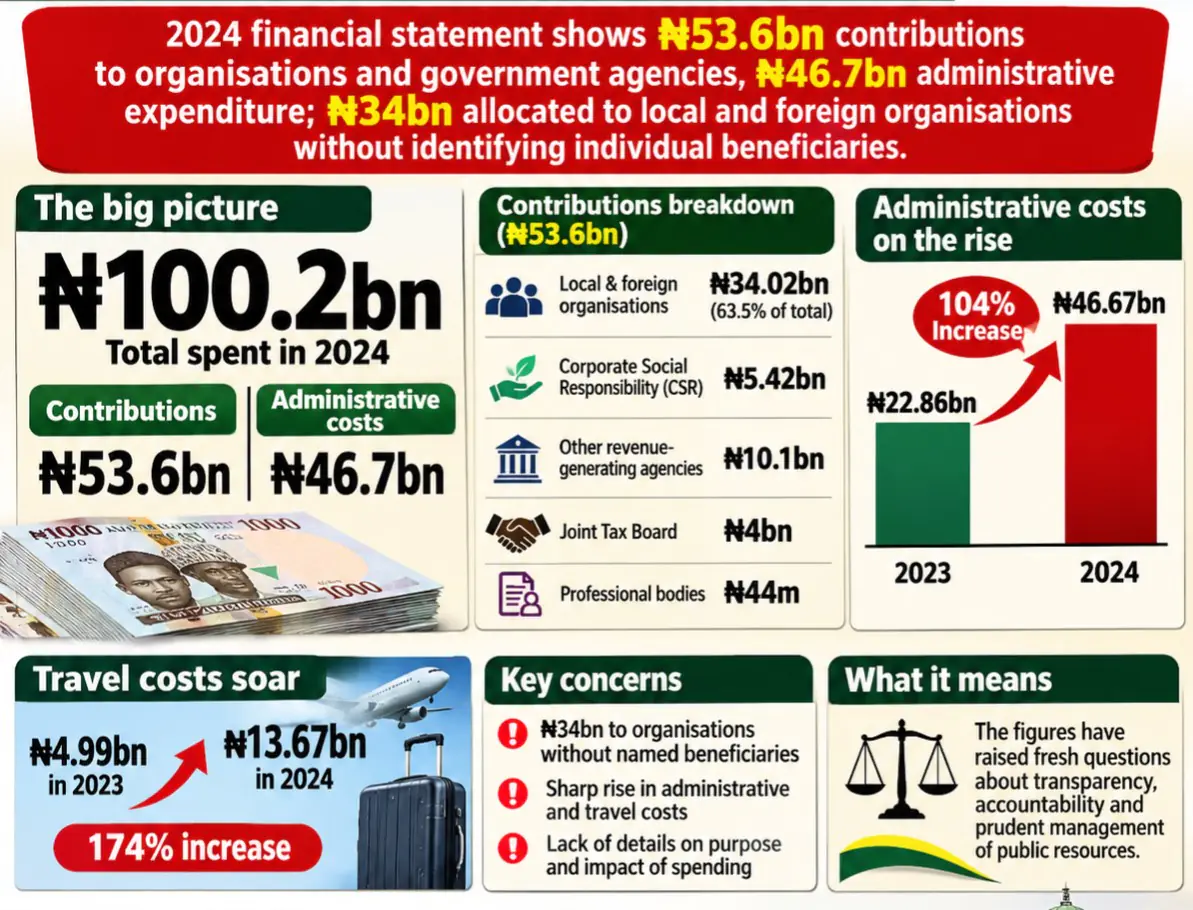
The Nigeria Revenue Service (NRS), formerly the Federal Inland Revenue Service (FIRS), recorded approximately ₦100.2bn in combined contributions and administrative expenditure in 2024.
-
Contributions to local and foreign organisations jumped from about ₦158.9m in 2023 to ₦34.02bn in 2024.
-
The agency also recorded ₦10.1bn in contributions to other revenue-generating agencies, ₦5.42bn for corporate social responsibility (CSR) and approximately ₦4bn for the Joint Tax Board.
-
Administrative expenses climbed by 104 per cent to ₦46.67bn, while travel and transport expenditure surged from approximately ₦4.99bn to ₦13.67bn within one year.
November 19, (THEWILL) – The Nigeria Revenue Service (NRS), formerly the Federal Inland Revenue Service (FIRS), recorded approximately ₦100.2bn in combined contributions and administrative expenditure in 2024, with more than half of the amount going to contributions to organisations, government agencies and corporate social responsibility activities.
The expenditure, disclosed in the agency’s 2024 Annual Report and Accounts, comprises approximately ₦53.59bn in contributions and ₦46.67bn in administrative costs, reflecting substantial spending across both categories during the financial year.
The accounts particularly show a dramatic increase in the amount allocated to local and foreign organisations, which rose from approximately ₦158.9m in 2023 to ₦34.02bn in 2024.
The disclosure comes as Nigerians contend with the rising cost of living and an expanding tax burden, while the government intensifies efforts to improve revenue mobilisation and increase compliance with tax obligations.
₦34bn Contributions to Organisations
A breakdown of Note 22 of the financial statement shows that contributions to local and foreign organisations accounted for the largest portion of the NRS’s ₦53.59bn expenditure under the category.
The ₦34.02bn allocation represented approximately 63.5 per cent of the total contributions recorded in 2024.

The agency also spent ₦5.42bn on corporate social responsibility activities, compared with approximately ₦13.65bn in 2023.
Another ₦10.1bn was recorded as contributions to other revenue-generating agencies, while approximately ₦4bn went to the Joint Tax Board. Contributions to professional bodies amounted to ₦44m.
The combined expenditure of approximately ₦53.59bn represented an increase of about ₦29.25bn, or 120 per cent, from the ₦24.33bn recorded in 2023.
The sharpest increase occurred in contributions to local and foreign organisations, which moved from a relatively modest allocation in 2023 to more than ₦34bn in the following year.
Administrative Expenditure Rises 104%
NRS also recorded a substantial increase in administrative expenditure, which climbed from approximately ₦22.86bn in 2023 to ₦46.67bn in 2024. The increase of about ₦23.8bn represents a 104 per cent rise within one year.
The financial statement lists administrative expenses alongside other operating costs, including maintenance and services, contributions to organisations, travel and transport, professional services, staff training, advertising and publicity, insurance premiums, rent and office accommodation.
Travel and transport expenditure recorded one of the most significant increases during the period.
The agency spent approximately ₦13.67bn on travel and transport in 2024, against about ₦4.99bn in 2023.
The difference of approximately ₦8.68bn represents an increase of about 174 per cent within 12 months.
The accounts also disclosed expenditure on professional services, staff training, advertising, insurance, rent, office accommodation, audit fees, bank charges and directors’ remuneration.
READ ALSO:
 Questions Over Public Expenditure
The expenditure disclosures are significant given the NRS’s central responsibility for collecting taxes and mobilising revenue to finance government programmes and public services.
NRS institutional mandates include strengthening tax compliance, modernising tax administration, building institutional capacity, enhancing public trust and strengthening legal and policy frameworks.
However, the financial statement does not establish the specific institutional objectives served by the ₦34.02bn contributions to local and foreign organisations or provide sufficient information to assess the individual beneficiaries and outcomes of the expenditure.
The same disclosure gap applies to the ₦10.1bn allocated to other revenue-generating agencies and the projects funded through the CSR expenditure.
While the accounts record the amounts spent under the various categories, the absence of detailed beneficiary information limits the extent to which the distribution and purposes of the funds can be independently assessed from the published statement.
The figures also show that administrative expenditure and contributions together accounted for approximately ₦100.2bn in 2024, underscoring the scale of resources committed to the agency’s operations and other institutional engagements during the year.

Felix Ifijeh is a journalist with years of professional reporting experience. Known for his keen news sense, compelling storytelling and commitment to accurate, impactful reporting, he has built a reputation for turning leads into clear, engaging, and well-structured reports that resonate with readers. His work reflects deep newsroom experience and a commitment to accurate, impactful journalism.