
-
NNPC provided ₦473.8bn to its gas infrastructure subsidiary in 2025 to support the Nigeria-Morocco Gas Pipeline, AKK pipeline and Anoh Gas Processing Company.
-
₦25.7bn in interest on the facility remained outstanding at the end of 2025, while ₦14.4bn was undrawn.
-
Petroleum economist Wumi Iledare says NNPC’s ₦7.2trn profit must be assessed alongside asset productivity, cash flows, capital efficiency and the ₦11.2trn energy-security receivable.
October 05, (THEWILL) – The Nigerian National Petroleum Company Limited (NNPC) committed ₦473.8 billion to major gas infrastructure projects in 2025, including the proposed Nigeria-Morocco Gas Pipeline, while ₦25.7 billion in interest on the facility remained outstanding at the end of the year.
The funding was provided to NNPC Gas Infrastructure Company Limited (NGIC), a wholly owned subsidiary of NNPC, to meet cash call obligations for the Nigeria-Morocco Gas Pipeline, provide an equity injection into Anoh Gas Processing Company (AGPC) and finance the Ajaokuta-Kaduna-Kano (AKK) gas pipeline project.
According to NNPC’s 2025 annual financial report, ₦14.4 billion of the facility remained undrawn as of December 31, 2025.

The report stated that the ₦473.8 billion loan was granted to NGIC “to fund the Nigeria–Morocco Gas Pipeline cash call commitments, equity injection to AGPC, and finance the AKK Pipeline Project.”
It added that ₦25.7 billion in interest on the facility was outstanding as of the reporting date.
Gas Pipeline Projects Drive NNPC Financing
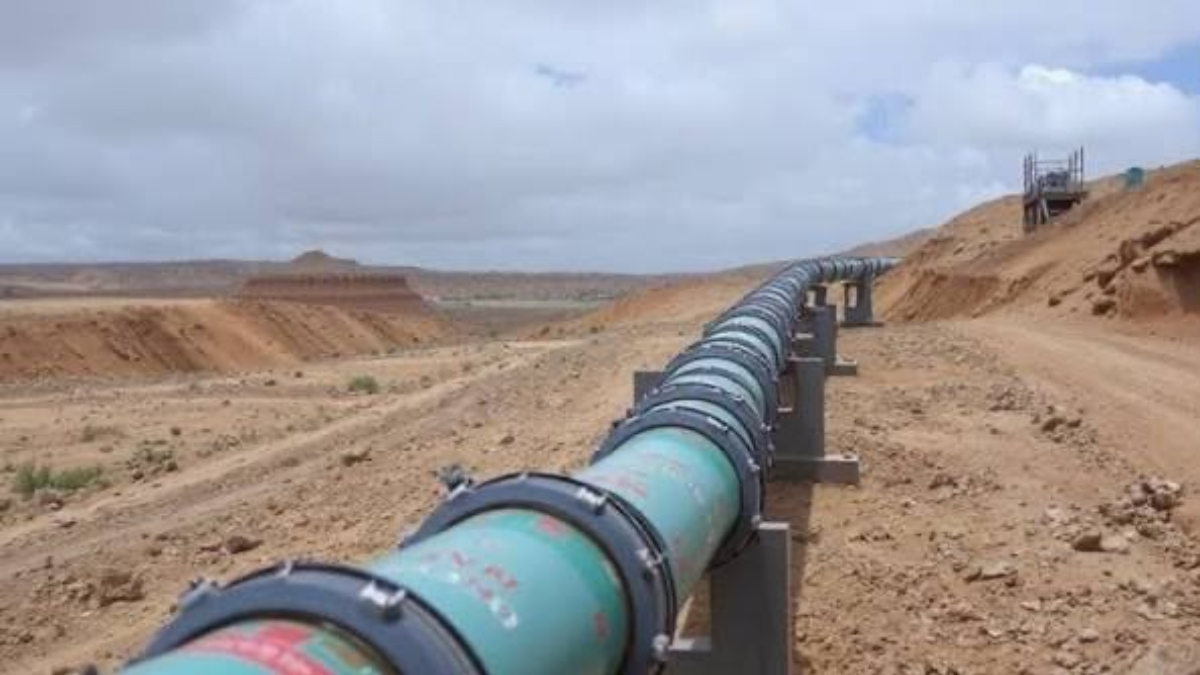
The disclosure provides further details of NNPC’s financial commitments to the expansion of Nigeria’s gas infrastructure, particularly the proposed Nigeria-Morocco Gas Pipeline, also known as the African Atlantic Gas Pipeline.
The proposed transnational project is expected to transport Nigerian natural gas through several West African countries to Morocco, with the potential to connect the country’s gas resources to European markets.
The proposed route is expected to pass through Benin, Togo, Ghana, Côte d’Ivoire, Liberia, Sierra Leone, Guinea, Guinea-Bissau, The Gambia, Senegal and Mauritania before reaching Morocco.
The pipeline is intended to improve regional energy access, support industrial development and strengthen gas exports, while encouraging investment in gas production and infrastructure across participating countries.
However, its development requires substantial financing, cooperation among participating countries and companies, as well as the construction of extensive pipeline infrastructure.
NNPC’s financial statements did not specify how much of the ₦473.8 billion facility had been allocated exclusively to the Nigeria-Morocco pipeline, as the loan also covers the AKK project and the equity injection into AGPC.
The AKK pipeline is a major domestic gas transportation project designed to move gas from southern Nigeria to the northern parts of the country, supporting power generation, industrial activities and other gas-consuming businesses.
Related-Party Lending Rises Sharply
The NNPC financial statements also showed a significant increase in lending to related parties during 2025.
At the company level, loans to related parties rose to ₦939.253 billion from ₦185.544 billion in 2024, representing an increase of ₦753.709 billion, or about 406.2 percent.
The 2025 balance included ₦211.642 billion lent to NNPC Energy Services Limited, ₦77.588 billion to Kaduna Refining and Petrochemical Company, ₦29.580 billion to Port Harcourt Refining Company, ₦113.327 billion to Warri Refining and Petrochemical Company, and ₦485.173 billion to NGIC.
The NGIC balance reported in the related-party loans table was higher than the ₦473.8 billion facility specifically described in the report. The financial statements, in the disclosure provided, did not explain the difference between the two figures.
NNPC also reported a ₦21.943 billion loan to the African Medical Centre of Excellence, an associate, while loans to related parties at the group level totalled ₦52.853 billion.
The group balance comprised ₦30.910 billion for Anoh Gas Processing Company and ₦21.943 billion for the medical centre.
The company also provided ₦133.5 billion to Kaduna Refining and Petrochemical Company to finance invoice payments and tax obligations associated with its Quick Fix Maintenance project. ₦56 billion of that facility remained undrawn at year-end.
Warri Refining and Petrochemical Company received ₦104.8 billion to finance tax payments relating to its Quick Fix Maintenance project, while ₦26.07 billion was disbursed to Port Harcourt Refining Company to settle outstanding invoices under a nine-month operations and maintenance contract for the Area 5 Plant.
NNPC also disclosed that an outstanding intercompany loan balance of ₦9.104 billion and ₦1.660 billion involving NNPC Limited and NIDAS Shipping Services Limited was converted to an investment following the conclusion of the relevant legal formalities pursuant to a 2021 TMC approval.
Separately, NNPC’s outstanding loan to Enserv stood at ₦211.6 billion at the end of 2025. The funding was intended to support the Keana drilling campaign, Chad Basin re-entry activities and other three-dimensional seismic acquisition projects.
READ ALSO:
Iledare Questions Sustainability Of NNPC’s Profit

The scale of NNPC’s financing commitments comes against the backdrop of the company’s reported ₦7.2 trillion profit for 2025, which petroleum economist and Professor Emeritus at the LSU Energy Institute, Wumi Iledare, said should not be viewed in isolation as evidence of sustainable commercial operations.
Iledare, who chairs the Nigeria Oil, Gas, and Energy Policy Forum in Abuja, said NNPC’s annual financial report should be assessed beyond its headline profitability to determine whether its transformation under the Petroleum Industry Act is delivering sustainable economic value.
“These are significant results and should be acknowledged. But they do not, on their own, establish sustainable commerciality. The more fundamental questions are: What assets does NNPC Limited actually own? How productive are those assets? How much of the reported earnings has been converted into cash? How transparent is the flow of value? And who is ultimately accountable for the decisions that determine that value?” he asked.
According to him, commerciality should be assessed not only through profitability but also through asset productivity, capital efficiency, sustainable production, reserves replacement and operating cash flow.
“A profitable petroleum company can still face declining production, inadequate reinvestment, weak asset productivity or deteriorating cash flow. The appropriate measures must therefore include asset productivity, capital efficiency, production sustainability, reserves replacement and operating cash flow, alongside conventional profitability. The question is not simply how much NNPC earned in 2025, but whether the assets and capital employed are generating sustainable economic value”, Iledare added.
He also stressed the need to distinguish between ownership of petroleum resources and ownership of commercial assets.
According to him, NNPC should have clearly identified and legally documented interests in joint ventures, production-sharing contracts, infrastructure and associated contractual rights, without taking ownership of Nigeria’s petroleum resources.
₦11.2trn Receivable Raises Cash-Flow Concerns
Iledare also raised concerns about NNPC’s reported ₦11.2 trillion receivable associated with energy-security expenditure, warning that outstanding payments could weaken the company’s ability to sustain operations despite its reported profit.
“The expenditure may have contributed to increased production and broader economic benefits, and those benefits should be recognised. But the outstanding receivable exposes a critical distinction between accounting performance and commercial sustainability: profit can be recognised before cash is collected”, he said.
He said NNPC needed transparent reporting of receivables, credible recovery arrangements and enforceable payment terms to ensure that reported earnings translated into available cash.
While welcoming the company’s audited financial statements, Iledare argued that transparency should extend beyond the publication of accounts.
“The public should be able to follow the economic chain from resources and contractual rights, to assets, production, lifting, sales, revenue, costs, earnings, government payments and reinvestment”, he stated.
He further cautioned against treating a proposed initial public offering as a substitute for commercial reform.
According to him, a stock market listing could improve disclosure and accountability, but should come after NNPC establishes a clear asset base, dependable cash generation and disciplined capital allocation.
“Ultimately, Nigeria needs more than a profitable NNPC Limited. It needs an NNPC Limited capable of converting petroleum resources and productive assets into sustainable economic value while remaining transparently accountable for the national wealth entrusted to it. That, in my view, is the real test of commerciality under the PIA”, he said.

Ogochukwu Onwaeze is a writer specializing in business and economic journalism. At THEWILL News Media, she translates market trends, financial developments, and policy shifts into clear and engaging stories.
