
-
World Bank says federal interest payments reached ₦7.7trn against ₦6.2trn in revenue in the first half of 2026, a ratio disputed by the Finance Ministry.
-
Nigeria has not published budget implementation reports since Q3 2025, limiting scrutiny of actual spending and fiscal performance.
-
Education and health received a combined ₦6trn allocation in the 2026 budget, ₦1.7trn below the federal government’s first-half interest bill.
October 19, (THEWILL) – Nigeria’s public finances are facing renewed scrutiny as the Federal Government challenges the World Bank’s assessment of its debt burden, while the absence of recent budget implementation reports limits independent verification of revenue and expenditure.
The World Bank’s latest Nigeria Development Update, Beyond the Federal Purse, reported that the Federal Government spent ₦7.7 trillion on interest payments in the first half of 2026, against revenue of ₦6.2 trillion.
The figures put interest payments at 124.2 percent of federal revenue, meaning the government’s reported interest bill exceeded its revenue by ₦1.5 trillion during the six months.

However, the Federal Ministry of Finance has disputed the interpretation, arguing that the calculation excludes some government revenue and includes debt obligations serviced on behalf of other tiers of government.
The disagreement raises questions about the appropriate measure of Nigeria’s debt burden and the extent to which interest costs are restricting the government’s capacity to finance public services and infrastructure.
The debate is unfolding against a backdrop of limited fiscal transparency, with budget implementation reports reportedly unavailable since the third quarter of 2025.
Interest Bill Exceeds Revenue
 Data from the Debt Management Office show that Nigeria’s total public debt stood at ₦166.8 trillion as of June 2026. The Federal Government accounted for ₦152.7 trillion, or about 91.5 percent, while the 36 states and the Federal Capital Territory owed a combined ₦14.1 trillion.
The World Bank’s assessment highlights the pressure that servicing this debt places on federal finances.
Although revenue increased by 72.2 percent year-on-year in the first half of 2026, interest payments rose by 37.5 percent. The faster growth in revenue suggests an improvement in collections, but the absolute amount available remained insufficient to cover the reported interest bill.
Total federal expenditure increased by 10.3 percent to ₦16.1 trillion during the period, while capital expenditure stood at ₦700 billion. Interest and personnel costs reportedly accounted for about 73.9 percent of total expenditure.
The figures indicate that a substantial portion of federal spending is committed to debt obligations and personnel costs, leaving a narrower margin for capital projects and other discretionary expenditure.
Matilda Adefalujo, an economic research analyst at Meristem, said the interest burden reflected structural weaknesses in Nigeria’s fiscal position.
“With interest payments absorbing 124 percent of federal revenue, the government is effectively spending more than it earns just to service existing obligations, leaving limited fiscal space for infrastructure, healthcare, education and other development priorities”, she said.
Adefalujo warned that inadequate public investment could constrain productivity and economic growth, weakening the government’s ability to generate the revenue required to meet future obligations.
High domestic borrowing costs can also raise financing expenses for private businesses, potentially delaying expansion, equipment purchases and staff training.
Education, Health Spending Under Scrutiny
The pressure on public finances is particularly significant when compared with allocations to human capital development.
The 2026 federal budget allocated ₦3.52 trillion to education and ₦2.48 trillion to health, bringing their combined annual allocations to ₦6 trillion.
That amount is ₦1.7 trillion lower than the ₦7.7 trillion the government reportedly spent on interest payments in just the first half of the year.
The comparison illustrates the scale of the interest burden relative to planned spending on two critical public services. However, the figures cover different periods: the education and health allocations are for the full year, while the interest payments cover six months.
Actual releases and expenditure data are needed to establish how much the government disbursed to the two sectors during the first half of 2026.
The absence of recent budget implementation reports makes that assessment more difficult.
Under the Fiscal Responsibility Act 2007, the government is required to publish quarterly budget execution and performance reports within 30 days of the end of each quarter.
Without timely reports, legislators, researchers and citizens have less information with which to assess revenue performance, spending priorities, capital project implementation and compliance with approved budgets.
The transparency gap also complicates efforts to reconcile the competing assessments of the government’s fiscal position.
READ ALSO:
Finance Ministry Challenges World Bank Assessment
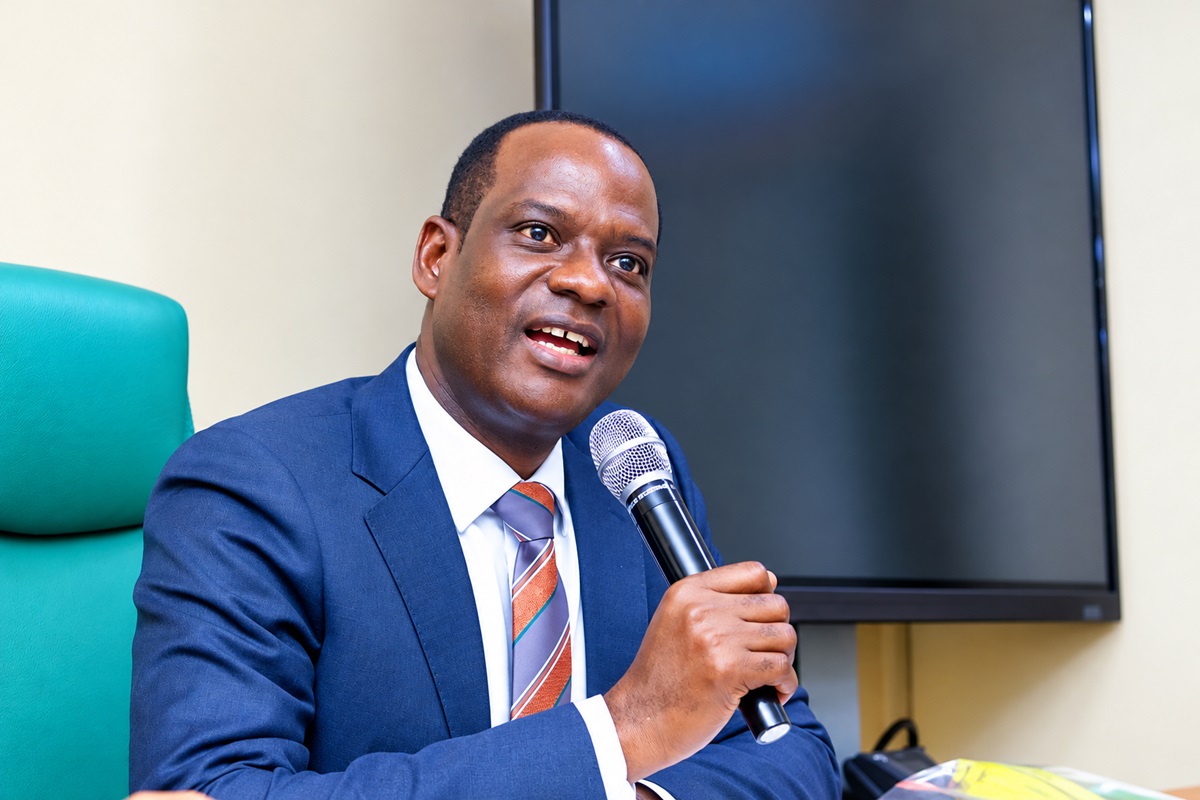
In a statement issued on October 18, the Federal Ministry of Finance argued that the World Bank’s interest-to-revenue ratio did not fully capture the government’s fiscal position.
The ministry said the interest figure included debt serviced by the Federal Government on behalf of other tiers of government, including external loans to states. It also argued that the revenue calculation excluded independent earnings by government agencies and enterprises that had not been remitted to the Treasury.
It further maintained that revenue collections typically increase in the second half of the year because of the timing of certain tax payments, making half-year figures an incomplete measure of debt sustainability.
The ministry cited a full-year 2025 debt-service-to-revenue ratio below 60 percent, compared with 97 percent before the current administration’s reforms. It also said the World Bank projected full-year 2026 debt service, including interest and principal repayments, at 46 percent of revenue.
The distinction between the measures is important. Interest payments represent the cost of borrowing, while total debt service includes both interest and principal repayments. The ministry’s full-year debt-service ratio therefore cannot be directly compared with the World Bank’s half-year interest-to-revenue ratio without accounting for the different periods and definitions.
The ministry also said federal revenue rose by 72 percent between the first halves of 2025 and 2026, outpacing the 38 percent increase in interest payments. It argued that the decline in the interest-to-revenue ratio from 156 percent to 124 percent demonstrated progress under the government’s fiscal reforms.
However, assessing the competing claims requires a consistent breakdown of the revenue included in each calculation, the debt obligations attributed to the Federal Government and the treatment of unremitted agency earnings.
Revenue Shortfall Compounds Fiscal Pressure
The World Bank reported that the federal deficit narrowed to ₦9.9 trillion in the first half of 2026, from ₦11 trillion in the corresponding period of 2025. Nevertheless, revenue remained below budget expectations.
CFG Advisory said federal revenue was 64.4 percent below its straight-line half-year budget projection, arguing that the shortfall had affected expenditure and the deficit. The advisory called for an audit of compliance with the Fiscal Responsibility Act by the finance ministry and Budget Office.
SBM Intelligence also argued that higher revenue collections were not translating into greater fiscal flexibility because a substantial share of government income was being absorbed by existing debt obligations.
“The challenge is no longer that revenue mobilisation falls short. It is arithmetic: stronger collections are running into an increasingly expensive debt structure”, the research firm said.
The World Bank has recommended limiting expensive borrowing, seeking more concessional financing and extending debt maturities to reduce refinancing pressure.
For Nigeria, the immediate challenge is not only to increase revenue but also to demonstrate transparently how much is collected, how debt costs are calculated and how available funds are spent. Timely budget implementation reports would help establish whether improved revenue collections are translating into stronger public investment or being absorbed by existing obligations.

Ogochukwu Onwaeze is a writer specializing in business and economic journalism. At THEWILL News Media, she translates market trends, financial developments, and policy shifts into clear and engaging stories.
