
-
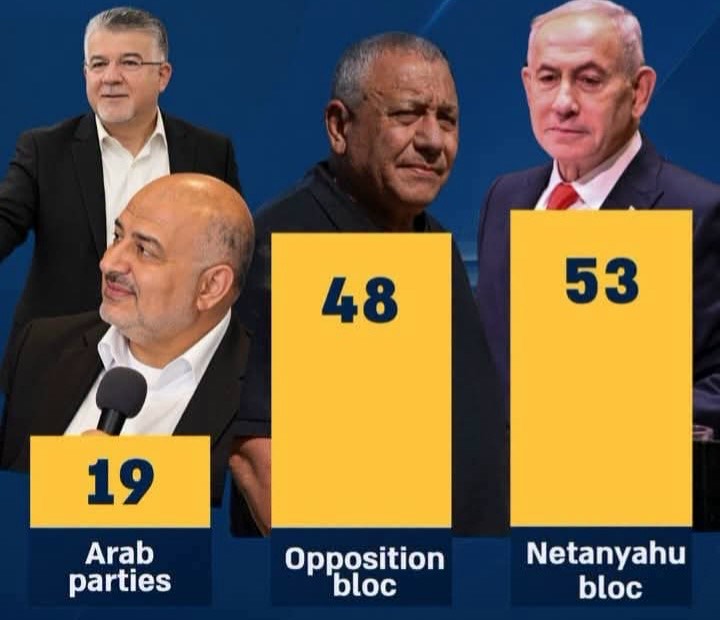
Israeli Prime Minister Benjamin Netanyahu’s political bloc has lost its parliamentary majority after securing 53 seats in the 120-member Knesset, eight short of the 61 required to form a government.
-
The main opposition bloc, led by former military chief Gadi Eisenkot, won 48 seats, while Arab-led parties secured a combined 19 seats in a historic electoral performance.
-
Netanyahu’s Likud Party emerged as the largest single party with 27 seats, but the election result leaves both major political blocs needing support from other parties to secure a governing majority.
-
The outcome sets the stage for difficult coalition negotiations, with President Isaac Herzog expected to begin consultations with political parties ahead of the formation of a new government.
October 30, (THEWILL) – Israeli Prime Minister Benjamin Netanyahu’s governing political bloc has lost its parliamentary majority after final election results showed it secured 53 seats in the 120-member Knesset, leaving the long-serving leader facing difficult negotiations to retain power.
The final results, released by Israel’s Central Elections Committee on Friday, October 30, showed that Netanyahu’s right-wing and far-right coalition fell eight seats short of the 61 required for a parliamentary majority.
The main opposition bloc, led by centrist politician Gadi Eisenkot, secured 48 seats, while Arab-led political parties won the remaining 19 seats, giving them a potentially decisive position in negotiations over the formation of the next government.

Although Netanyahu’s Likud Party emerged as the largest individual party with 27 seats, the overall result represents a setback for the prime minister’s political bloc, which previously controlled 68 seats in the outgoing parliament.
The results followed Tuesday’s general election, which recorded a voter turnout of 77.9 per cent, with 5,716,665 votes cast, according to the Central Elections Committee.
READ ALSO:
Breakdown of Election Results
The final distribution of seats showed Likud winning 27 seats, followed by Yashar, the party led by Eisenkot, with 21 seats.
Naftali Bennett’s B’Yachad secured 12 seats, while the Joint List, an Arab-led political alliance, won 11 seats.
The Democrats and Ra’am each secured eight seats, while Yisrael Beytenu, United Torah Judaism and Otzma Yehudit won seven seats apiece.
Shas and Religious Zionism secured six seats each, completing the 120-member parliament.
The two Arab-led political groupings, the Joint List and Ra’am, together secured 19 seats, almost doubling their representation in the outgoing Knesset.
The results leave Netanyahu’s bloc with 53 seats, Eisenkot’s opposition bloc with 48, and the Arab-led parties with 19. The Times of Israel +2
Coalition Negotiations Ahead
With neither of the two major political blocs securing the required majority, attention has shifted to negotiations among political parties to determine who will form the next government.
Eisenkot’s bloc would need support from the Arab-led parties to cross the 61-seat threshold, although cooperation between the opposition and the Arab parties could face resistance from some of the Jewish-led parties.
The 19 seats held by the Joint List and Ra’am could therefore become important in determining the direction of the coalition negotiations.
Felix Ifijeh is a journalist with years of professional reporting experience. Known for his keen news sense, compelling storytelling and commitment to accurate, impactful reporting, he has built a reputation for turning leads into clear, engaging, and well-structured reports that resonate with readers. His work reflects deep newsroom experience and a commitment to accurate, impactful journalism.
