
-
A foreign TV programme mocked Nigeria over its unfinished projects, but the criticism struck a nerve with Ibrahim Babangida.
-
After becoming military president, Babangida made the stalled Third Mainland Bridge a top priority in a bid to prove the critics wrong.
-
The 11.8km bridge was eventually completed in 1990, becoming one of Lagos’ most important links between the Mainland and Island.
August 20, (THEWILL) — A television programme watched by former military President Ibrahim Babangida in the early 1980s reportedly played an unexpected role in the completion of one of Lagos’ most iconic landmarks, the Third Mainland Bridge.
Babangida, who was not yet Nigeria’s military president at the time, said he was watching an American television programme when its presenter used Nigeria’s stalled Third Mainland Bridge as an example of the “elephant projects” often associated with African governments.
The programme showed the unfinished bridge and questioned where the massive structure was leading, portraying it as another ambitious Nigerian project that would never be completed.

For Babangida, the criticism struck a nerve.
He later recalled that seeing a foreign broadcaster portray Nigeria in that manner stayed with him and created a personal determination to prove the criticism wrong.
“I saw it as an insult, a foreigner talking about my country in that manner,” Babangida recalled in an interview published in a study of abandoned and completed infrastructure projects.
He said the experience also gave him a sense of responsibility to complete the project if he eventually had the opportunity to do so.
That opportunity came in 1985, when Babangida became military president.
READ ALSO:
From Abandoned Project To National Landmark
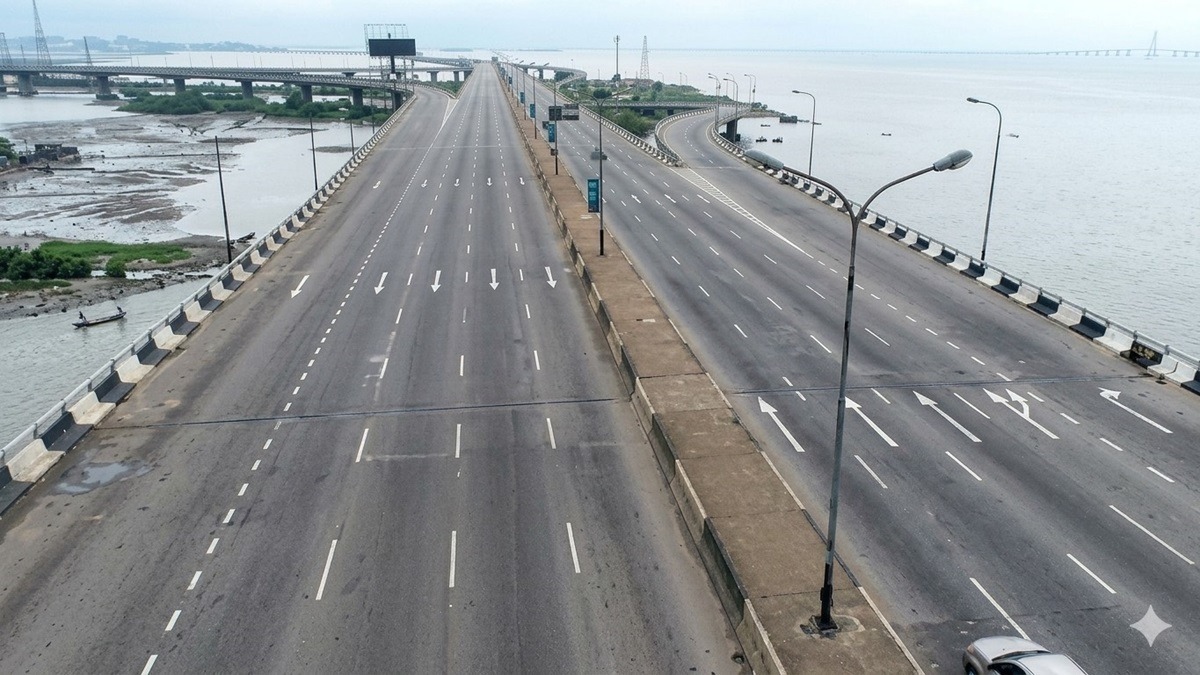
The Third Mainland Bridge had actually been conceived and construction begun before Babangida came to power. Work started in the late 1970s, with the first phase linking Lagos Island to Ebute Metta completed in 1980. The project subsequently stalled, leaving the remaining section towards Oworonshoki unfinished.
According to Babangida’s account, the unfinished structure immediately came back to his mind after he assumed office.
He summoned the then military governor of Lagos State, Raji Rasaki, and discussed how the project could be completed. Babangida said the government brought together the relevant contractors, engineers and authorities to determine whether the remaining work was feasible.
They agreed that it could be completed if the necessary funding was provided.
The administration subsequently revived the project, with Julius Berger constructing the second section from Ebute Metta to Oworonshoki. The completed bridge was commissioned in 1990.
At about 11.8 kilometres, the Third Mainland Bridge became the longest of Lagos’ three major bridges linking the Island and Mainland and, for several years, was the longest bridge in Africa.
For Babangida, however, the bridge represented more than an infrastructure project.
It was, by his own account, a response to a foreign television presenter who had questioned Nigeria’s ability to complete major projects.
What began as an embarrassing television moment ultimately became a motivation to finish a project that would go on to become one of Lagos’ most recognisable landmarks.
Ogochukwu Onwaeze is a writer specializing in business and economic journalism. At THEWILL News Media, she translates market trends, financial developments, and policy shifts into clear and engaging stories.
