
-
Fela Anikulapo-Kuti was inducted into the Rock & Roll Hall of Fame on November 14, 2026, through its Early Influence Award, after failing to secure induction through the performer category in 2021 and 2022.
-
His first nomination in 2021 generated a massive fan campaign backed by Nigerian stars, including Burna Boy, Davido, Don Jazzy and Banky W.
-
His second nomination in 2022 produced a different result, with Fela finishing last among 17 nominees, receiving 69,656 votes.
-
The induction is part of a remarkable period of posthumous recognition for Fela, following the entry of his 1976 album Zombie into the Grammy Hall of Fame in 2025.
November 17, (THEWILL) – For five years, Fela Anikulapo-Kuti‘s relationship with the Rock & Roll Hall of Fame was a story of nominations, public enthusiasm and disappointment. Twice, the Nigerian Afrobeat pioneer appeared on the institution’s performer ballot but did not make it in.
When his name eventually appeared among the 2026 inductees, it was through a different category, one that recognised not simply his recordings but the influence his music had exerted on generations of artists.
On November 14, 2026, nearly three decades after his death, Fela was formally inducted into the Rock & Roll Hall of Fame at a ceremony held at the Peacock Theater in Los Angeles. He received the Early Influence Award, alongside Celia Cruz, Queen Latifah, MC Lyte and Gram Parsons.
His induction made him the first African-born solo artist to enter the Hall, according to the Associated Press.
It was a significant milestone for Nigerian music and a particularly meaningful recognition for an artist whose musical ideas had travelled across continents long before international institutions began acknowledging his contribution.
The journey, however, was not without its complications. Fela’s first two attempts at induction had taken place in the performer category, where the outcome was determined through a voting process that included music industry professionals and a public fan ballot.

His eventual success came through a separate honour decided by the Hall’s special recognition process.
The distinction helps explain how an artist who once finished second in a public vote eventually entered the institution through another door.
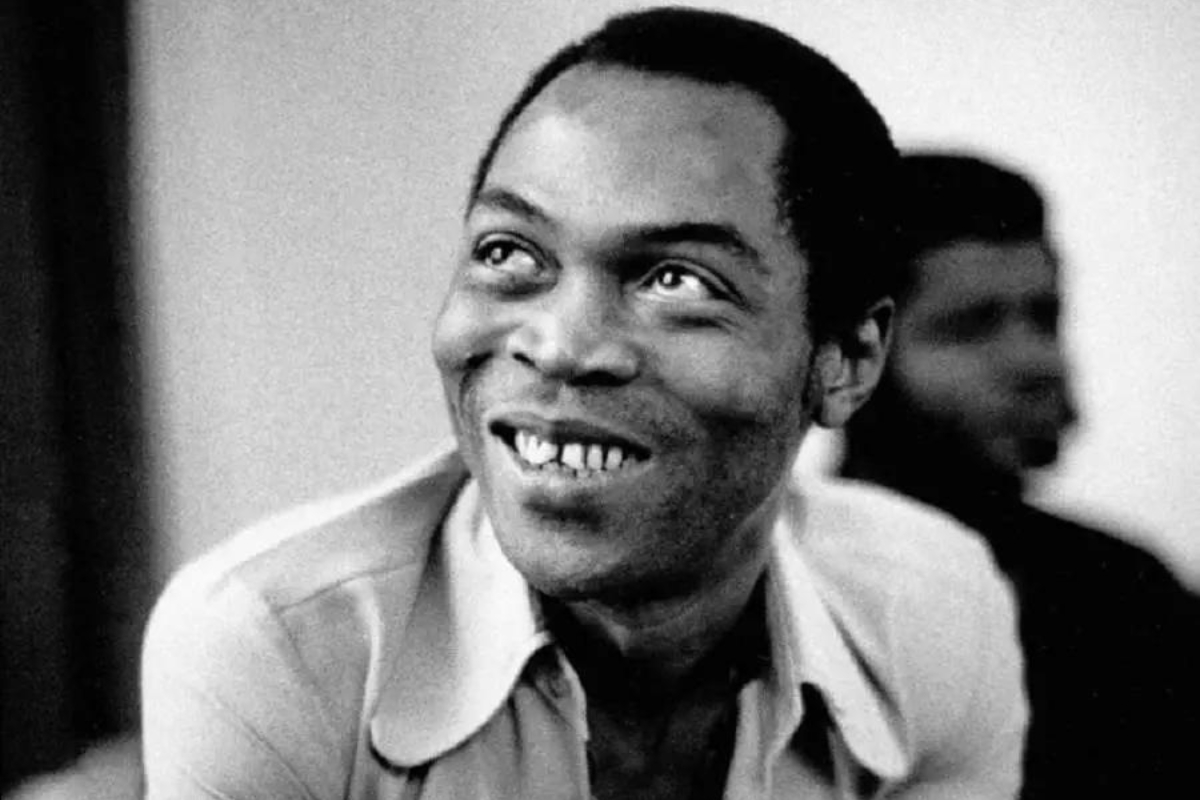
2021: The fan favourite who did not make the class
Fela’s first Rock & Roll Hall of Fame nomination came in February 2021. He was one of 16 artists on the performer ballot and the only African musician among the nominees.
The nomination attracted considerable attention in Nigeria, where his music and political legacy remain deeply influential. It also generated excitement among contemporary African musicians, several of whom recognised the opportunity to introduce Fela’s work to a wider international audience.
Burna Boy, Davido, Don Jazzy and Banky W were among the artists who supported the campaign, encouraging their followers to participate in the public voting process.
The response was immediate. Fela emerged as one of the leading contenders, at one point moving ahead of Tina Turner in the early voting figures.
His supporters mobilised across social media, turning the nomination into a broader conversation about African music’s place in international musical history.
When voting closed on May 7, Turner finished first with more than 585,000 votes, while Fela secured second place with more than 545,000.
The five leading artists formed the fan ballot, which was counted alongside ballots submitted by more than 1,000 artists, historians and music industry figures.
For Fela’s supporters, finishing second was an achievement in itself. It demonstrated the strength of his following and the willingness of African music fans to participate in a process associated with one of America’s most prominent music institutions.
But the final announcement on May 12 produced a different result.
The 2021 performer inductees were Tina Turner, Carole King, the Go-Go’s, Jay-Z, Foo Fighters and Todd Rundgren. Fela was absent from the list, despite his strong showing in the public vote.
The outcome generated frustration among Nigerian supporters, many of whom questioned the practical importance of the fan ballot. If the public could mobilise hundreds of thousands of votes for an artist and still not secure his induction, what exactly did the exercise accomplish Fela’s son, Femi Kuti, offered an explanation.
Responding to questions about the result, he said there was another voting process in which only members could participate, and that this was the decisive process.
He expressed disappointment, suggesting that supporters had spent considerable time campaigning without having the final say.
However, he also acknowledged a positive outcome: the campaign had brought Fela’s name and music to people who had never encountered his work.
That observation would prove important. Even without induction, the 2021 nomination had created an international moment of renewed attention around Fela and Afrobeat.
2022: A second nomination and a dramatic fall in the fan vote
Fela returned to the Rock & Roll Hall of Fame ballot in 2022, receiving another nomination in the performer category.
There was optimism that a second opportunity might produce a different outcome. But the public voting figures were considerably less impressive than those of the previous year.
Out of approximately 5.43 million votes cast, Fela received 69,656, representing 1.28 per cent of the total. He finished last among the 17 nominees.
Duran Duran led the voting with 934,880 votes, followed by Eminem, Pat Benatar, Eurythmics and Dolly Parton. Those five artists formed the fan ballot, and all five were subsequently inducted.
Fela was among the nine nominees who did not make the 2022 class.
The contrast with 2021 was striking. In the space of a year, his public vote had fallen from more than half a million to fewer than 70,000.
The result also demonstrated why public voting alone could not be treated as a reliable prediction of induction. The fan ballot was one part of a wider selection process, and its rankings did not automatically determine the final outcome.
For Fela, the second unsuccessful nomination closed another chapter in a process that had generated considerable expectations among his supporters.
It was not, however, the end of his relationship with the institution.
2026: The recognition comes through another category
On April 13, 2026, the Rock & Roll Hall of Fame announced its latest class during a special episode of American Idol, with Fela’s name finally appearing among the inductees.
This time, he was not considered in the performer category. Instead, he was selected for the Early Influence Award, alongside Celia Cruz, Queen Latifah, MC Lyte and Gram Parsons.
The award recognises artists whose music and performance styles have directly influenced, inspired and helped evolve rock and roll and other forms of music that have shaped popular culture.
The Hall’s description of Fela provides a useful explanation of the decision.
It identifies him as a revolutionary musical voice who confronted injustice through his work and combined jazz, West African music and soul to pioneer Afrobeat.
This is a different kind of recognition from the performer category. The latter celebrates artists whose recordings, originality and impact have changed the course of rock and roll.
The Early Influence Award places greater emphasis on the musical traditions, ideas and innovations that have shaped subsequent generations.
For Fela, that distinction is particularly relevant. His importance cannot be measured simply through record sales, chart positions or commercial success in the United States.
His influence is rooted in the musical language he developed, the political ideas he communicated and the generations of musicians who have drawn from his work.
The Hall’s 2026 announcement also recognised artists through the Musical Excellence Award and the Ahmet Ertegun Award, demonstrating the different ways in which the institution acknowledges contributions to music.
The 2026 class included another Nigerian connection. Sade, the British band led by Nigerian-born singer Sade Adu, was inducted in the performer category.
Adu was born in Ibadan, although the band’s induction should be distinguished from Fela’s individual recognition.
For Nigeria, having Fela and Sade represented in the same induction class was a notable moment, bringing attention to the country’s contribution to international music through two very different musical careers.
READ ALSO:
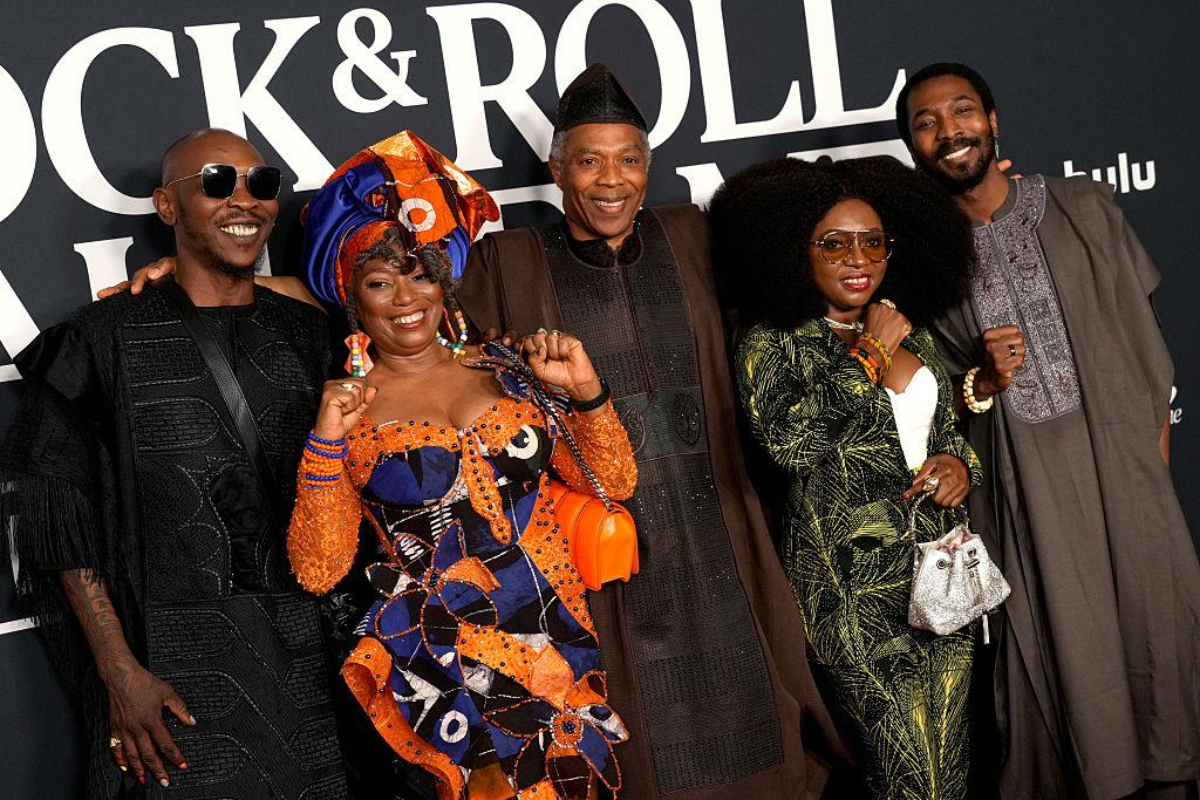
November 14: Fela enters the Hall
The 2026 induction ceremony took place on November 14 at the Peacock Theater in Los Angeles. The event brought together musicians, music industry figures and the families and representatives of artists being honoured.
Fela’s recognition was presented through a video tribute, appropriate for an artist who died in 1997. His family was represented at the ceremony, with his children and grandchildren, including Femi, Seun, Yeni, Shalewa and Made Kuti, attending to accept the honour on his behalf.
The occasion gave his family an opportunity to receive an institutional recognition that had eluded him during his lifetime.
The Associated Press identified Fela as the first African-born solo artist to be inducted into the Rock & Roll Hall of Fame.
The description is significant because it places his achievement within a wider history of African musicians whose contributions have often been more influential than their representation in major Western music institutions.
Fela’s induction also brought together two sides of his legacy: the musician who created a distinctive sound and the activist who used that sound to confront political authority.
His music was never simply entertainment. Songs such as Zombie and Water No Get Enemy demonstrate different dimensions of his work, from sharp political criticism to the intricate musical arrangements that helped establish his reputation as one of Africa’s most innovative composers and bandleaders.
The Hall’s recognition therefore extends beyond a collection of recordings.
It acknowledges an artist whose work challenged conventional musical boundaries and whose ideas continue to resonate long after his death.
A year of recognition from American music institutions
The Rock & Roll Hall of Fame induction is part of a remarkable period of posthumous recognition for Fela.
In 2025, his 1976 album Zombie entered the Grammy Hall of Fame, becoming the first Nigerian album to receive that distinction.
In January 2026, the Recording Academy honoured him with its Lifetime Achievement Award, making him the first African recipient of that particular honour.
The Grammy recognition was accepted by members of his family, adding another significant moment to the growing list of international acknowledgements of his contribution to music.
These honours are particularly notable because Fela’s relationship with establishment institutions was often difficult during his lifetime.
His music challenged political authority, exposed corruption and criticised military rule.
His outspoken opposition to government policies made him a controversial figure in Nigeria, where his activism brought him into repeated conflict with the authorities.
The 1977 military raid on his Kalakuta Republic compound, during which his mother, Funmilayo Ransome-Kuti, was severely injured and later died, remains one of the most painful episodes in his history.
Fela’s artistic identity was inseparable from his political convictions. He built a musical movement that was simultaneously African in its foundations and international in its influences, drawing on Yoruba rhythms, highlife, jazz and funk.
His son Seun Kuti has spoken about the absence of establishment recognition during his father’s lifetime. In an interview with the BBC concerning the Grammy Lifetime Achievement Award, Seun described the recognition as a form of balance being brought to Fela’s story.
That observation captures the significance of the honours arriving decades after Fela’s death.
They do not change the circumstances of his life, but they demonstrate a growing willingness among international music institutions to recognise the depth of his contribution.
The recognition was late, but the influence was never in doubt
Fela Kuti’s journey into the Rock & Roll Hall of Fame is ultimately a story about the difference between popularity, recognition and lasting influence.
In 2021, hundreds of thousands of people voted for him, placing him second in the public ballot. He did not make the final class. In 2022, he received another nomination but finished last in the fan vote.
In 2026, he finally entered the Hall through a category that recognised the influence of his music on the wider development of popular music.
The route was different from the one his supporters had initially hoped for, but the significance of the outcome is difficult to overlook.
Fela created a musical tradition that travelled beyond Nigeria, influenced artists across generations and helped establish African music as an important force in global popular culture.
His work continues to find new audiences, while his political and cultural ideas remain subjects of discussion.
The Rock & Roll Hall of Fame has now formally acknowledged that contribution.
For Nigeria, it is an international recognition of one of its most consequential cultural figures. For Afrobeat, it is another confirmation of the genre’s historical importance.
And for Fela’s family and supporters, it is the culmination of a journey that began with a public voting campaign and ended with an honour decided through a different understanding of musical influence.

Gertrude Oby is a writer and journalist passionate about the creative industries. Works span fashion, film, media, art, and culture.