
-
Gumi alleges foreign intelligence agencies may be supplying weapons to Nigerian bandits.
-
Says bandits target civilians in retaliation for alleged killings of their women and children.
-
Claims some bandits are tired of the bloodshed but fear being killed if they surrender.
-
Warns that ransom payments and rivalry are fuelling an arms race among bandit groups.
November 3, (THEWILL) – Islamic cleric, Sheikh Ahmad Gumi, has alleged that foreign intelligence agencies are involved in supplying weapons to armed bandits operating in Nigeria, claiming that the United States and other foreign interests could be backing the criminal groups.
The cleric also explained why bandits predominantly target ordinary Nigerians through killings, kidnappings and extortion rather than politicians and military personnel, saying the criminals regard their activities as part of a cycle of revenge over alleged killings of their women and children during military and vigilante operations.
Gumi made the disclosures during an interview on PAPShow, published on October 29, with clips from the interview going viral on social media on Tuesday.

The Islamic scholar, who has repeatedly visited bandits in their forest hideouts to engage them in dialogue, said some of the armed men he interacted with expressed dissatisfaction with the continued bloodshed but claimed they felt compelled to sustain the attacks because of what they described as killings in their communities.
According to him, the bandits viewed the violence as a cycle of revenge and retaliation, while some feared they could be killed if they abandoned their activities or surrendered.
Gumi said he and members of his team had directly questioned the armed men about their apparent preference for attacking civilians instead of politicians and military personnel.
Explaining their response, he said the bandits complained that military operations initially presented as efforts to tackle cattle rustling had resulted in the killing of women and children in their communities.
“But why did they kill their women and children? Why are they killing their women and children? Why are the vigilantes arresting them and killing them? Why?” he quoted the bandits.
According to Gumi, the armed men considered the violence a continuing cycle of bloodshed, revenge and counterattacks arising from what they claimed were attacks against their communities.
“So, they feel it’s a field of blood, revenge, attack and counterattack”, he noted.
The cleric said some bandits had admitted that the killings had become excessive, although they claimed they were being forced to continue participating in the violence.
“One of the bandits was telling us the bloodshed is too much. They, too, are not happy. And they say they are forced to do it”, Gumi said.
Asked why the bandits could not simply abandon their activities, Gumi said some feared they would be killed if they surrendered.
“Because they thought they were killed. So, we need to reaffirm to them, to put confidence in them that they will not be killed”, he added.
He argued that the continued killings made dialogue necessary, adding that religious leaders had a responsibility to encourage the parties to embrace negotiations and end the violence.
“So, we, as clergy, our own duty is to look at how to stop it. Let’s stop the bloodshed. Let’s come to the table”, he stated.
Ransom Payments Fuel Arms Race
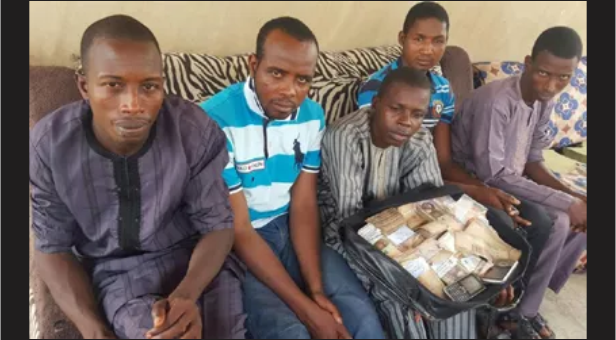
On the proliferation of firearms among bandit groups, Gumi said financial resources available to the criminals were enabling them to acquire more weapons, while competition among rival factions was further fuelling the arms race.
Asked whether individuals were sponsoring the armed groups, he said such a possibility existed.
“It’s possible now. You know, it’s possible now”, he responded.
He explained that the different factions were competing to acquire superior firepower, with each group seeking to possess more sophisticated weapons to intimidate rival formations.
“They buy more weapons because there’s an arms race between them. You know, there are different groups.
“There’s an arms race. So, this den has more machine guns than this one. So, they should fear them”, he said.
Asked about the sources of the weapons, Gumi described the supply network as an underground market similar to the illicit drug trade, where firearms could be obtained by buyers with sufficient financial resources.
“Well, it’s a black market, like drugs. It’s a black market. If you just have the money, you get them”, he said.
READ ALSO:
Gumi Alleges Foreign Intelligence Involvement
The cleric also alleged that foreign intelligence agencies were involved in the supply of weapons to armed groups, suggesting that external interests could be exploiting internal conflicts in different countries to advance their strategic objectives.
Asked whether foreign intelligence agencies had a hand in the arms supply network sustaining banditry in Nigeria, Gumi responded: “Foreign intelligence definitely have a hand in it.”
To support his position, he cited international conflicts in which powerful countries have provided financial and military assistance to armed groups.
He specifically referred to remarks attributed to United States President Donald Trump concerning the provision of money and weapons to Kurdish fighters in the conflict involving Iran.
“Just recently we had, when there’s an Iranian, I would say Iranian-Israeli-American war. President Trump was saying we armed the Kurds. The northern Kurds. We give them money. We give them weapons to fight the Iranians”, Gumi said.
He argued that powerful countries sometimes arm dissident groups when doing so serves their national or strategic interests.
“So you see when they have interests, they arm. If you have dissidents,” he added.
Asked whether the United States could be supplying weapons to bandits in Nigeria, Gumi said the possibility could not be ruled out.
“Could it be possible that America is arming our bandits? It’s possible. It’s possible. Any other foreign power that’s interested in Nigeria possibly could be behind them,” he said.
Banditry remains a major security challenge in Nigeria, particularly across the North-West and parts of the North-Central region, where armed groups have carried out repeated attacks on rural communities, highways, schools and farming settlements.
The criminal groups have been responsible for mass kidnappings, killings, cattle rustling, extortion and the displacement of residents, with ransom payments emerging as a major source of funding for their operations.
The crisis, which initially became prominent in Zamfara State, has spread to several other states, prompting successive military operations and joint security offensives aimed at dismantling the groups and restoring security in affected communities.
The Federal Government and security agencies have deployed troops and other security personnel to combat the criminals, while local vigilante groups have also participated in community defence operations.
Gumi has been among the religious figures advocating dialogue with armed groups, having visited their forest hideouts on several occasions to engage their leaders and persuade them to abandon violence.

Felix Ifijeh is a journalist with years of professional reporting experience. Known for his keen news sense, compelling storytelling and commitment to accurate, impactful reporting, he has built a reputation for turning leads into clear, engaging, and well-structured reports that resonate with readers. His work reflects deep newsroom experience and a commitment to accurate, impactful journalism.
