
-
NCDC identifies two additional suspected Ebola cases as Nigeria widens its response to the confirmed imported infection.
-
Number of primary contacts under investigation rises to 53, with potentially exposed persons being monitored for 21 days from their last possible exposure.
-
NCDC says isolation and quarantine facilities are available, while about 12 public and private laboratories have capacity to test suspected Ebola cases.
-
Health authorities order tighter screening, triage and infection-prevention measures nationwide, urging exposed persons to cooperate fully with contact-tracing teams.
October 25, (THEWILL) – The Nigeria Centre for Disease Control and Prevention (NCDC) has identified two additional suspected cases of Ebola Virus Disease as the country expands contact tracing around its confirmed imported infection, with the number of primary contacts now rising to 53.
Director-General of the NCDC, Dr Jide Idris, disclosed the development at a press briefing in Abuja on Sunday, saying the agency had activated isolation and quarantine facilities while strengthening surveillance and laboratory testing to prevent further spread of the deadly virus.
“We have established two additional suspected cases and 53 primary contact links. They are primary contacts. We have an isolation centre and a quarantine centre,” Idris said.

The development marks a widening of Nigeria’s Ebola containment operation, which initially focused on contacts linked to the confirmed imported case.
Contacts Under 21-Day Watch
According to the NCDC, public health teams are continuing to identify and monitor people who may have been exposed to the confirmed patient.
The contacts will be followed for 21 days after their last possible exposure, corresponding with the maximum recognised incubation period for Ebola Virus Disease.
The expanded contact list means health officials must maintain daily surveillance of potentially exposed persons to ensure that anyone who develops symptoms is quickly identified, isolated and tested.
Idris urged those contacted by public health officials to cooperate fully with surveillance and contact-tracing teams.
He appealed to them to provide accurate information about their movements, people with whom they had interacted and any symptoms they might develop.
12 Laboratories Available For Ebola Testing
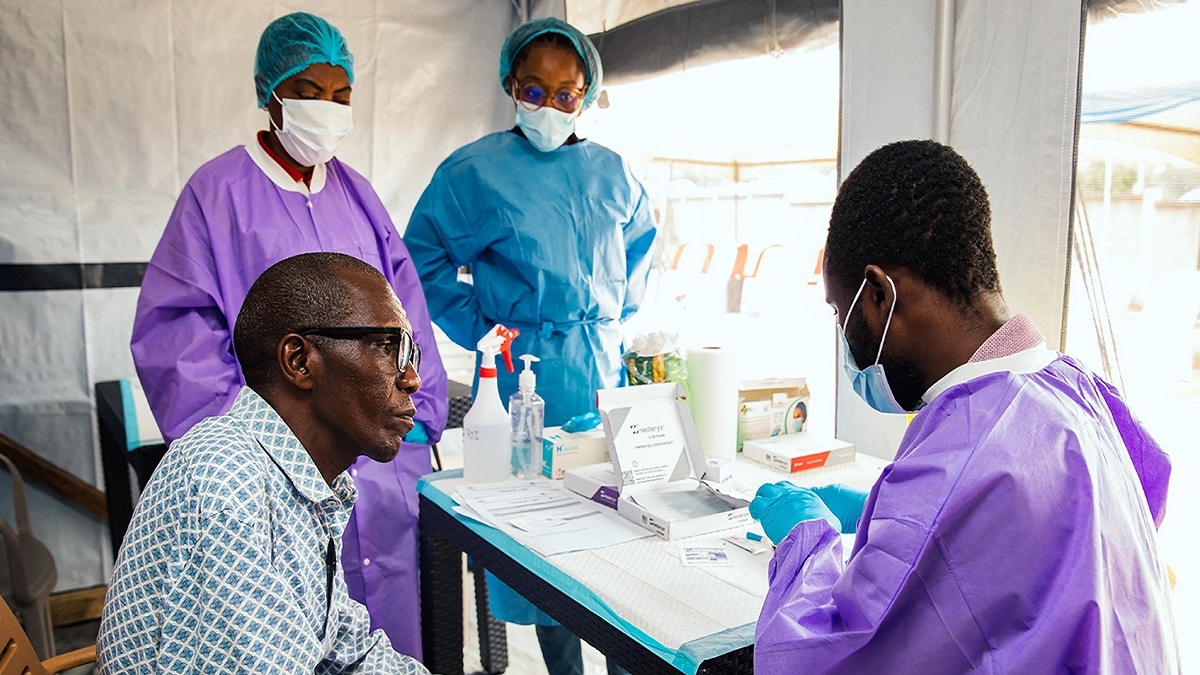 Idris said about 12 public and private laboratories were available to conduct Ebola testing as Nigeria strengthens its diagnostic capacity.
According to him, the NCDC is maintaining heightened surveillance and expanding laboratory preparedness to ensure that suspected cases are promptly investigated and tested.
The NCDC chief said the agency’s strategy was focused on quickly detecting suspected cases and preventing any undetected transmission.
He also directed public and private healthcare facilities across the country to strengthen screening and triage procedures.
Hospitals and other healthcare facilities were urged to reinforce infection prevention and control measures and ensure that doctors, nurses, laboratory personnel and other frontline workers have adequate personal protective equipment.
The measures are intended to protect healthcare workers and patients, particularly where a person with symptoms consistent with Ebola presents at a medical facility before their infection status is known.
READ ALSO:
Nigeria Races to Contain Imported Case
The latest development comes days after Nigeria confirmed an imported case of the Bundibugyo Ebola virus, triggering an emergency public health response.
The infected patient, a woman with recent travel history to Uganda, developed symptoms on October 7 and sought medical attention in Abuja on October 11.
She subsequently tested positive for the virus on October 20 and was placed in isolation for treatment.
The confirmation prompted Nigerian authorities to launch contact tracing, surveillance and investigations to identify everyone who might have been exposed to the patient.
UN Backs Nigeria’s Containment Efforts
The development also comes after the United Nations expressed confidence in Nigeria’s ability to contain the confirmed case.
Spokesperson for the UN Secretary-General, Stéphane Dujarric, said at the UN Headquarters in New York that although the appearance of Ebola in another country was concerning, the organisation had confidence in Nigeria’s health authorities.
“We have full confidence in the ability and the capacity of the Nigerian Government’s health authorities to deal with this single case,” Dujarric said.
The UN also pledged assistance to Nigeria and urged countries to cooperate with the World Health Organisation (WHO) and comply with international health regulations as efforts intensify to prevent further cross-border transmission.
“We are, as always, ready to assist the Government of Nigeria in any way possible,” Dujarric said.
The NCDC has urged Nigerians, particularly those contacted by public health officials, to cooperate with the response and provide complete and accurate information as authorities work to prevent the imported infection from developing into a wider outbreak.
Felix Ifijeh is a journalist with years of professional reporting experience. Known for his keen news sense, compelling storytelling and commitment to accurate, impactful reporting, he has built a reputation for turning leads into clear, engaging, and well-structured reports that resonate with readers. His work reflects deep newsroom experience and a commitment to accurate, impactful journalism.
