
-
The National Biosafety Management Agency has pledged technical support to the Nigeria Centre for Disease Control and Prevention following the confirmation of an imported Ebola case in the FCT
-
NBMA Director-General, Dr Fatima Suleiman-Zuntu, says the agency is prepared to deploy its biosafety and biosecurity experts to strengthen containment and infection-prevention efforts.
-
The agency has urged Nigerians to remain calm but vigilant, warning against contact with the body fluids of sick persons or handling the remains of anyone suspected to have died from Ebola.
-
Citing Nigeria’s successful containment of Ebola in 2014, NBMA says preparedness, scientific evidence, coordinated government action and public cooperation will be critical to preventing further spread.
October 22, (THEWILL) – The National Biosafety Management Agency (NBMA) has pledged to deploy its biosafety and biosecurity expertise in support of efforts by the Nigeria Centre for Disease Control and Prevention (NCDC) and other health authorities to contain the reported imported case of Ebola Virus Disease in the Federal Capital Territory (FCT).
Director-General and Chief Executive Officer of the NBMA, Dr Fatima Suleiman-Zuntu, who announced the agency’s readiness to support the national response, urged Nigerians to remain calm but vigilant and adhere strictly to official public health advisories.
Suleiman-Zuntu said the NBMA was prepared to make its biosafety experts available to the NCDC and other relevant response teams to strengthen ongoing containment and infection-prevention measures.

She commended the Federal Ministry of Health and Social Welfare, the NCDC, the FCT Health Services Secretariat and their partners for measures already taken in response to the reported case.
According to her, Nigeria’s experience with the 2014 Ebola outbreak demonstrated that rapid response, preparedness, scientific evidence, coordinated action among government agencies and cooperation from the public are crucial to stopping transmission.
The NBMA chief urged Nigerians to maintain good hand hygiene and avoid direct contact with blood and other body fluids of anyone who is ill.
She also warned members of the public against handling the bodies of persons suspected to have died from Ebola, given the high risk of transmission associated with contact with bodily fluids of infected persons.
The agency advised anyone experiencing symptoms consistent with Ebola, particularly people who have had contact with a suspected or confirmed case or recently travelled from an affected area, to immediately seek guidance from public health authorities.
It also urged individuals identified as contacts to cooperate fully with health officials conducting surveillance and contact tracing, saying such cooperation remained important to breaking possible chains of transmission.
For verified information and guidance, the agency directed members of the public to contact the NCDC through its toll-free number, 6232, or the NBMA on 0808 225 4683.
The latest intervention adds the NBMA to the network of federal and sub-national agencies mobilising expertise around the response, with health authorities seeking to prevent the imported infection from developing into sustained local transmission.
READ ALSO:
Background
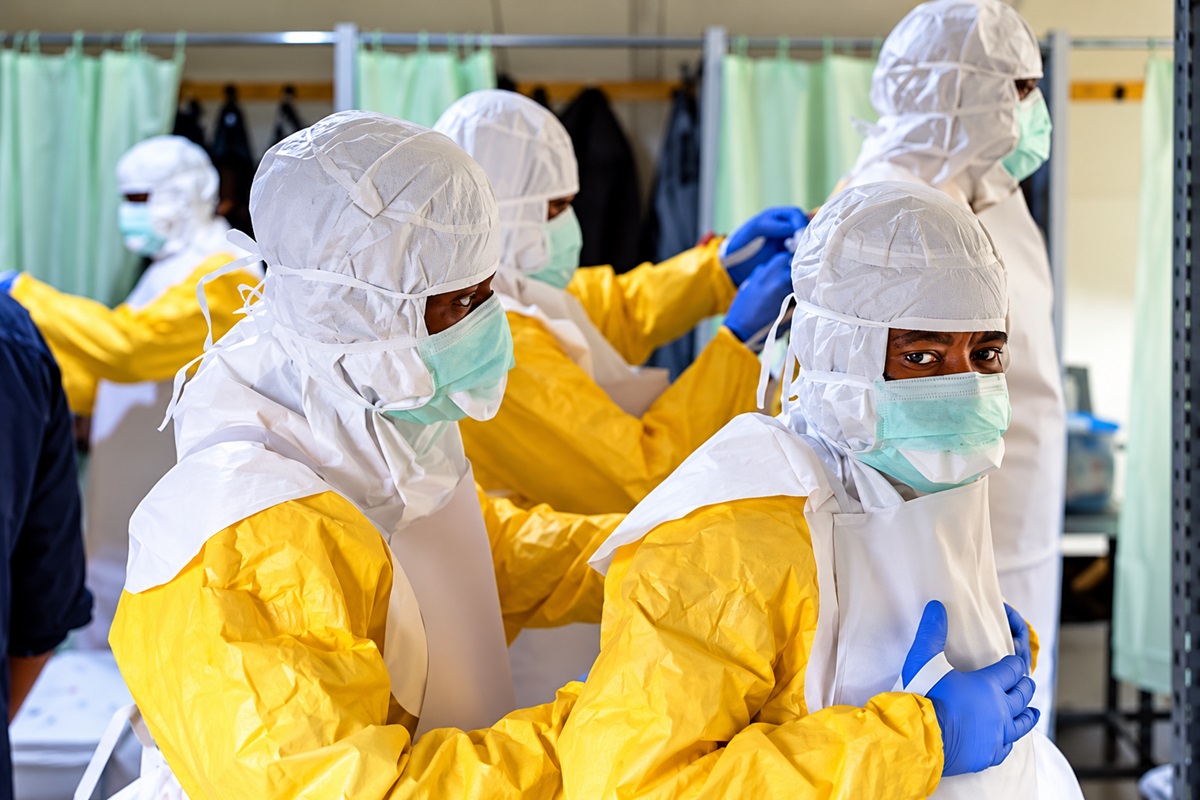 Nigeria recorded its first Ebola outbreak in July 2014 after an infected traveller, Liberian-American Patrick Sawyer, arrived in Lagos from Liberia during the devastating West African epidemic.
The case triggered an intensive emergency response involving contact tracing, isolation, surveillance and public health campaigns. The outbreak ultimately resulted in 20 confirmed and probable cases and eight deaths, according to the World Health Organisation.
Nigeria was declared Ebola-free by the WHO on October 20, 2014, after completing the required period without a new case.
The country’s response was widely recognised internationally for rapidly tracing contacts and interrupting transmission despite the introduction of the virus into densely populated Lagos.
The experience has since formed an important part of Nigeria’s infectious-disease preparedness architecture, including stronger surveillance, emergency operations and coordination among health and biosafety authorities.
With the latest reported imported case in Abuja, authorities are again relying on early detection, isolation, contact tracing, infection prevention, and public cooperation to prevent wider transmission.
Felix Ifijeh is a journalist with years of professional reporting experience. Known for his keen news sense, compelling storytelling and commitment to accurate, impactful reporting, he has built a reputation for turning leads into clear, engaging, and well-structured reports that resonate with readers. His work reflects deep newsroom experience and a commitment to accurate, impactful journalism.
