
-
Chinese AI companies are seeking overseas Nvidia computing capacity before Washington potentially tightens restrictions.
-
Researchers estimate that China could access computing power equivalent to 2.8 million H100 chips abroad by 2027.
-
US lawmakers want export controls to cover sensitive American technology accessed remotely.
-
New restrictions could reshape Southeast Asia’s data-centre market and China’s demand for domestic processors.
November 12, (THEWILL) – Washington has spent years trying to keep its most advanced artificial intelligence chips out of China‘s hands, but Chinese technology companies have found a way to use some of that computing power without importing the processors themselves.
They are renting it from data centres in other countries, where the equipment can remain physically beyond China’s borders while its developers use the processing capacity remotely.
The arrangement is now attracting renewed interest as Chinese AI companies attempt to secure overseas access ahead of possible changes to American export restrictions.
Reuters reported on Thursday, November 12, that a major Chinese cloud provider had discussed reserving additional Nvidia computing capacity abroad, while other technology companies had contacted overseas data-centre operators about similar arrangements.
Smaller AI laboratories were also exploring providers in Southeast Asia.
The discussions, which Reuters attributed to three sources with knowledge of the companies’ plans, have not been accompanied by publicly confirmed contracts or figures showing how much additional computing capacity the businesses intend to obtain.

Their urgency follows growing concern that Washington could extend semiconductor export controls to cover computing services supplied remotely, closing an avenue through which Chinese developers can access certain American technologies without purchasing or importing restricted hardware.
Recent scrutiny of Nvidia chief executive Jensen Huang has added political sensitivity to the issue, although the proposed legislation predates the controversy surrounding him.
The development exposes an awkward reality of the global AI business.
A government can restrict where its technology is sold, but controlling who ultimately uses that technology becomes harder when the equipment, its owner and its customer operate in different countries.
For Chinese developers, overseas computing offers access to powerful systems without the expense and difficulty of importing them.
For data-centre operators, it creates customers willing to pay for expensive infrastructure. Washington, meanwhile, must decide how far its restrictions should extend into a global cloud-computing market built around serving customers remotely.
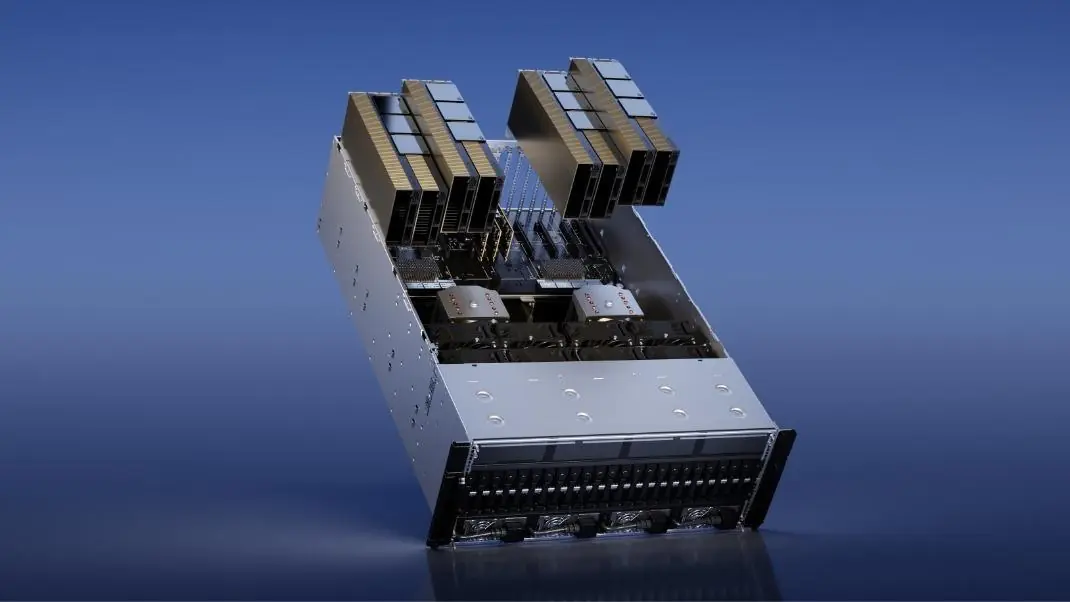
China’s Overseas Computing Market Is Already Taking Shape
China’s demand for American computing power is not simply a consequence of inadequate domestic ambition. Building competitive AI hardware requires manufacturing capacity, advanced memory, networking technology and software that developers can use efficiently across thousands of processors.
Huawei and other Chinese manufacturers have developed alternatives to Nvidia’s processors, but the companies building AI models still face practical decisions about performance, availability, compatibility and cost.
Nvidia’s advantage also extends beyond its chips. Its CUDA software platform and supporting development tools have become deeply embedded in AI research and commercial applications, making a switch to competing hardware an engineering decision as much as a purchasing one.
Overseas computing allows developers to continue using established systems while China expands its own semiconductor capabilities.
Some substantial arrangements are already identifiable.
In research published in October, the Washington-based Institute for Progress identified overseas computing clusters linked to Chinese customers, including ByteDance’s Blackwell computing installation in Norway and Tencent’s reported agreement to lease approximately 100,000 graphics processors from Oracle.
These arrangements illustrate the commercial model behind the latest Reuters findings.
A Chinese technology company can obtain dedicated processing capacity from a foreign provider without owning the data centre or directly importing the underlying equipment.
The scale is difficult to establish because operators seldom disclose every customer or the amount of capacity assigned to individual businesses.
To estimate the market, the Institute for Progress combined publicly identifiable Chinese computing clusters with data on overseas facilities leased by major Chinese technology companies.
Its central model puts China’s remotely accessible computing capacity at approximately 1.05 million Nvidia H100-equivalents by the end of 2026, potentially reaching 2.83 million in 2027.
An H100-equivalent is a standardised measure of computing capability rather than a physical count of Nvidia H100 chips. Researchers use it to compare processors with different performance characteristics.
The composition of that estimate deserves close attention.
Of the projected 2026 total, roughly 280,000 H100-equivalents come from computing clusters the researchers could identify through reporting and company disclosures.
Approximately 775,000 are inferred from leased data-centre capacity, using assumptions about the equipment installed and how much of the infrastructure supports AI.
Consequently, the headline estimate should not be interpreted as evidence that Chinese companies have already secured more than one million H100 chips abroad.
The study’s 2027 forecast also carries substantial uncertainty, with a modelled range of approximately 1.97 million to 3.91 million H100-equivalents.
Those qualifications do not make the research unimportant.
They show how much of the market remains difficult to observe even as developers make commercial commitments involving valuable infrastructure.
Researchers also estimate that roughly three-quarters of China’s remotely accessible AI capacity could be located in Southeast Asia, making the region a significant participant in an arrangement that began as a dispute between Washington and Beijing.

A Multibillion-Dollar Opportunity With a Regulatory Problem
Southeast Asia’s involvement brings money, infrastructure and national technology policy into the same commercial relationship.
Malaysia and Singapore have attracted investment in data centres serving cloud providers, digital businesses and companies requiring substantial computing capacity.
Developers build facilities around access to electricity, reliable connectivity, equipment, financing and customers prepared to make long-term commitments.
One example of the region’s expansion came in December 2025, when Vantage Data Centers announced that its new KUL14 facility in Cyberjaya, Malaysia, had become operational.
The 16-megawatt facility was fully leased to a single customer, although Vantage did not identify that customer in the announcement.
Jeremy Deutsch, Vantage’s president for Asia-Pacific, described Malaysia as “Southeast Asia’s fastest-growing data center hub” while outlining the company’s expansion plans.
Vantage also disclosed plans for a second Cyberjaya campus with more than 400 megawatts of capacity, demonstrating the scale of infrastructure investment taking place in the country.
There is no established evidence that Vantage’s KUL14 facility supplies computing services to Chinese AI developers seeking restricted Nvidia processors. Its expansion illustrates the wider data-centre market into which such demand could flow.
This matters because a data-centre business does not earn money merely by constructing a facility. It needs customers to occupy the space or purchase computing services, often under agreements intended to support the substantial upfront investment.
Chinese demand could provide additional revenue for eligible overseas providers, but access restrictions could also affect their customer relationships and compliance obligations.
The Institute for Progress estimated that renting approximately 1.05 million H100-equivalents for a year would cost about $7.8 billion.
Its range extends from $5.8 billion to $14.8 billion under different assumptions about processor configurations and rental pricing.
The $7.8 billion figure represents an estimated annual rental cost, not confirmed spending by Chinese companies or verified revenue received by overseas operators.
Even with that limitation, the calculation helps explain the commercial interest in supplying such capacity.
Advanced computing is expensive to build and operate, and customers seeking large installations can represent substantial business for infrastructure providers.
However, any operator relying on American-designed processors must also consider the regulations attached to those technologies.
Changes to US rules could require providers to examine the identities and locations of customers more closely, restrict particular services or seek additional authorisation before allowing access.
The financial effect would depend on the final rules and each operator’s exposure. A provider serving customers across several markets might be able to redirect capacity, while one reliant on restricted customers could face cancelled demand or more difficult contract negotiations.
Importantly, the same restrictions need not produce identical consequences for Nvidia. Strong demand from customers elsewhere could absorb some computing hardware that might otherwise have served Chinese developers.
Nor would every data-centre investment in Southeast Asia become exposed to the same controls. Operators use different technologies, serve different customers and structure their contracts differently.
The commercial problem is therefore more specific than an American rule threatening an entire regional industry. It concerns which services become restricted, which providers supply them and how much revenue depends on customers who may lose access.
READ ALSO:
Washington Wants Its Rules to Reach Beyond the Chip
The United States has already moved to address remote access through legislation.
On January 12, the House of Representatives passed the Remote Access Security Act by 369 votes to 22, with support from both Republicans and Democrats.
The bill, sponsored by Republican Representative Mike Lawler, would expand authority under the Export Control Reform Act to regulate certain remote access to sensitive American-controlled technology.
It was referred to the Senate Banking Committee on January 13 and had not become law as of November 12.
Lawler explained the concern in a statement following the House vote.
“Our export controls are only as strong as the weakest link,” he said, arguing that current rules allowed access to restricted American technology through cloud services.
Representative John Moolenaar, chairman of the House Select Committee on China, made the intended policy direction explicit, saying the legislation would bring existing rules into the digital age by making remote computing access subject to export-control authority.
The proposal addresses a weakness in a regulatory approach developed largely around controlling goods and technology transferred between jurisdictions.
Physical shipments leave records that customs officials and export-control authorities can investigate.
Remote computing presents a less straightforward arrangement because a processor may be housed in one country, owned by a company incorporated in another and used by engineers operating elsewhere.
Enforcement therefore depends on more than establishing where the equipment sits. Authorities may need information about the customer, intermediaries, the terms of access and the activities permitted under the applicable rules.
The proposed legislation would not automatically criminalise every international cloud-computing arrangement.
Its application would depend on controlled technology, covered foreign access and national security or foreign policy considerations.
Until the bill becomes law and any implementing rules take effect, the House vote alone does not prohibit Chinese companies from entering all overseas computing contracts.
That legal position is important because ordinary cross-border cloud services are a legitimate part of the digital economy.
Regulators must distinguish prohibited access from authorised commercial activity rather than treating every foreign customer as a security threat.
Recent investigations involving physical chips also demonstrate the importance of separating different forms of access.
Reuters reported on November 11 that a Chinese university linked to the People’s Liberation Army had purchased Nvidia H200 processors despite appearing on a US export blacklist.
Earlier in the year, American prosecutors charged three individuals over an alleged scheme involving the diversion of servers containing Nvidia processors to China through overseas intermediaries. The defendants have not been convicted.
Those cases concern the physical procurement and movement of hardware. They do not establish that the overseas computing arrangements described in Reuters’ latest report are themselves illegal.
Washington’s challenge is to develop controls that address the specific access it considers dangerous without unnecessarily restricting legitimate cloud services or creating obligations providers cannot reasonably enforce.
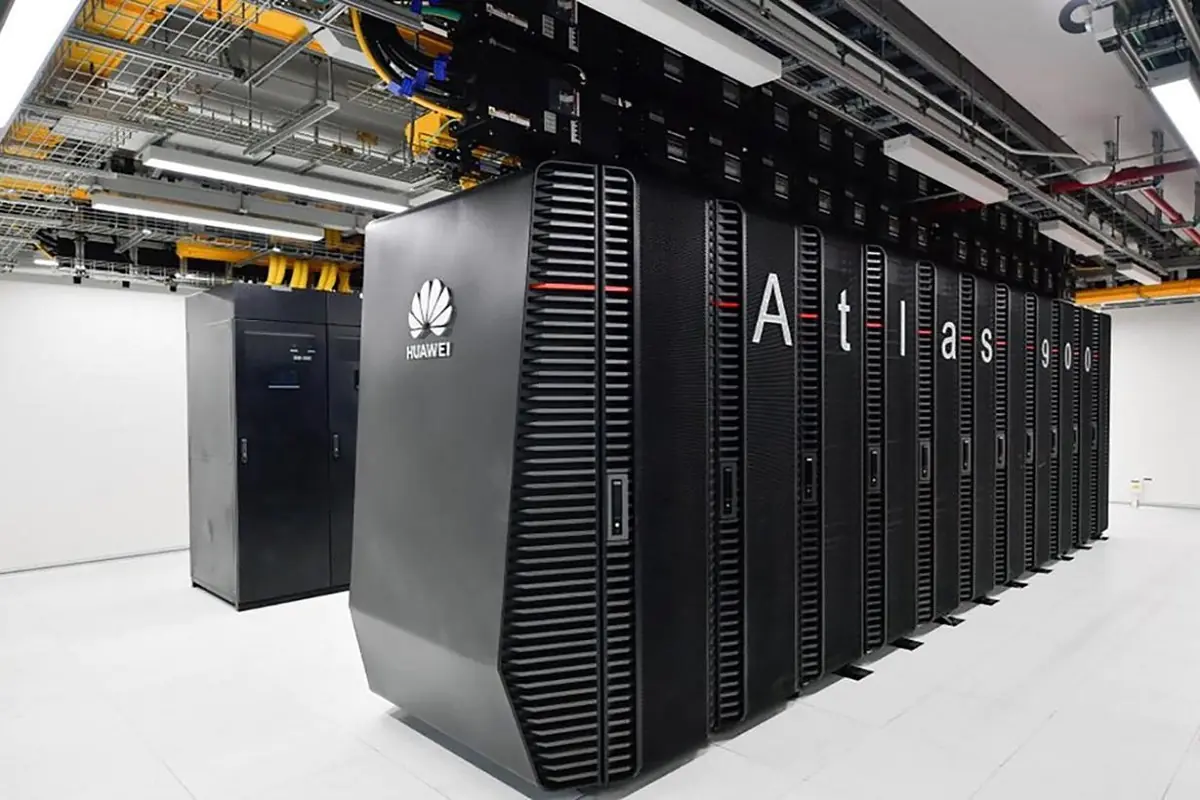
More Restrictions Could Give Huawei a Larger Market
China’s domestic semiconductor industry has an interest in the outcome that differs from that of AI developers seeking immediate access to advanced computing.
A company building a language model may prefer to rent available Nvidia capacity today rather than spend additional time adapting its systems to alternative processors.
Huawei, by contrast, stands to benefit commercially if restrictions encourage more Chinese developers to purchase domestic hardware.
The extent of that benefit would depend on whether local manufacturers can deliver sufficient processors, memory, networking equipment and software support at competitive costs.
Advanced memory remains one important constraint.
The Institute for Progress identifies high-bandwidth memory, or HBM, as a significant limitation on China’s domestic AI chip production. HBM allows processors to transfer large volumes of data quickly, making it valuable for demanding AI workloads.
Although Chinese companies are developing domestic alternatives, manufacturing capacity and access to advanced memory continue to affect how quickly local suppliers can expand production.
The institute estimates that China’s domestic AI chip output could deliver computing capacity equivalent to approximately 986,000 H100 processors in 2026 and 1.3 million in 2027.
These are modelled estimates, not independently verified production totals, and their accuracy depends on assumptions about manufacturing, memory availability and processor performance.
They nevertheless illustrate why stronger demand for Huawei’s chips would not automatically translate into enough supply to replace overseas Nvidia computing.
Restrictions could therefore produce several outcomes at once.
Some Chinese developers might increase spending on domestic processors. Others could adapt models to run more efficiently on available hardware, seek permitted computing alternatives, or delay projects requiring additional capacity.
Domestic manufacturers could gain customers and investment without immediately matching the capabilities of every American system their buyers previously used.
The effects would also take time. Manufacturing capacity cannot expand instantly, while software changes and large computing installations require technical work and capital.
That creates a policy trade-off for Washington. Restricting China’s access to advanced American processors may raise the cost of developing certain AI systems, but sustained restrictions could also strengthen the commercial case for building competing domestic technologies.
The outcome depends on how effectively Chinese companies respond, not simply on the severity of American rules.
Reuters’ November 12 findings establish that Chinese businesses are exploring additional overseas Nvidia capacity before those rules potentially change. They do not establish how much capacity will ultimately be contracted, how future restrictions will treat existing agreements or how much demand would transfer to domestic suppliers.
For now, Chinese developers are trying to preserve access to computing resources they consider valuable, overseas operators have commercial incentives to serve eligible customers, and American policymakers are examining ways to prevent restricted technology from reaching users through remote services.
The same restrictions intended to keep American technology beyond China’s reach could change where data centres are built, which customers they serve, and how much Chinese companies invest in alternatives.
Washington can make access to Nvidia’s most advanced processors more difficult. What it cannot determine through export controls alone is how China’s AI companies will choose to build without them.

Joy Onuorah is a business journalist and brand communications specialist covering financial markets, artificial intelligence, digital economy, and the ideas reshaping business across Africa and the global market. Beyond her reporting for TheWill, Joy uses brand strategy, storytelling, copywriting, and high-value SEO to help brands build lasting market authority.