
-
INEC warns that AI-generated fake election results, cloned voices, forged directives and deepfakes could trigger confusion, undermine public confidence and provoke violence during the 2027 general elections.
-
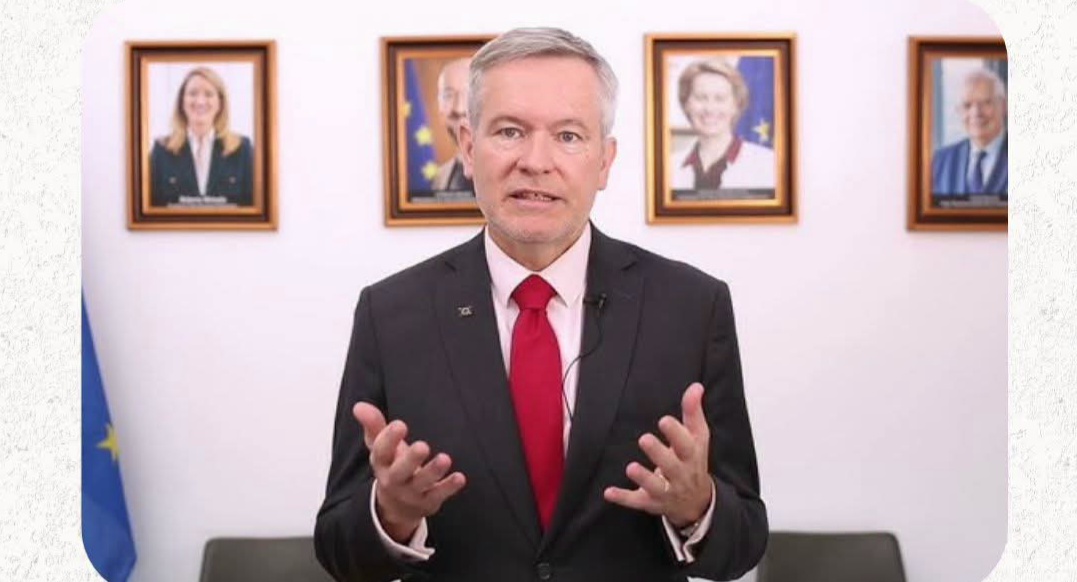
EU Ambassador Gautier Mignot cautions against using the fight against AI-generated misinformation to suppress political dissent, silence journalists or restrict freedom of expression.
-
Former INEC Chairman, Prof. Attahiru Jega, urges the commission to deploy AI-powered chatbots to provide voters with verified electoral information and counter disinformation.
-
IPC seeks a coordinated Electoral Information Integrity Response Protocol, while HURIWA demands a non-partisan security task force to protect political activities amid reported attacks on supporters and campaign teams.
November 3, (THEWILL) – The European Union (EU) and the Independent National Electoral Commission (INEC) have raised concerns over the growing threat of artificial intelligence (AI)-generated fake election results, cloned voices, deepfakes and other forms of digital manipulation ahead of Nigeria’s 2027 general elections, warning that the emerging threats could undermine electoral credibility, trigger confusion and provoke violence.
The EU, however, cautioned that efforts to combat AI-driven misinformation must not become a pretext for suppressing political dissent, silencing journalists or restricting freedom of expression.
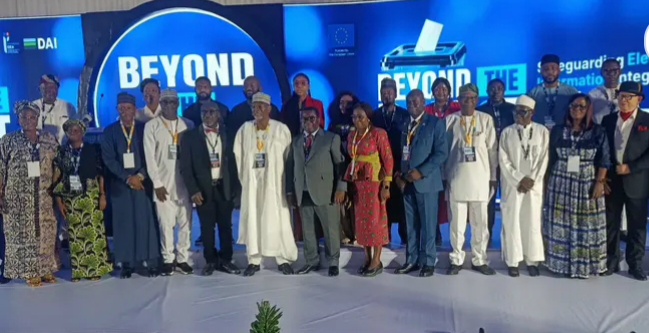
THEWILL reports that the warnings came on Monday at the opening of the National Summit on Electoral Information Integrity, a two-day event in Abuja organised by the International Press Centre (IPC), the Centre for Media and Society (CEMESO) and DAI under the European Union Support to Democratic Governance in Nigeria (EU-SDGN) programme.

The summit, themed “Beyond the Ballot: Safeguarding Electoral Information Integrity in the Age of AI”, brought together representatives of INEC, security agencies, political parties, media organisations, technology companies, telecommunications operators, fact-checkers and civil society groups.
Speaking at the event, EU Ambassador to Nigeria and ECOWAS, Gautier Mignot, said protecting the integrity of electoral information was essential to ensuring that citizens could make informed choices during elections.
He warned that an election could be compromised even without the alteration of a single ballot, explaining that fabricated announcements, false election results and misleading voting instructions could create confusion and erode public confidence.
“An election can be undermined without a single ballot being altered. A fabricated announcement can send voters to the wrong location. A false claim about results can deepen suspicion before verified information reaches the public. The immediate target is information; the deeper target is trust”, Mignot said.
He noted that information manipulation during elections was a growing global challenge affecting both Europe and Africa, adding that although artificial intelligence could improve accessibility, translation and communication, it had also made deception easier to produce and more difficult to detect.
According to him, the challenge extended beyond identifying deepfakes to building an electoral information environment where reliable information was readily available, public institutions communicated credibly, independent journalism thrived, and manipulation was met with an effective response.
Mignot identified three priorities for Nigeria ahead of the 2027 elections: early preparedness before electoral pressure intensifies, effective implementation of local and international partnerships, and the protection of fundamental democratic rights while safeguarding electoral information.
He said stakeholders must establish clear verification channels, define responsibilities and agree on communication procedures well before election day.
“Election day is too late to establish verification contacts, clarify responsibilities, or agree on who can authorise a public correction. Those arrangements should be developed and tested now”, he said.
The EU ambassador also cautioned against using the fight against misinformation to justify censorship or the suppression of legitimate political activities.
“The legitimate threat of AI manipulation must never become a pretext for state overreach, digital censorship or suppression of political dissent. A citizen questioning an institution is not necessarily spreading misinformation. A journalist reporting a failure is performing a democratic function”, he said.
He stressed that journalists must retain their editorial independence, fact-checkers must remain free to reach independent conclusions, INEC must communicate within its statutory authority, while digital platforms must explain their decisions and provide appropriate channels for review.
Mignot reaffirmed the EU’s commitment to supporting Nigerian-led initiatives to protect electoral integrity without dictating the country’s political outcomes.
INEC Warns Of Fake Results, Forged Directives
Also speaking, INEC Chairman, Prof. Joash Amupitan, warned that artificial intelligence could be exploited to circulate fake election results, forged operational directives and fabricated information capable of triggering confusion, public unrest and violence during the 2027 general elections.
He said synthetic audio, manipulated videos and forged documents could be used to falsely announce election results or claim that elections had been cancelled in particular constituencies, thereby undermining public confidence and disrupting the collation process.
According to him, the increasing accessibility of generative AI tools has made it easier for individuals and organised groups to produce convincing fake audio, videos and other materials capable of misleading voters.
He warned that fabricated election results could circulate on social media before INEC released official announcements, potentially provoking unrest and violence.
“Today, elections can be undermined long before the first ballot is cast”, Amupitan said.
He identified synthetic media, automated misinformation and disinformation, deepfakes, digital micro-targeting and Foreign Information Manipulation and Interference (FIMI) as emerging threats to the credibility of the 2027 elections.
The INEC chairman cited the possibility of AI-generated audio impersonating senior political figures to make false claims about vote-buying or electoral manipulation, as well as fabricated videos of electoral officials announcing decisions they never made.
He also warned that manipulated audio and video could be deliberately circulated during result collation and announcement to create confusion before the commission released verified information.
Amupitan disclosed that INEC had established an artificial intelligence unit to anticipate risks associated with emerging technologies and develop measures to protect the electoral process.
He acknowledged that AI could also assist election management bodies with voter register analysis, logistics planning, data processing and administrative efficiency, stressing that the risks depended on how the technology was deployed.
The commission, he added, had signed a memorandum of understanding with TikTok and was seeking stronger cooperation with other digital platforms, including Facebook, Instagram, WhatsApp, YouTube, Telegram and X.
He further disclosed that INEC had introduced ChatGPT to support its operations and was working with development partners, including the European Union, to establish a strategic communication crisis network.
According to him, the commission was strengthening its technological capacity and communication systems to detect deepfakes, verify suspicious media and issue authoritative clarifications.
He cautioned against relying solely on fact-checking after false information had gone viral, noting that manipulated content could spread widely within 30 minutes.
Amupitan called for coordinated action involving INEC, security agencies, media organisations, technology companies and fact-checking groups to address emerging threats before and during the elections.
READ ALSO:
Jega Proposes AI-Powered Chatbots
Former INEC Chairman, Prof. Attahiru Jega, who chaired the summit, urged the commission to consider deploying artificial intelligence-powered chatbots to provide voters with accurate electoral information and counter misinformation ahead of the 2027 elections.
Jega said the technology could enable citizens seeking information about the electoral process to obtain official responses promptly and verify the authenticity of information circulating in the public space.
He disclosed that the recommendation followed discussions at the 2024 Cambridge Conference on Electoral Democracy, where participants examined how election management bodies, particularly in Africa, could deploy chatbots to reduce the impact of misinformation and disinformation.
He urged INEC to consider adopting the system if it had yet to do so, noting that the positive applications of artificial intelligence could complement efforts to safeguard electoral information integrity.
IPC Seeks Electoral Information Response Protocol
Earlier, IPC Executive Director, Lanre Arogundade, warned that Nigeria’s electoral information environment had changed significantly since the 2023 general elections, with the growing use of social media and emerging technologies creating additional challenges for credible elections.
Citing data from the Nigeria Fact-Checkers Coalition, Arogundade said 63 per cent of presidential and National Assembly claims reviewed during the 2023 elections were entirely false, while false claims reached secondary social media platforms within an average of 11 minutes.
He also noted that voter turnout in the 2023 general elections fell to 26.7 per cent, the lowest since Nigeria’s return to democratic rule in 1999.
Arogundade disclosed that Nigeria had approximately 148 million internet users, while a recent survey showed that 52 percent obtained political news primarily through social media.
He said the figure exceeded 82 percent in the South-East, where more than four in 10 voters reportedly did not verify political information they received.
The IPC director identified voice cloning, forged result sheets and attempts to dismiss authentic evidence as AI-generated as additional challenges to public accountability.
He urged participants to move beyond declarations by establishing an Electoral Information Integrity Response Protocol and adopting the proposed Abuja Commitment as an operational framework ahead of the 2027 elections.
“Awareness alone is insufficient. Nigeria needs a trusted, coordinated, rights-respecting system enabling institutions to anticipate threats, verify evidence, escalate incidents, and communicate authoritatively”, he said.
Arogundade acknowledged INEC’s recent initiatives, including the establishment of its AI unit and assurances that algorithms would not determine the outcome of the 2027 elections.
He, however, stressed the need to ensure that institutions, systems and personnel were adequately prepared before voting commenced.
HURIWA Demands Security Task Force Over Political Attacks
Meanwhile, the Human Rights Writers Association of Nigeria (HURIWA) has condemned reported attacks on political supporters and campaign teams in different parts of the country, warning that political violence and the alleged sponsorship of armed thugs threaten democratic participation and electoral stability.
The association condemned an attack on members of the Nigeria Democratic Congress (NDC) during a ward meeting in Obuofia, Nkanu West Local Government Area of Enugu State, which reportedly left several members injured.
It also condemned an alleged attack on APC supporters travelling to Funtua for the flag-off of Governor Dikko Radda’s re-election campaign in Katsina State.
Suspected hoodlums reportedly hurled stones and other objects at vehicles conveying the supporters in Malumfashi Local Government Area, shattering windscreens and windows and leaving some people with minor injuries.
HURIWA equally condemned the disruption of Abia State Governor Alex Otti’s re-election campaign inauguration at Umuahia Township Stadium, where rival political groups reportedly caused disorder during the proceedings, including a church service.
The association also condemned the reported assault on human rights activist and African Action Congress presidential aspirant, Omoyele Sowore, and members of his team in Ado-Ekiti, Ekiti State.
Sowore had alleged that a mobile phone stolen during the attack was subsequently traced to the Ekiti State Governor’s Lodge.
HURIWA maintained that political meetings and peaceful association were fundamental rights that security agencies must protect, irrespective of political affiliation.
It called on the National Security Adviser to establish a joint security task force comprising professional, patriotic and non-partisan personnel to protect political parties, candidates, campaign officials, supporters and other participants in the electoral process.
The association also urged the police, Department of State Services and other relevant security agencies to establish a coordinated security framework for campaign rallies, ward meetings, campaign tours and other political engagements.
It warned political parties and their supporters against turning campaign grounds into arenas of violence, intimidation and disorder, insisting that Nigerians must be able to participate in political activities without fear of assault.

Felix Ifijeh is a journalist with years of professional reporting experience. Known for his keen news sense, compelling storytelling and commitment to accurate, impactful reporting, he has built a reputation for turning leads into clear, engaging, and well-structured reports that resonate with readers. His work reflects deep newsroom experience and a commitment to accurate, impactful journalism.
