
-
Major Nigerian businesses are increasingly pursuing growth through three strategies: regional expansion, new business lines, and deeper use of the capital market.
-
Zenith Bank and Zedcrest are taking financial services beyond traditional domestic boundaries, while MTN Nigeria and Airtel Africa are building businesses around payments and digital infrastructure.
-
Dangote Refinery and Dangote Cement are using capital markets to finance expansion and widen access to investors, with potential implications for Nigeria’s energy, industrial and financial sectors.
September 08, (THEWILL) — Nigeria’s corporate growth story is increasingly moving beyond the traditional strategy of expanding sales in the domestic market.
For some companies, the next opportunity lies in other African markets. Others are building new businesses around existing customer bases and infrastructure, while some of the country’s largest industrial companies are turning to capital markets to finance their next phase of growth.
These six companies illustrate how that shift is taking shape.

Going Regional And Global
1. Zenith Bank: Taking a ₦31trn Banking Business into East Africa
Zenith Bank is entering its East African expansion from a position of considerable strength.
The bank reported ₦4.19 trillion in gross earnings in 2025, up 6 percent from ₦3.97 trillion a year earlier, while profit after tax stood at about ₦1.04 trillion. Total assets reached approximately ₦31.46 trillion, with deposits of ₦24.33 trillion.
Against that backdrop, Zenith completed the acquisition of 100 percent of Paramount Bank Kenya, marking its entry into Kenya’s banking market.
The move gives Zenith access to another major African financial market and creates opportunities around corporate banking, trade finance, payments and cross-border transactions.
The wider implication is that Nigerian banks with sufficiently strong balance sheets can increasingly export financial services and participate in financing intra-African trade rather than depending entirely on Nigeria for growth.
2. Zedcrest: From Nigerian Finance to Cross-Border Services

Zedcrest is taking a different route to international expansion.
The financial-services group has broadened beyond securities and financing into areas including investment banking, asset management, financial technology and cross-border payments. It completed the acquisition of UK-founded Leatherback in July, having first invested in the company through a $10 million pre-seed funding round in 2022.
Although Zedcrest does not publicly disclose the financial performance of the privately held group in the same detail as listed banks, the Leatherback deal shows the direction of its strategy: using acquisitions to build an internationally connected financial-services platform.
For Nigeria, stronger indigenous cross-border payment infrastructure could support businesses operating across multiple African markets and improve the flow of trade and investment.
Moving Into New Business Lines
3. MTN Nigeria: Turning Telecoms Scale Into Financial Services
MTN Nigeria’s existing scale provides the foundation for its diversification strategy.
In the first half of 2026, service revenue increased 25.7 percent, while the company added 4.9 million subscribers to reach 92.2 million customers. Active data users rose to 55.7 million.
That customer base is increasingly becoming a platform for financial services.
Through MoMo and the wider MTN Group fintech strategy, the telecoms company is moving into payments and other financial products. At group level, MTN is now also considering banking licences in selected markets as it seeks to deepen lending and fintech services.
The potential macroeconomic effect is significant: telecom infrastructure can become a distribution channel for financial inclusion, digital payments and consumer finance, bringing more transactions into the formal digital economy.
READ ALSO:
4. Airtel Africa: Building Beyond Telecoms
Airtel Africa is similarly broadening its revenue base.
The company ended FY2026 with 183.5 million customers, while Airtel Money customers increased 21.3 percent to 54.1 million. Airtel Money generated about $1.35 billion in revenue during the year.
Its strategy now extends beyond connectivity into mobile money, enterprise services and digital infrastructure.
Airtel is also pursuing a potential London listing for Airtel Money, which could value the business at around $10 billion and raise approximately $1.5 billion.
For Nigeria, the broader shift could strengthen digital infrastructure and provide additional platforms for fintech, cloud computing, and other technology businesses.
Using the Capital Market
5. Dangote Refinery: Turning Industrial Scale Into Capital-Market Scale
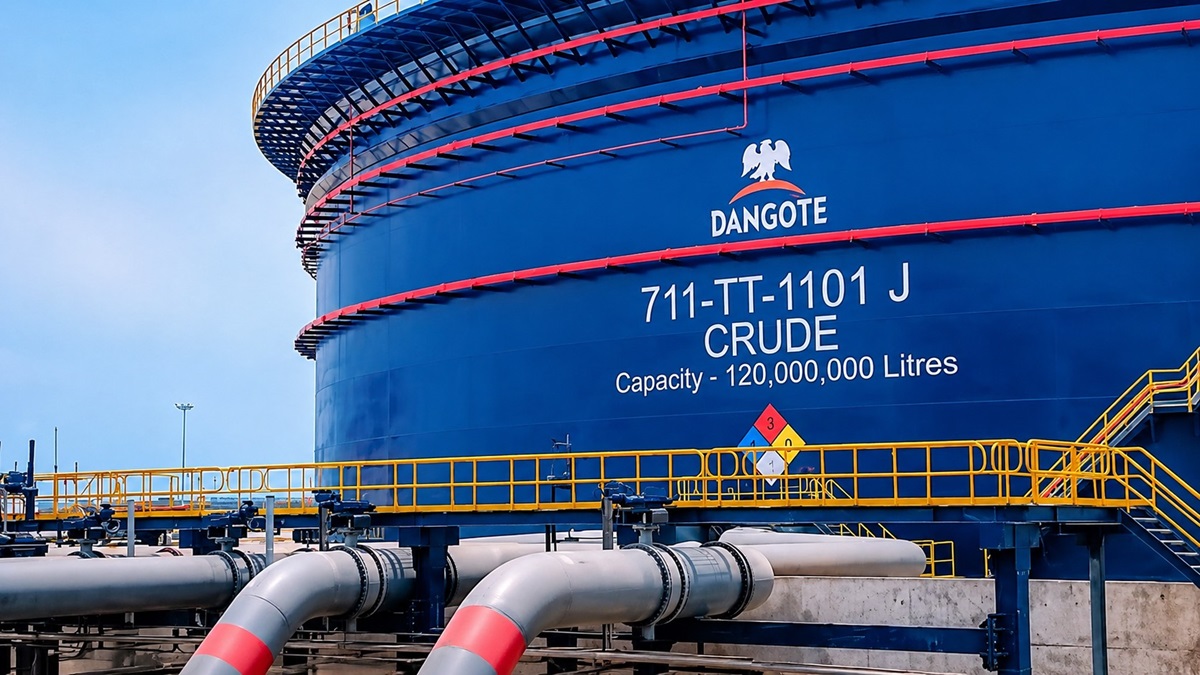
Dangote Refinery represents perhaps the most consequential capital-market expansion among the six.
The approximately $20 billion refinery has a nameplate capacity of 650,000 barrels per day and has tested output of 700,000 bpd. Its approved IPO involves 4.1 billion shares at ₦525 each, potentially raising ₦2.15 trillion ($1.63 billion).
The IPO will run from September 14 to October 13, 2026, with the offer targeting retail investors and allowing the public to take ownership in the refinery. The minimum subscription is 10 shares, costing ₦5,250.
The latest prospectus also places the refinery’s valuation at about $49 billion, making the public offer one of the largest capital-market transactions in Africa.
More importantly, the company has now outlined a $14.3 billion expansion plan to increase refining capacity from its current 700,000 barrels per day level to 1.4 million bpd by 2029.
The refinery reported a $1.82 billion profit in the first half of 2026, reversing a $476 million loss recorded in 2025, strengthening the financial case behind its next phase of expansion.
The funds raised through the IPO will support the expansion, while the broader investment programme is expected to include additional infrastructure such as tank farms and other facilities.
That expansion could have implications beyond the company, including greater domestic refining capacity, lower dependence on imported petroleum products, stronger demand for Nigerian crude and greater export potential.
The IPO could also become a major test of the NGX’s ability to absorb large-scale industrial listings, broaden retail participation and attract institutional investors.
6. Dangote Cement: Connecting African Industrial Growth to Global Capital

Dangote Cement is approaching the capital market from an already powerful position.
The company recorded ₦4.31 trillion in revenue in 2025, while profit after tax rose to about ₦1.02 trillion. Its total installed capacity stands at about 55 million tonnes per annum, making it one of Africa’s largest cement producers.
Its proposed secondary listing on the London Stock Exchange would give the company access to a broader pool of international investors. The company is also targeting further expansion of production capacity over the coming years.
The significance extends beyond Dangote Cement. If successful, the listing could demonstrate how large African companies can use international exchanges to widen their investor base, improve visibility and potentially access new sources of capital.
Taken together, the six companies reveal a broader shift in Nigerian corporate strategy: going beyond Nigeria, moving beyond traditional business lines and going beyond the domestic capital market.
The success of these strategies could determine whether Nigeria’s biggest companies remain primarily domestic champions or evolve into businesses with greater regional reach, diversified revenue streams and stronger connections to global capital.

Ogochukwu Onwaeze is a writer specializing in business and economic journalism. At THEWILL News Media, she translates market trends, financial developments, and policy shifts into clear and engaging stories.