
-
Oyo Governor confirms active talks, says data, political strength and national interest will determine whether opposition leaders can forge a winning coalition
-
Makinde confirms ongoing negotiations with Atiku, Obi and other opposition leaders ahead of the 2027 election.
-
Governor expresses willingness to work with any opposition figure, including Atiku, if consultations identify him as the strongest consensus candidate.
-
A common opposition candidate could address the division of votes that weakened the opposition in 2023.
November 13, (THEWILL) – Oyo State Governor Seyi Makinde has confirmed active negotiations among opposition leaders, including former Vice-President Atiku Abubakar and former Labour Party presidential candidate Peter Obi, towards a possible alliance that could consolidate opposition votes and provide a united challenge to President Bola Tinubu in the 2027 election.
The proposed alignment according to him is aimed at reshaping the presidential contest by bringing together politicians with different regional constituencies, political structures and support bases.
However, whether the emerging consultations can produce a cohesive and electorally effective coalition will depend on the ability of the leaders to resolve competing ambitions, agree on a common platform and rally behind a single candidate.
Makinde disclosed during a Friday interview with ARISE News anchor, Ojy Okpe, that discussions were already underway and that he was actively participating in the process.
“Not only that I’m open, we’re actively discussing this,” he said, dismissing suggestions that his position on an opposition alliance was merely an expression of willingness.
The governor declined to endorse either Atiku or Obi as his preferred presidential candidate, insisting that the opposition must be guided by evidence, including candidates’ manifestos, previous performances in public office and public sentiment.

“To arrive at a decision, you need data,” he said, adding that the process should not be driven by emotions or personal preferences.
READ ALSO:
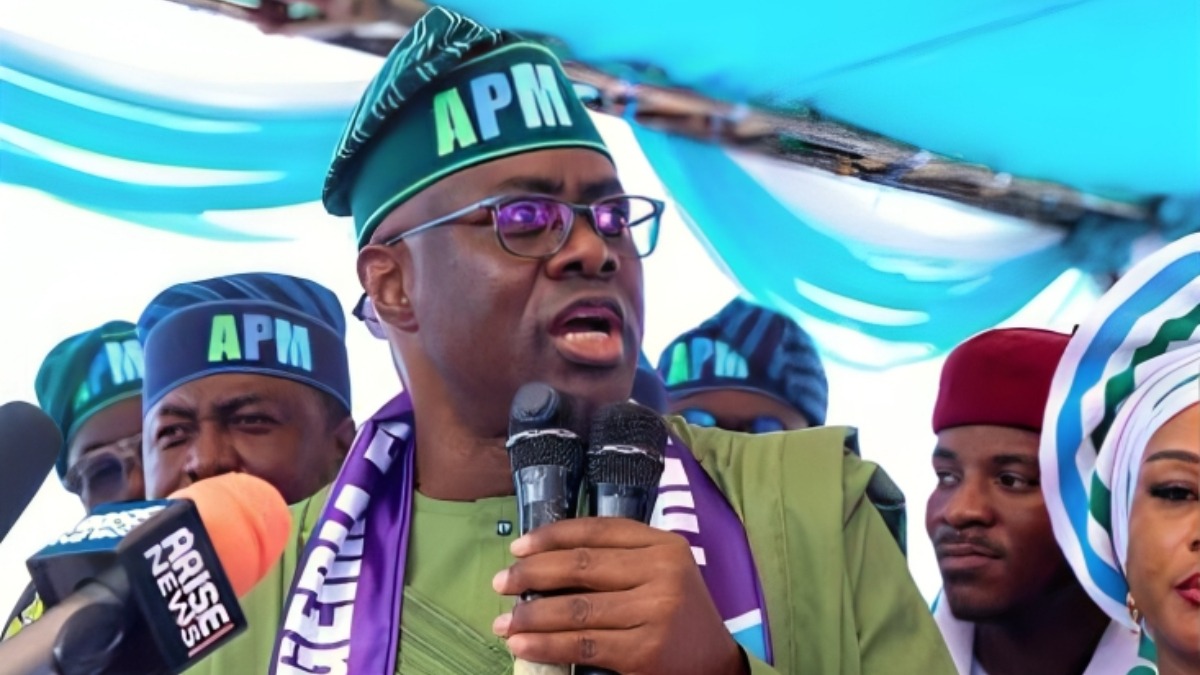
Makinde specifically affirmed that he would be willing to work with Atiku if consultations established that the former vice-president was the most suitable candidate around whom the opposition should unite.
“Yes. I’m willing to work with any Nigerian,” he said.
He maintained that the objective should be to reset Nigeria rather than advance individual political ambitions, drawing an analogy from the oil and gas industry, where competing companies sometimes collaborate when circumstances demand it.
“Our biggest challenge is, first, to agree on what is the best course of action, and then seek an alliance,” he said.
Makinde cited the 1999 presidential election, when Olu Falae’s considerable support in the South-West failed to translate into victory at the national level, as an example of the limitations of regional popularity without broader political cooperation.
He also referenced South Africa’s experience with political alliances, arguing that competing interests should not prevent opposition politicians from negotiating an arrangement in the national interest.
“That negotiation will not be anything personal. That negotiation will be the deal for Nigeria, by Nigeria,” he said.
The consultations reportedly involve six opposition parties: the African Democratic Congress (ADC), Allied Peoples Movement (APM), Nigeria Democratic Congress (NDC), Peoples Democratic Party (PDP), Social Democratic Party (SDP) and Peoples Redemption Party (PRP).
Among the politicians involved are Atiku, Obi, Makinde, former Cross River State Governor Donald Duke and former presidential candidate Adewole Adebayo.
The possibility of a successful alliance is strengthened by the argument that a common candidate could prevent a repeat of the opposition’s divided contest in 2023, when Atiku and Obi ran separately against Tinubu.
Bringing their respective political constituencies into one arrangement could broaden the opposition’s national reach.
Nevertheless, the challenge extends beyond agreeing on a presidential candidate.
The parties must also settle questions of political platform, leadership, campaign coordination, power-sharing and the distribution of responsibilities after the election.
Previous disagreements over the presidential ticket and political arrangements contributed to Obi and former Kano State Governor Rabiu Kwankwaso leaving the ADC for the NDC in May 2026, underscoring the difficulties involved in reconciling competing interests.
The opposition’s efforts are also unfolding alongside the Rainbow Coalition promoted by FCT Minister Nyesom Wike to mobilise cross-party support for Tinubu’s re-election.
Unlike the proposed opposition alliance, the Rainbow arrangement allows politicians to retain their party affiliations while supporting the president at the national level.
Ultimately, the proposed opposition alignment presents an opportunity for greater political cooperation.
