
-
El-Rufai says his claim that opposition politicians listen to government officials’ calls was political rhetoric and deliberate exaggeration.
-
The former Kaduna governor denies tapping NSA Nuhu Ribadu’s telephone or directing anyone to intercept his communications.
-
He tells the court he has never possessed telephone interception equipment or had access to Ribadu’s communication networks.
-
His defence follows the dismissal of his no-case submission after the DSS presented evidence through two witnesses.
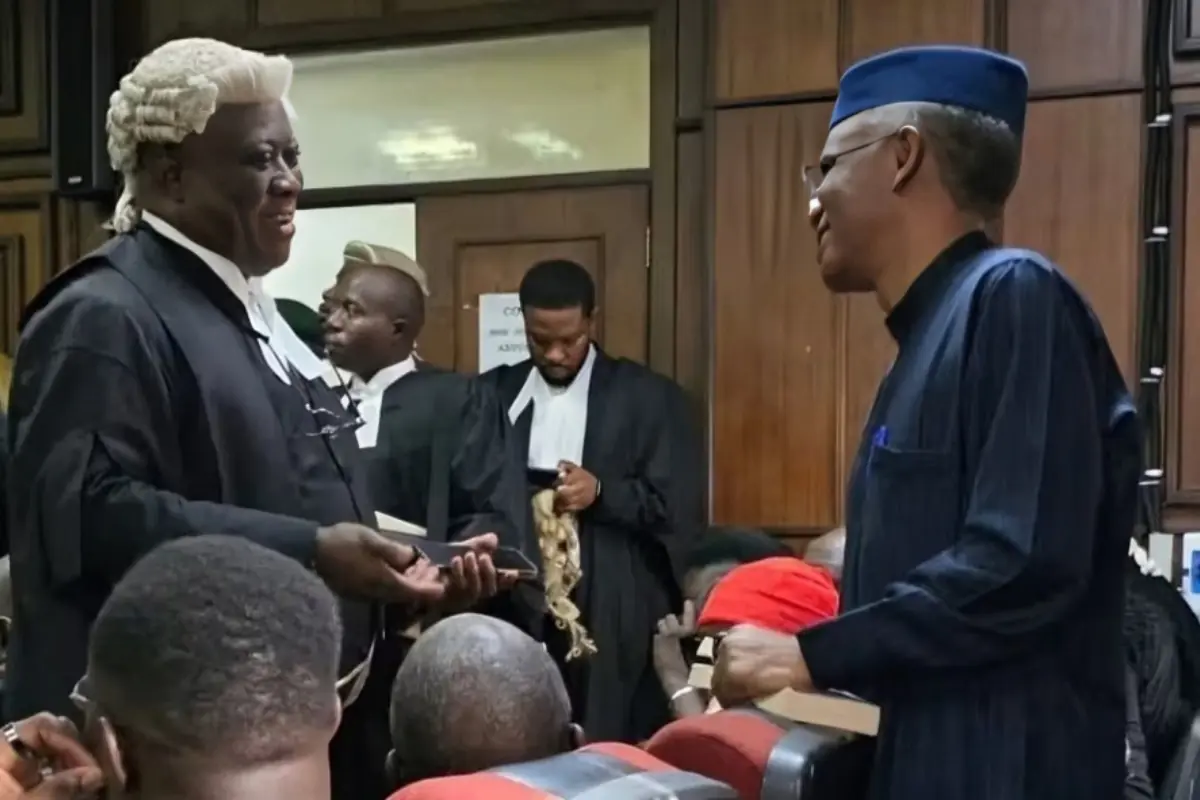
November 25, (THEWILL) – Former Kaduna State Governor Nasir El-Rufai has told the Federal High Court in Abuja that his controversial declaration that “we listen to their calls” was political rhetoric and deliberate exaggeration, insisting that he never intercepted the telephone communications of National Security Adviser (NSA), Nuhu Ribadu.
El-Rufai, who opened his defence on Wednesday before Justice Joyce Abdulmalik, denied tapping Ribadu’s telephone or instructing anyone to undertake such an operation, maintaining that his remarks during a February interview on Arise Television were intended as a political retort and should not be construed as an admission of unlawful surveillance.
The former governor, who is the sole defendant in the case instituted by the Department of State Services (DSS), said he had never owned equipment designed for telephone interception and lacked the technical expertise required to operate such devices.
Led in evidence by his counsel, Paul Erokoro, SAN, El-Rufai also denied having access to Ribadu’s communication networks or devices, insisting that he had no means of monitoring the NSA’s telephone conversations.
Addressing the specific language he used during the television interview, El-Rufai explained that his reference to “we” was directed at opposition politicians collectively and was not an admission that he had personally participated in intercepting telephone calls.
He told the court that his use of the word “tapped” was an embellishment intended to convey the opposition’s displeasure with the Federal Government.

“I used ‘we’ to refer to opposition politicians. When I said ‘tapped’, it was an embellishment intended to make the government feel the pain we are feeling. It was rhetorical and exaggerated. My objective was to engage in political retort and linguistic flourish,” he said.
Controversial Remarks That Triggered Investigation
The case followed El-Rufai’s February appearance on Arise Television, during which he made comments suggesting that opposition politicians had access to telephone conversations involving officials of the Federal Government.
During the interview, the former governor was asked how he obtained information that Ribadu was allegedly behind a plan to have him arrested.
In response, El-Rufai said: “He made the call because we listen to their calls.”
The statement attracted considerable attention because of its implication that telephone conversations involving senior government officials were being monitored.
It also raised questions about the possible interception of communications belonging to the NSA, prompting the authorities to investigate the matter.
READ ALSO:
However, while addressing the court on Wednesday, El-Rufai maintained that the statement was not a factual disclosure of any surveillance operation but an exaggerated expression deployed during a political exchange.
He specifically rejected the allegation that he had intercepted Ribadu’s telephone communications, arguing that he neither possessed the equipment nor had access to the infrastructure required to carry out such an operation.
Court Orders Former Governor to Open Defence
THEWILL reports that El-Rufai’s decision to open his defence followed the dismissal of his no-case submission by Justice Abdulmalik on October 26.
The former governor had filed the application after the DSS concluded its case, having called two witnesses to testify in support of the allegations against him.
Through the no-case submission, El-Rufai had sought to persuade the court that the evidence presented by the prosecution was insufficient to require him to defend himself against the charge.
However, in her ruling, Justice Abdulmalik held that the DSS had placed sufficient evidence before the court to warrant calling on the defendant to enter his defence, if he so desired.
The judge consequently directed El-Rufai to respond to the allegations, paving the way for the commencement of his defence.
Wednesday’s proceedings marked the former governor’s opportunity to challenge the prosecution’s case and present his explanation of the statement that formed the basis of the controversy.
Felix Ifijeh is a journalist with years of professional reporting experience. Known for his keen news sense, compelling storytelling and commitment to accurate, impactful reporting, he has built a reputation for turning leads into clear, engaging, and well-structured reports that resonate with readers. His work reflects deep newsroom experience and a commitment to accurate, impactful journalism.