
-
President Bola Ahmed Tinubu’s US lawyer, Wole Afolabi, SAN, has defended the President’s decision to challenge the release of FBI and DEA records linked to historical investigations involving him.
-
Afolabi dismissed allegations linking Tinubu to drug trafficking as speculative, arguing that the United States treats narcotics offences seriously.
-
The dispute centres on about 399 pages of records being sought by transparency activist Aaron Greenspan through a Freedom of Information Act lawsuit against the US Department of Justice, FBI and DEA.
-
Tinubu’s legal team argues that US FOIA is primarily designed to promote transparency about government agencies and cannot be used as a means of obtaining private information about individuals
August 31, (THEWILL) — Wole Afolabi, SAN, a member of President Bola Ahmed Tinubu’s legal team in the United States, has responded to critics questioning the President’s decision to challenge the release of records held by US law enforcement agencies.
He asked why American authorities have not arrested Tinubu if there is credible evidence linking him to drug trafficking.
Afolabi made these remarks during an appearance on Channels Television’s Sunday Politics, where he defended Tinubu’s ongoing legal challenge regarding records held by the United States Department of Justice (DOJ), the Federal Bureau of Investigation (FBI), and the Drug Enforcement Administration (DEA).

American transparency activist Aaron Greenspan is seeking these records through a Freedom of Information Act (FOIA) lawsuit.
This controversy has reignited discussions in Nigeria regarding historical allegations about Tinubu’s activities in the United States and the circumstances surrounding a 1993 civil forfeiture proceeding involving approximately $460,000. Tinubu has denied any wrongdoing related to these allegations.
What’s So Special About Tinubu?’
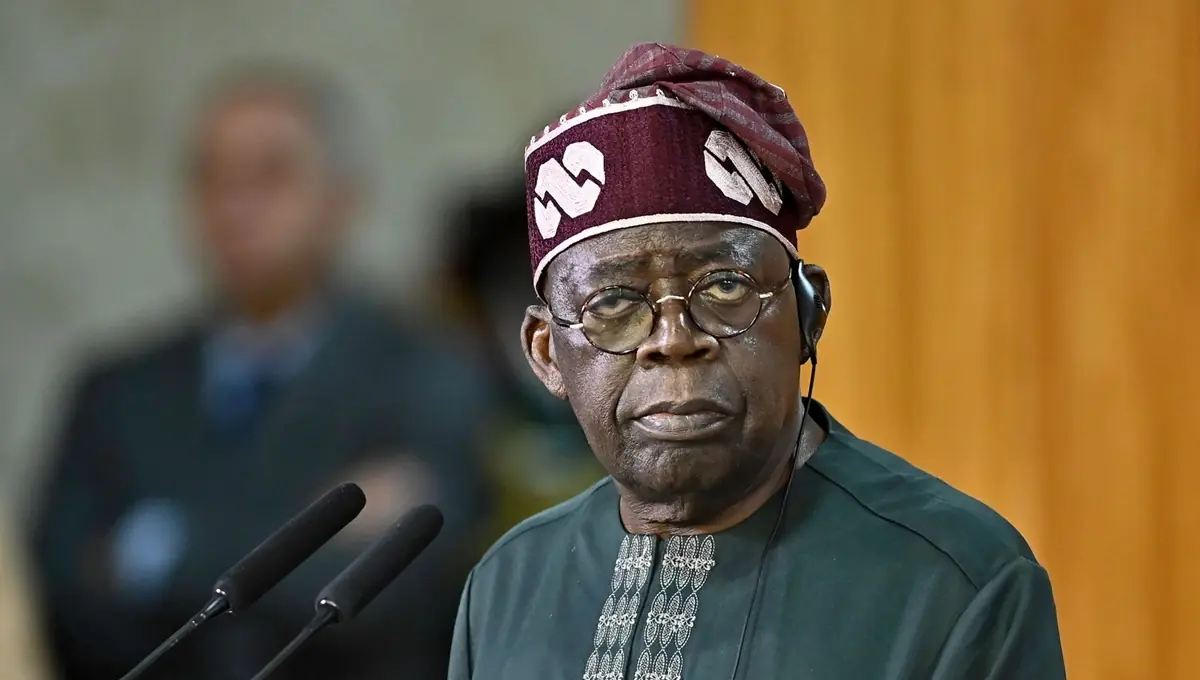
Afolabi challenged critics to consider how US authorities have historically dealt with allegations of drug trafficking against foreign political leaders and other high-profile individuals.
He argued that drug trafficking is a serious offense in the United States, and American law enforcement has shown a willingness to pursue suspects, regardless of their political status.
“What’s so special about President Bola Ahmed Tinubu that he can travel to and from America without being arrested, detained, or interviewed for anything?” Afolabi asked.
He cited the case of former Panamanian leader Manuel Noriega, who was apprehended by US forces, brought to the United States, and prosecuted for drug trafficking-related offenses.
He also mentioned Andrew Fahie, the former Premier of the British Virgin Islands, who was arrested in the US in April 2022 in connection with drug trafficking allegations.
Further, he referenced the case of Venezuela’s former president, who has faced US drug trafficking charges, as another instance of American authorities acting against foreign political figures.
Afolabi emphasized that several Nigerians have been extradited to the United States to face drug-related charges, demonstrating that US authorities typically do not shield foreign political figures from prosecution when there are grounds for criminal action.
Senior Advocate of Nigeria, Wole Afolabi (right), member of President Bola Ahmed Tinubu’s legal team in the United States, during an appearance on Channels Television’s Sunday Politics.
READ ALSO:
Lawyer Defends Challenge to FBI and DEA Records

Afolabi also justified Tinubu’s decision to contest the release of the disputed records.
He explained that US agencies had provided documents in response to Greenspan’s FOIA request, but Greenspan is seeking access to unredacted versions. He insisted that Tinubu’s lawyers are merely exercising their rights under US law.
“The way the system works is that what you want is not always what the law allows. We are operating within the legal framework that protects us,” Afolabi stated.
He added that lawyers have a professional obligation to utilize every legitimate legal protection available to their clients, saying, “It would amount to professional malpractice if we didn’t take advantage of what the law offers.”
‘I Don’t Know What’s in the Documents’
When asked about the contents of the approximately 399 pages of records being contested,
Afolabi stated that he was unaware of the full details. “I don’t know what’s in the documents,” he said. He did, however, refer to a recent filing by the US Department of Justice, specifically a footnote on page 24, which indicated that the government’s concerns were related to how some information was obtained.
Afolabi clarified that this filing did not suggest that the US government was protecting Tinubu from the release of information.
“In one of the recent filings made by the Department of Justice, it was noted in a footnote on page 24 that their concern is about the methodology used to gather information.
“There was no mention of any protection being offered to President Bola Ahmed Tinubu,” he explained.
He also mentioned that the FBI expressed concerns about safeguarding its agents and other individuals associated with the investigation.
‘Allegations Are Speculative’
The senior lawyer dismissed the allegations against Tinubu as mere speculation, insisting that accusations should not be treated as facts without supporting evidence.
“The allegations made against Tinubu are speculative. Speculation is not covered by the Freedom of Information Act. You must have your facts,” he asserted.
Afolabi further challenged the interpretation of FOIA by critics of the President. “The Freedom of Information Act is primarily directed at government agencies. It is not a tool to extract information without basis.”
Felix Ifijeh is a journalist with years of professional reporting experience. Known for his keen news sense, compelling storytelling and commitment to accurate, impactful reporting, he has built a reputation for turning leads into clear, engaging, and well-structured reports that resonate with readers. His work reflects deep newsroom experience and a commitment to accurate, impactful journalism.