
-
The Federal Government has launched a major reform of tertiary education accreditation to stop institutions from temporarily borrowing lecturers, laboratory equipment, workshops and other facilities to create a false impression of compliance during accreditation exercises.
-
Education Minister, Dr Maruf Tunji Alausa, said accreditation must reflect the actual and sustainable capacity of an institution, insisting that schools must maintain prescribed academic and infrastructural standards throughout the year rather than scramble to meet them only when inspectors visit.
-
A new digital, data-driven verification system will deploy geospatial mapping, geotagging and secure digital records to authenticate academic staff, establish their institutional affiliation and verify the ownership, functionality and continued availability of facilities and major equipment.
-
The reform will also address illegal admissions and other regulatory gaps, with the Federal Government bringing the NUC, NBTE, NCCE and other stakeholders into a strengthened quality-assurance framework designed to protect students from institutions that fail to maintain approved standards.
September 10, (THEWILL) – The Federal Government has moved to shut down a long-standing loophole in the accreditation of tertiary institutions, declaring that schools will no longer be allowed to rely on temporarily “borrowed” lecturers, equipment and facilities to secure regulatory approval.
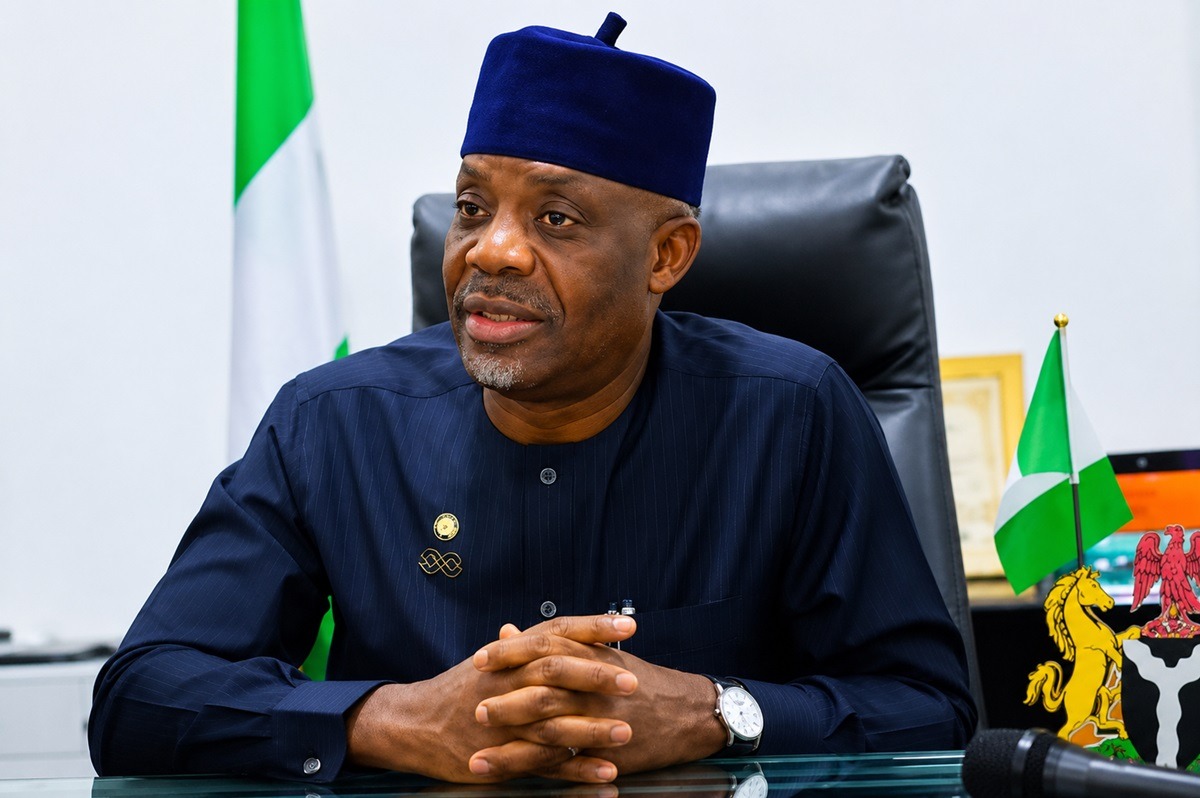
The Minister of Education, Dr Maruf Tunji Alausa, announced the move on Thursday in Abuja while inaugurating a Ministerial Committee on Strengthening the Accreditation and Quality Assurance System for Tertiary Institutions in Nigeria.
The committee, chaired by the immediate-past Registrar of the Joint Admissions and Matriculation Board, Professor Ishaq Oloyede, is expected to review the existing accreditation framework and recommend far-reaching measures to strengthen monitoring, verification, technology adoption and continuous quality assurance across the sector.

Alausa said the government was determined to ensure that accreditation no longer merely reflects what an institution is able to assemble temporarily when an accreditation team arrives.
According to him, accreditation must reflect an institution’s “actual and sustainable capacity”, meaning that the staff, laboratories, workshops, libraries, equipment and other facilities required to run approved programmes must be genuinely available and functional on a continuous basis.
The minister directed the committee to develop a digital and data-driven accreditation system capable of continuously verifying institutional claims.
The proposed framework will deploy technologies including geospatial mapping and geotagging, alongside secure digital records, to establish the location, ownership, condition and sustained availability of critical institutional facilities.
It will also verify the identities of academic staff and their affiliation with the institutions where they are presented as teaching personnel.
READ ALSO:
The measure is expected to make it substantially more difficult for institutions to temporarily recruit or “borrow” lecturers from other schools, move equipment into facilities or make short-term arrangements solely to satisfy accreditation inspectors.
Under the new approach, the question for regulators will not simply be whether a school can present the required facilities on inspection day, but whether those facilities actually belong to the institution, are functional and remain available to students throughout the academic year.
Crackdown On Illegal Admissions
The Federal Government is also widening the scope of the reform to cover illegal admissions and other weaknesses in the tertiary education regulatory system.
Alausa directed the committee to examine measures that would strengthen controls over admissions and prevent institutions from operating outside approved regulatory procedures.
Illegal admissions have remained a recurring concern in Nigeria’s tertiary education system, with the government and regulatory agencies repeatedly warning institutions against admitting students outside approved processes.
The issue is particularly significant because students admitted through irregular channels can face uncertainty over the recognition of their programmes, certificates and academic records.
The Federal Government’s decision to incorporate admissions into the wider quality-assurance reform signals an attempt to tackle the problem at both the institutional and regulatory levels.
Beyond Accreditation Day
The minister’s position effectively challenges the traditional model in which institutions prepare extensively for scheduled accreditation visits before returning to their normal operating conditions afterwards.
Under the proposed system, institutions would be required to demonstrate sustained compliance.
A school that has the required laboratory equipment during an inspection but subsequently removes or abandons it would therefore be exposed by the continuous verification mechanism.
Similarly, an academic who is presented as a full-time member of staff during accreditation but is not genuinely affiliated with the institution could be identified through staff authentication and institutional records.
The Ministerial Committee, headed by Oloyede, has been mandated to review existing policies and develop recommendations capable of strengthening the country’s accreditation and quality-assurance architecture. Its work is expected to cover monitoring, physical and digital verification, technology adoption, institutional records and continuous assessment of compliance.
The Federal Ministry of Education said it would work with the National Universities Commission (NUC), National Board for Technical Education (NBTE), National Commission for Colleges of Education (NCCE) and other relevant stakeholders to implement the reforms.

Felix Ifijeh is a journalist with years of professional reporting experience. Known for his keen news sense, compelling storytelling and commitment to accurate, impactful reporting, he has built a reputation for turning leads into clear, engaging, and well-structured reports that resonate with readers. His work reflects deep newsroom experience and a commitment to accurate, impactful journalism.