
-
Federal Government targets 70,000MW of electricity generation by 2030, despite current output remaining below 5,000MW.
-
Government says an East-West Grid programme, small hydropower projects and the Mambilla project will support expansion.
-
FG has paid ₦1.23tn of the ₦3.3tn legacy debt owed to power generation companies.
October 28, (THEWILL) – The Federal Government has set a target of generating 70,000 megawatts of electricity by 2030, seeking to expand power infrastructure to meet rising demand from industries, businesses and households despite persistent supply shortages.
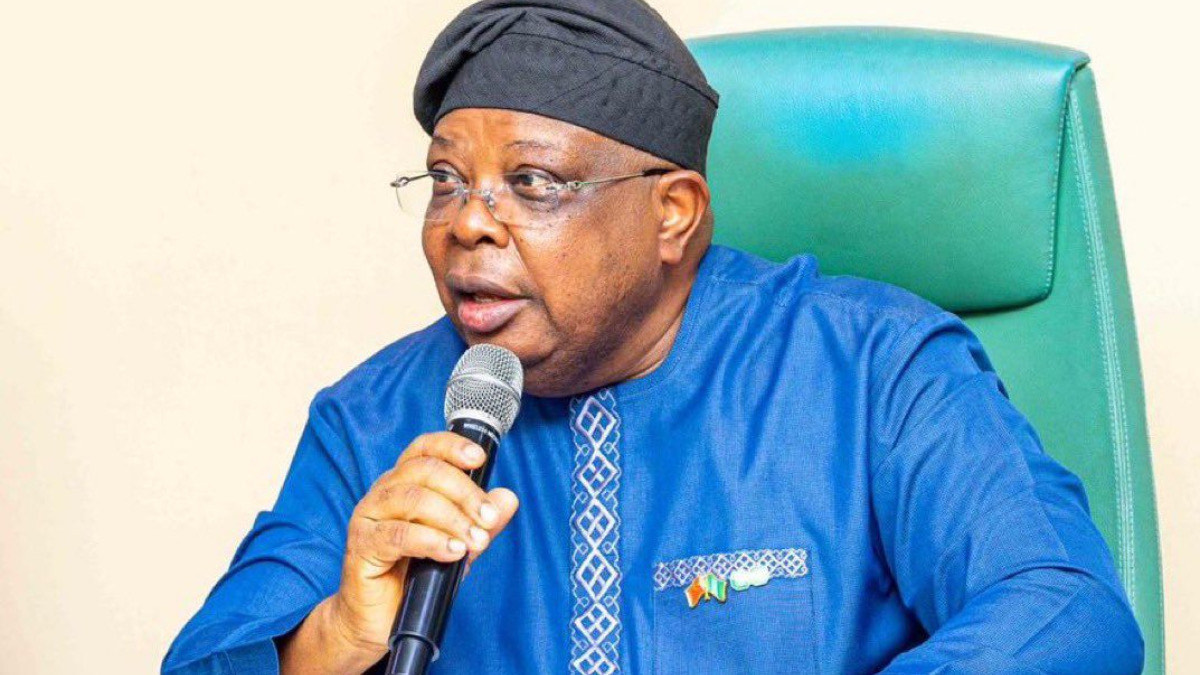
The Minister of Power, Joseph Tegbe, disclosed this on Tuesday at the 13th Nigeria Energy Leadership Summit in Lagos, where he outlined plans to strengthen the national grid, develop additional generation capacity and improve electricity delivery.
Nigeria currently has more than 13,000MW of installed generation capacity but struggles to generate less than 5,000MW, highlighting the gap between the country’s existing infrastructure and the government’s ambition.

Tegbe acknowledged the disparity but argued that planning must account for future electricity demand, particularly from industrialisation, artificial intelligence and data centres.
“Our plan remains that by 2030, we’re looking at 70 gigawatts for Nigeria,” he said, adding that Nigeria could not afford to be left behind as global energy demand rises.
The target would require generation capacity to increase substantially within four years, alongside improvements in transmission and distribution infrastructure.
The government’s announcement did not specify an annual capacity-addition schedule or the financing required to achieve the target.
Grid expansion and hydropower plans
Tegbe said the government was pursuing an East-West Grid programme intended to strengthen transmission infrastructure and improve electricity supply along major economic corridors.
He also disclosed plans to develop smaller hydropower projects, saying 21 dams had been identified along the Sokoto–Badagry Expressway for possible development.
The government intends to assess the dams for rehabilitation and conversion into hydropower facilities, potentially supporting electricity supply to agricultural areas, processing clusters and surrounding communities.
Tegbe added that the Mambilla hydropower project remained part of the government’s long-term expansion plans, alongside smaller schemes that could contribute additional generation capacity.
The minister said the Federal Government would work with state governments, regulators and private operators to coordinate electricity projects across three economic corridors.
However, the proposed projects will need to translate into commissioned generation capacity and reliable transmission before they can materially improve supply.
Nigeria’s electricity challenges extend beyond installed capacity to the availability of generation, gas supply, grid constraints and distribution infrastructure.
READ ALSO:
Government addresses power-sector debt
The minister also disclosed that the Federal Government had paid ₦1.23tn out of the ₦3.3tn legacy debt owed to power generation companies.
The outstanding balance is approximately ₦2.07tn, based on the figures provided.
Tegbe said the government was considering structured settlements, payment assurance mechanisms and legally permissible net-off arrangements to address outstanding obligations and prevent further debt accumulation.
The debt burden has been a persistent concern for the electricity industry because delayed payments can weaken the finances of generation companies and affect their ability to maintain equipment and sustain operations.
Resolving the liabilities could help improve financial flows across the electricity value chain, although the impact will depend on the timing and structure of settlements and the prevention of new arrears.
Earlier, the Lagos State Commissioner for Energy and Mineral Resources, Biodun Ogunleye, said reliable and affordable electricity was central to the state’s economic ambitions.
He said the Lagos State Electricity Law, enacted in 2024, established a framework for a more competitive electricity market, stronger regulation and increased private investment.
Exhibition Director for the Energy Portfolio at inD, Ade Yesufu, also called for improvements in electricity supply, pointing to Nigeria’s gas reserves and the emergence of new developers and innovators.
For Nigeria, the 70,000MW target sets out the scale of the government’s ambition. Delivering it will depend on how quickly proposed projects move from planning to construction, how they are financed, and whether the transmission and distribution networks can deliver the additional electricity to consumers.

Ogochukwu Onwaeze is a writer specializing in business and economic journalism. At THEWILL News Media, she translates market trends, financial developments, and policy shifts into clear and engaging stories.
