
-
Nigeria loses more than ₦3.6tn to inefficiencies and distortions in its transportation and logistics sector, according to the Africa Centre for Supply Chain.
-
Poor connectivity raises delivery costs, delays goods movement, and undermines small businesses.
-
Transport stakeholders call for better integration of rail, road, maritime and air networks to improve trade and productivity.
October 29, (THEWILL) – Nigeria loses more than ₦3.6tn to inefficiencies and distortions in its transportation and logistics sector, the Director-General of the Africa Centre for Supply Chain, Dr Obiora Madu, has said.
Madu warned that poor connections across the country’s transport network were increasing business costs, weakening the performance of small-scale enterprises and limiting the sector’s contribution to economic growth.
He spoke at the BusinessDay Mobility and Logistics Conference in Lagos, where industry stakeholders called for an integrated transport system to improve the movement of goods, lower logistics costs and strengthen Nigeria’s competitiveness.

According to Madu, investments in transport infrastructure will have limited impact if the different modes of transportation operate without effective coordination.
“If we don’t get the logistics right, the small-scale businesses would not be optimised. We do not need digital islands, we do not need superlative infrastructure, what we need is connected systems,” he said.
He argued that Nigeria needed a logistics network linking transport infrastructure with businesses and distribution channels, rather than isolated projects that fail to address wider supply-chain bottlenecks.
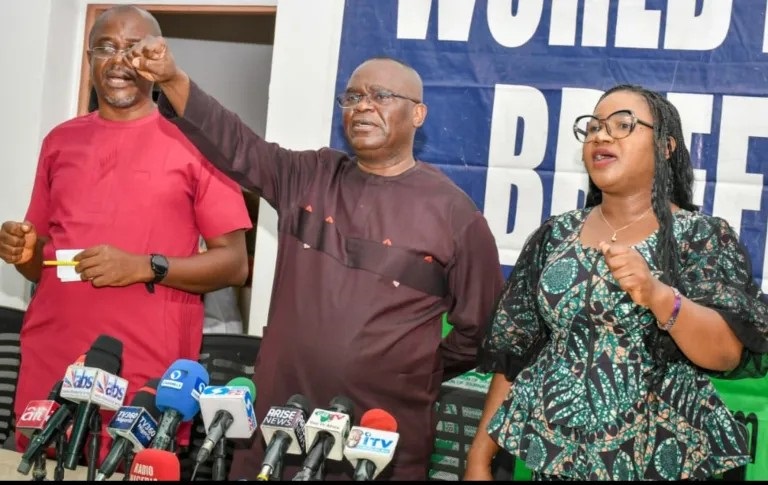
Nigerian Railway Corporation NRC m and staff of
the company during a press briefing at the NUJ FCT
Council Secretariat in Abuja
Rail, road and ports need stronger connections
The Managing Director of the Nigerian Railway Corporation, Dr Kayode Opeifa, also called for an integrated transportation and logistics system, describing it as essential to economic resilience and competitiveness.
Speaking on the theme, Scaling the Future: Building a Resilient and Efficient Mobility and Logistics Ecosystem in Nigeria, Opeifa said weaknesses in the transport network contributed to congestion, delayed deliveries, rising logistics costs and higher prices of goods and services.
He said better coordination among rail, road, maritime and air transport would enable businesses to move goods more efficiently, reach wider markets and reduce avoidable supply-chain expenses.
Opeifa identified rail as a key component of the network because of its capacity to transport large volumes of passengers and freight over long distances.
An effective rail system, he said, could ease pressure on highways and improve connections between seaports, industrial clusters, inland terminals and urban centres.
“Rail should not be viewed as a competitor to road, maritime or air transportation, but each should continue to develop as complementary components of an effective integrated transport system,” he said.
Under such a system, road transport would remain essential for cargo collection and last-mile delivery, while maritime transport would support international trade.
Inland terminals would facilitate cargo handling and distribution, with rail providing high-capacity links between ports and centres of production and consumption.
READ ALSO:
Logistics costs weigh on businesses
The calls for integration highlight the need to improve the movement of goods across Nigeria’s supply chains, particularly for small businesses with limited capacity to absorb higher transport costs.
Poor coordination can force businesses to rely more on road transport, expose cargo to delays, and complicate the movement of goods between ports, warehouses, factories, and markets.
These costs can affect the final prices paid by consumers while reducing the competitiveness of Nigerian products in domestic and regional markets.
Madu said connecting transport systems would unlock opportunities across the logistics sector, while Opeifa maintained that coordination among the different modes would lower costs and promote regional commerce.

However, the ₦3.6tn estimate cited by Madu was not accompanied by a breakdown of the losses by transport mode, sector or methodology in the information provided at the conference.
The figure therefore indicates the scale of the problem identified by the supply-chain expert but does not establish how much could be recovered through specific infrastructure or policy interventions.
The stakeholders’ central message was that expanding transport infrastructure alone would not resolve Nigeria’s logistics challenges without effective links between the networks that move goods from production sites to consumers.

Ogochukwu Onwaeze is a writer specializing in business and economic journalism. At THEWILL News Media, she translates market trends, financial developments, and policy shifts into clear and engaging stories.
