
-
Damascus court sentences former President Bashar al-Assad, his brother Maher and seven former regime officials to death for killings linked to the 2011 Deraa uprising.
-
Judges convict Assad in absentia of premeditated murder, torture, arbitrary detention and crimes described as crimes against humanity, while ordering international pursuit of the former ruler.
-
Syrian authorities hail the verdict as a landmark step toward justice, even as Assad remains in Russia beyond the reach of the new government.
-
Historic ruling reopens painful memories of the civil war that claimed hundreds of thousands of lives and displaced millions of Syrians.
August 12, (THEWILL) — A Damascus criminal court has sentenced former Syrian President Bashar Al Assad to death in absentia over the mass killings, torture and repression that marked the brutal crackdown on anti-government protests in 2011.
THEWILL reports that the ruling, delivered on Tuesday by the Fourth Criminal Court in Damascus, also handed death sentences to Bashar’s younger brother, Maher Al Assad, former Political Security chief Atif Najib and six other former senior regime officials.
While Najib appeared before the court and stood trial in person, Bashar al-Assad, Maher al-Assad, and the remaining defendants were tried in absentia after fleeing the country following the collapse of the Assad government.

The court further ordered Syrian authorities to pursue Bashar and Maher internationally in an effort to bring them before the country’s justice system.
Convicted Over Murder, Torture And Crimes Against Humanity
Reading the judgement, Head of the Fourth Criminal Court, Fakhr Al Aryan, declared that Bashar Al Assad had been found guilty of multiple counts of premeditated murder, including the killing of children under the age of 15, murder accompanied by torture, arbitrary detention and incitement to commit murder.
The court held that the crimes committed during the suppression of peaceful demonstrations in the southern city of Deraa amounted to offences that could be characterised as crimes against humanity and war crimes, even though those classifications are not yet expressly codified under Syrian domestic law.
Najib, a cousin of the former president and one-time head of the Political Security Branch in Deraa, was convicted on charges including torture, unlawful detention, participation in the violent suppression of peaceful protesters using live ammunition and systematic abuse that resulted in the deaths of detainees.
According to prosecutors, the defendants oversaw a campaign of widespread violence against civilians during the early days of the Syrian uprising, when security forces opened fire on demonstrators, detained thousands and subjected many prisoners to torture that frequently ended in death.
READ ALSO: UK Announces £50m Support Package For Syria
Government Celebrates Landmark Justice
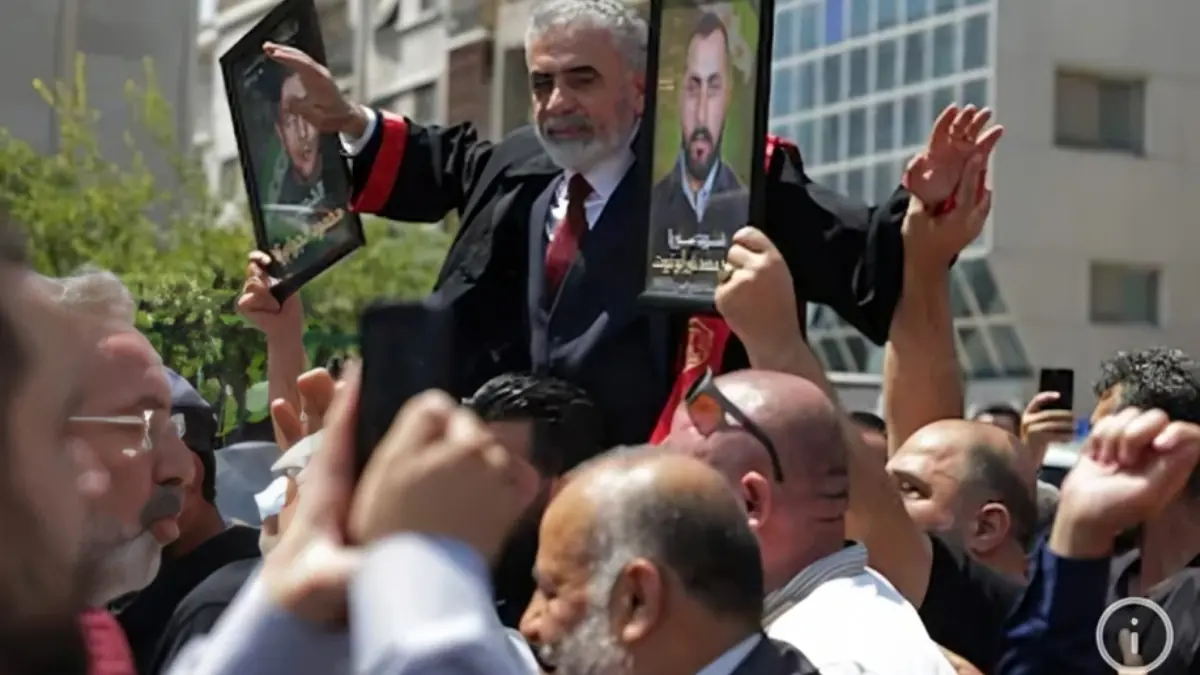
Syrian Interior Minister, Anas Khattab, described the verdict as a turning point in the country’s effort to confront decades of repression.
He said the judgments represented “a historic step towards achieving justice for the victims and holding those responsible accountable,” adding that investigations and prosecutions would continue against other former officials implicated in atrocities committed under the previous government.
The announcement sparked celebrations in Deraa, where mosque loudspeakers echoed with chants of “God is greater” as residents welcomed what many regarded as long-awaited justice for victims of the crackdown.
Assad Remains Beyond Syria’s Reach
Despite the landmark convictions, Bashar al-Assad remains outside the reach of Syrian authorities.
He fled to Russia after the rapid offensive led by current Syrian President Ahmad Al Shara toppled the Assad government in an 11-day military campaign that ended more than five decades of Assad family rule.
Although the new administration has detained hundreds of former military officers, intelligence operatives and government officials, many of the senior figures of the former regime, including Bashar and Maher al-Assad, are believed to be living in Russia.
Syrian authorities had already issued an arrest warrant against Bashar al-Assad in December on charges of murder and torture, marking the first criminal action initiated against him by Syria itself after years of unsuccessful attempts by activists to secure prosecutions in foreign courts.
READ ALSO: Trump Confirms Secret Aircraft Switch After Iran Threat Triggered High-Stakes Security Operation
Background
The Syrian conflict began in March 2011 after peaceful demonstrations demanding political reforms were met with a violent security response in Deraa. What started as local protests quickly expanded into a nationwide uprising and ultimately a civil war that lasted more than a decade.
The conflict resulted in hundreds of thousands of deaths, displaced millions of Syrians and devastated much of the country’s infrastructure, while allegations of war crimes and crimes against humanity were levelled against multiple parties, including the former Assad government.
Although the latest convictions represent a major symbolic victory for survivors and families of victims, significant challenges remain. Bashar al-Assad and several senior members of his former administration remain outside Syria, while the country continues to grapple with sectarian tensions, revenge attacks against alleged regime collaborators and efforts to rebuild institutions after years of conflict.
Felix Ifijeh is a journalist with years of professional reporting experience. Known for his keen news sense, compelling storytelling and commitment to accurate, impactful reporting, he has built a reputation for turning leads into clear, engaging, and well-structured reports that resonate with readers. His work reflects deep newsroom experience and a commitment to accurate, impactful journalism.