
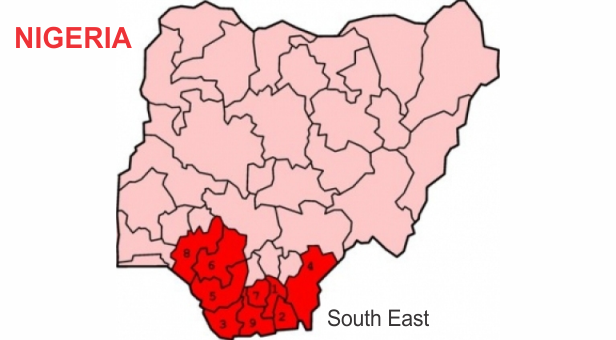
September 20, (THEWILL) – Sam Diala examines how the women of South-East Nigeria have turned the traditional August Meeting into a community development initiative supported by Nestle Nigeria
Every August, something remarkable happens across Nigeria’s South-East. Roads that were relatively quiet become crowded with vehicles. Communities that have witnessed years of youth migration suddenly come alive. Families reunite, town halls fill up, and women—many of whom have travelled from Lagos, Abuja, Port Harcourt, overseas and other parts of the world—return home. It is called the August Meeting.
To an outsider, it may appear to be simply a social gathering of women. There are meetings, speeches, fund-raising, colourful attire, entertainment and communal celebrations. But beneath this familiar cultural ritual lies something far more consequential: an indigenous model of grassroots development that has survived for generations.

The South-East woman does not merely return home in August to visit. She returns with a responsibility. She may contribute money to a school project, support a widow, rehabilitate a road, equip a health centre, provide borehole water, assist vulnerable families, award scholarships or finance a community security initiative. Collectively, thousands of women can mobilise resources that governments sometimes struggle to deploy efficiently at the grassroots.
This raises a fundamental question for Nigeria: what if community development is not something government should do alone, but something government should learn to facilitate by harnessing the enormous social capital already embedded in Nigerian communities? The August Meeting provides an important answer.
Community Development Begins Where People Live
Community development is often reduced to the construction of roads, schools, hospitals and water projects. These are important, but genuine development goes beyond physical infrastructure. It is the process through which people collectively identify their needs, mobilise resources and participate in solving problems that directly affect their lives. This distinction matters in Nigeria.
For decades, development planning has been heavily centralised. Federal and state governments formulate policies, prepare budgets and execute projects, while communities frequently remain passive recipients of government intervention. The result is a familiar paradox: billions of naira can be appropriated for development, yet some communities remain without functional primary healthcare, potable water, decent schools or accessible roads.
The August Meeting demonstrates a different philosophy. Its strength lies in ownership. When women from a community identify a problem themselves, contribute towards solving it and participate in monitoring the project, the intervention is no longer perceived merely as a government project. It becomes a community asset. That sense of ownership can determine whether a project survives.
A borehole that nobody feels responsible for can break down and remain unrepaired for years. A school building constructed without community involvement may deteriorate. But when residents have contributed their resources, labour or social capital, they are more likely to protect and maintain what they have created. This is the first lesson Nigeria can learn from the August Meeting: development becomes more sustainable when beneficiaries become stakeholders.
The Economic Power of Collective Action
The most compelling feature of the August Meeting is not its ceremony. It is its ability to convert individual contributions into collective capital. One woman may not be able to construct a health centre. Another may not be able to provide scholarships for an entire community. A third may not be able to finance a water project. Together, however, they can. This is essentially the economics of collective action.
The principle is not new. Traditional self-help associations, town unions, age grades, development unions and women’s organisations have historically played major roles in financing community infrastructure across the South-East. What makes the August Meeting particularly interesting is the ability of women to connect local needs with resources generated outside the community.
Nestle’s Maggie Sponsors August Meeting
Today, the South-East women are able to attract the attention of big, multinational companies to support their community development projects.
Nestlé Nigeria implemented this initiative in Enugu State (specifically in communities like Nsukka and Obolo-Afor) to lift women out of poverty by providing mentoring, training, and business grants. Nestlé’s Maggi sponsored the annual August Meeting across five states in South-East Nigeria, reaching over 8,100 women in 18 locations in 2025 and 2026.
The programme provided nutrition education, culinary demonstrations, and workshops on family well-being and economic empowerment. Examples include the Amizi Community in Ikwuano Local Government of Abia and the Christ Church home and abroad women meeting to empower neighbouring community women.
The annual migration therefore becomes more than a demographic phenomenon. It can become a development resource. A woman living in Abuja may earn income there but invest part of it in her village. Another living in Lagos may contribute to a community project. Someone in the diaspora may finance a scholarship or healthcare programme. In effect, the community becomes connected to a wider economic network.
This has enormous implications for Nigeria. At a time when public finances are under intense pressure, the government cannot realistically finance every development requirement from Abuja or state capitals. The country therefore needs a framework that encourages communities, businesses, philanthropists, civil society organisations and governments to pool resources.
READ ALSO:
The August Meeting offers a practical cultural foundation for such a model. Women Are Not Merely Beneficiaries; They Are Development Actors. Perhaps the most important lesson from the August Meeting concerns the role of women. Development policy has historically portrayed women primarily as beneficiaries—recipients of empowerment grants, maternal healthcare, agricultural inputs or social intervention programmes.
But the August Meeting presents women in a fundamentally different role. They are organisers, financiers, decision-makers, negotiators and development managers. This matters because women often possess intimate knowledge of the problems affecting families and communities. They know which families are struggling. They understand the challenges confronting children, widows, elderly people and persons with disabilities. They know when a health centre lacks essential equipment and when school infrastructure is deteriorating.
Consequently, women’s participation can make community development more responsive. Nigeria should therefore move from a model of women’s empowerment as welfare to women’s empowerment as economic and civic leadership. The women who return home during August should not simply be celebrated for their generosity. Their organisational capacity should be formally recognised as part of Nigeria’s development architecture.
Imagine what could happen if every local government area had properly structured community development partnerships in which women’s organisations were represented alongside traditional institutions, youth groups, professional associations, businesses and local authorities. The impact could be substantial.
From Charity to Structured Development
Yet the August Meeting model is not without weaknesses.
One danger is that community development can become dependent on charity rather than planning. Another is that contributions may be directed towards highly visible projects while less glamorous but equally important needs—such as maintenance, teacher quality, primary healthcare staffing, sanitation and skills development—receive inadequate attention.
There can also be questions around transparency, accountability and project prioritisation.
This is where government has an important role. Government should not take over the August Meeting. It should institutionalise the principles that make it successful without destroying its community ownership. A Community Development Matching Fund, for example, could be established at state or local government level. Under such a programme, a verified community that raises a specified amount for a priority project could receive matching funds from the government, subject to transparent criteria and independent monitoring.
If a community raises N20 million for a primary healthcare centre, the government could contribute an additional N20 million. If women contribute to a school rehabilitation project, the state government could provide teaching equipment and professional oversight. Such a system would stretch scarce public resources while giving communities an incentive to mobilise their own capital.
More importantly, it would change the psychology of development. Government would no longer be viewed solely as the financier of every project. Communities would become partners.
The Diaspora Opportunity
There is another dimension that deserves greater attention: the Nigerian diaspora. The South-East has one of Nigeria’s most extensive networks of people living outside their ancestral communities. During August, many return physically.
But their financial and professional connections with their communities can operate throughout the year. Nigeria should exploit this opportunity.
State governments and local governments could establish transparent digital platforms where communities list verified development projects, publish budgets, disclose contributions and report project progress. A diaspora woman living in London, for example, should be able to see exactly how much has been raised for a maternity centre in her community, how much the government has contributed, who is executing the project and whether it has been completed.
Transparency would build trust. Trust would encourage more contributions. More contributions would create more development. The objective should therefore be to transform August remittances into year-round development finance.
Community Development and the Fight Against Poverty
The significance of this model becomes even clearer when viewed through Nigeria’s poverty challenge. Nigeria cannot eradicate poverty simply by distributing cash. Sustainable poverty reduction requires productive communities.
A functioning school creates human capital.
A functional health centre protects household income.
A rural road connects farmers to markets.
Reliable water reduces the burden on women and children.
A vocational centre creates skills.
A community enterprise creates employment.
These interventions have multiplier effects. Therefore, community development should not be regarded as a peripheral social activity. It is an economic strategy. A community that can organise itself around development becomes more capable of attracting private investment, retaining young people and creating local economic opportunities.
This is particularly important in the South-East, where the departure of young people from rural communities has contributed to the hollowing-out of many villages. Instead of asking only why young people leave, policymakers should ask a more fundamental question: What would make them want to stay—or return?
The answer includes jobs, infrastructure, security, education, healthcare and economic opportunity.
Community-led development can help create the foundation for these conditions.
What Nigeria Can Learn
The August Meeting contains at least five lessons for national development.
First, development must be participatory. People are more likely to protect what they help create.
Second, women’s organisations are development institutions. They should be treated as partners rather than merely beneficiaries.
Third, government resources can be leveraged rather than deployed alone. Matching grants can multiply the impact of public spending.
Fourth, diaspora Nigerians represent development capital. Their financial and professional resources should be connected systematically to community priorities.
Fifth, accountability is indispensable. Community development funds must be subject to transparent budgeting, independent verification and public reporting.
These principles can be applied beyond the South-East.
Across Nigeria, communities have indigenous institutions capable of mobilising people and resources. Northern communities have traditional associations and development groups. The South-West has powerful town unions, professional associations and community organisations. The Niger Delta has community-based structures with considerable influence.
The lesson is therefore not that every Nigerian community should copy the August Meeting culturally. The lesson is that Nigeria should identify and strengthen the indigenous institutions through which its people already organise themselves.
A New Social Contract
Ultimately, the August Meeting represents something deeper than women gathering once a year. It represents a social contract. A woman returns to her community because she recognises that her prosperity is connected to the wellbeing of the place from which she came. That principle is desperately needed in Nigeria.
The country has spent decades debating what the government should provide. Perhaps the more productive question is how government, citizens and private institutions can work together to provide it.
Government has the authority and public resources.
Businesses have capital, technology and expertise.
Civil society has an advocacy capacity.
Communities possess local knowledge.
Women possess extraordinary networks of social capital.
The diaspora possesses financial and professional resources.
The future of community development lies in bringing these strengths together.
From August Tradition to National Development Model
The most powerful thing about the August Meeting is not the money raised during the celebrations.
It is the idea behind the money. It says that ordinary citizens can identify extraordinary problems and organise themselves to solve them. It says development does not always have to begin in a ministry, department or government office.
Sometimes, it begins in a village hall. Sometimes, it begins with women sitting around a table asking a simple question:
What does our community need, and what can we do about it?
Nigeria should listen to that question. The country faces enormous fiscal pressures, infrastructure deficits, unemployment, poverty, insecurity and declining trust in public institutions. Government alone cannot solve all these problems.
But government can create an environment in which communities become active partners in solving them.
The South-East’s August Meeting therefore deserves to be understood not merely as a cultural tradition, but as an indigenous experiment in participatory development, social capital mobilisation and women’s leadership. Its future should not be limited to one month.
The challenge is to transform its spirit into a permanent development framework—one where communities identify priorities, women lead mobilisation, government provides matching resources, businesses supply expertise, the diaspora contributes capital and transparent systems guarantee accountability.
If Nigeria can achieve that, the August Meeting will have evolved from an annual gathering into something much more consequential: a model of how a nation can rebuild development from the grassroots upward.
And perhaps the most important lesson is this:
A community does not become developed merely because somebody builds something for it. It becomes developed when its people acquire the capacity, confidence and collective responsibility to build its future themselves.

Sam Diala is a Bloomberg Certified Financial Journalist with over a decade of experience in reporting Business and Economy. He is Business Editor at THEWILL Newspaper, and believes that work, not wishes, creates wealth.